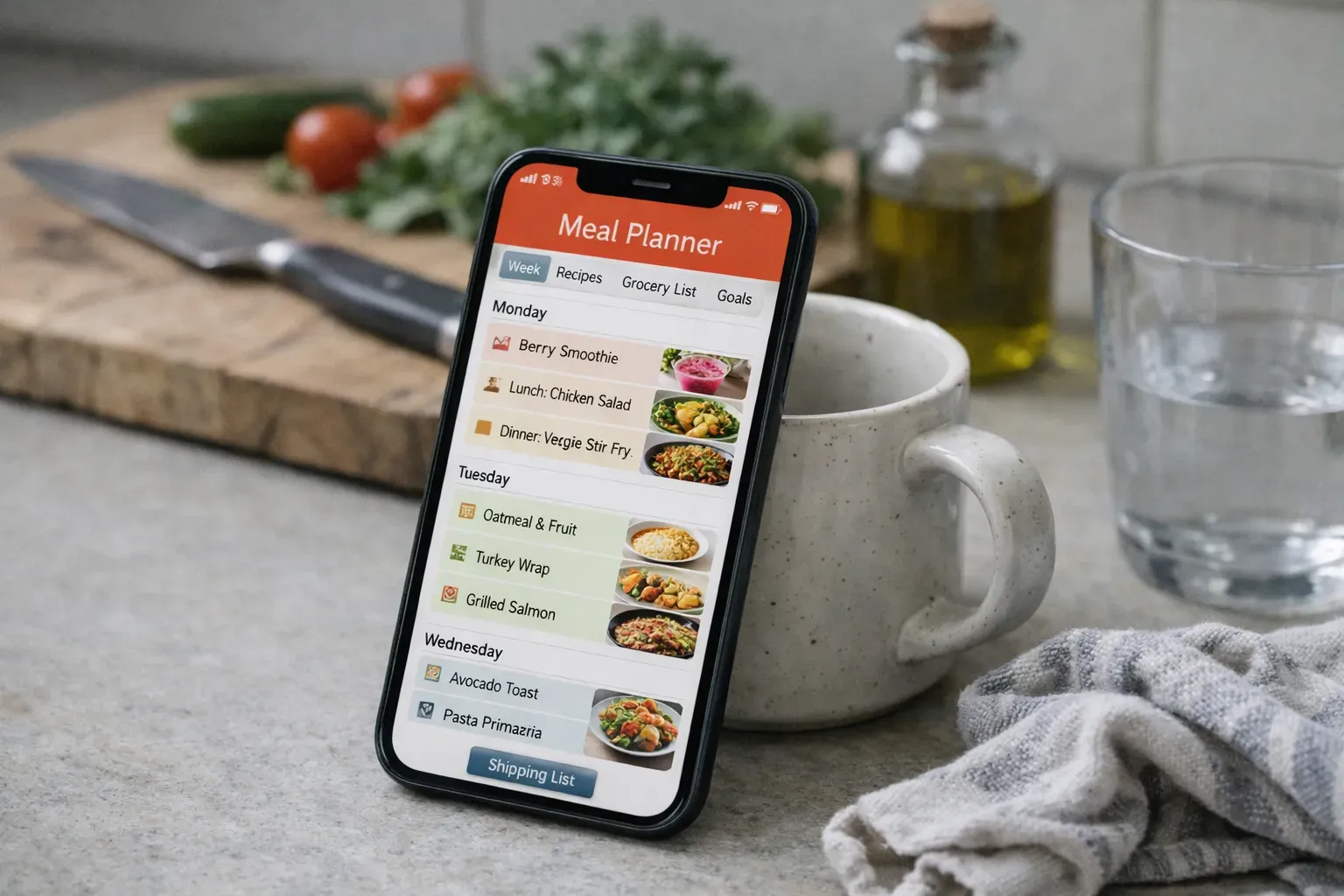
AI is transforming meal planning by handling the tedious logistics—weekly schedules, grocery lists, dietary adjustments—while leaving the creative, meaningful parts to you. Instead of spending 2-3 hours per week planning meals and making lists, AI tools reduce that to 15 minutes while keeping your family’s actual recipes and preferences intact.
The key difference from traditional meal planning: AI learns your patterns, adapts to what’s in your pantry, and automates the repetitive work, but it doesn’t replace your recipes with generic, artificial ones. You maintain control over what you cook; AI just makes the planning faster.
Key Takeaways
- AI meal planning cuts weekly planning time from 2+ hours to about 15 minutes — saving roughly 95 hours per year
- The best AI tools schedule and organize your own recipes rather than replacing them with generic AI-generated ones
- AI handles logistics (grocery lists, pantry tracking, schedule-aware suggestions) while you keep control of what you actually cook
- AI-generated recipes lack the tested reliability and personal meaning of your family’s real recipes
- Within 3-4 weeks of use, AI learns your patterns well enough to make highly accurate meal suggestions
In This Article
- The Current State of Meal Planning
- How AI Helps With Meal Planning
- The Problem With AI-Generated Recipes
- A Better Approach: AI Handles Logistics, Your Recipes Stay Yours
- Real-World Time Savings
- AI Meal Planning for Different Family Types
- What AI Meal Planning Won’t Do
- Getting Started With AI Meal Planning
- Common Questions About AI Meal Planning
- The Future of AI and Meal Planning
- Make Meal Planning Effortless
The Current State of Meal Planning
For most families, meal planning is a multi-hour weekly task that never ends.
The traditional process looks like this:
- Stare at empty calendar trying to think of meal ideas (30 minutes)
- Check what’s in the pantry and fridge (15 minutes)
- Browse recipes or cookbooks for inspiration (45 minutes)
- Write out a weekly plan (20 minutes)
- Create grocery list from recipes (30 minutes)
- Organize list by store sections (15 minutes)
- Total: 2.5+ hours
And this repeats every single week. Miss a week and you’re ordering takeout three nights in a row. The mental load is exhausting, especially when you’re juggling work, kids, and everything else.
Common pain points:
- Decision fatigue from choosing 7+ meals weekly
- Time wasted searching through recipes you’ve made before
- Forgetting ingredients and making multiple store trips
- Buying produce that goes bad because plans changed
- Same meals rotating every 2-3 weeks out of habit
- Difficulty adapting recipes for dietary needs or preferences
Traditional solutions like meal planning apps help organize but still require you to manually input recipes, build menus, and create lists. They digitize the process without fundamentally reducing the work.
How AI Helps With Meal Planning
AI meal planning tools use machine learning to automate the repetitive, time-consuming parts of meal planning while adapting to your specific needs.
Smart Meal Suggestions
AI learns from your history—what you cook regularly, what you rate highly, what your family actually eats—and suggests meals that fit your patterns.
Instead of browsing through hundreds of recipes, you see 10-15 suggestions tailored to the current week: comfort food for a cold Monday, quick meals for your late work nights, family favorites for weekends.
The AI considers:
- What you’ve cooked recently (avoids repetition)
- Day of the week patterns (lighter meals midweek, elaborate meals on weekends)
- Seasonal ingredients currently available
- Dietary restrictions and preferences
- Cooking time available
- What’s already in your pantry
This turns a 45-minute recipe search into a 5-minute review of personalized suggestions.
Automated Grocery Lists
Once your meal plan is set, AI generates a complete grocery list automatically.
It consolidates ingredients across all recipes (if three recipes need onions, it adds “3 onions” not three separate entries), organizes by store section, and removes items you already have in your digital pantry.
Advanced AI systems also:
- Adjust quantities for family size
- Suggest substitutions for out-of-stock items
- Flag items that are typically cheaper at specific stores
- Group by shopping trip if you use multiple stores
- Sync to your phone for easy shopping
This eliminates the 30-45 minutes spent manually writing and organizing a grocery list each week.
Dietary Adaptation
AI can instantly adapt recipes for dietary needs without manual calculation.
Need to make a recipe vegetarian? Lower sodium? Increase protein? AI suggests appropriate substitutions while maintaining the dish’s core flavor profile. It calculates nutritional changes and adjusts serving sizes automatically.
This is particularly valuable for:
- Families with multiple dietary needs (one person vegetarian, one gluten-free)
- Health conditions requiring specific macronutrient ratios
- Kids with allergies requiring consistent substitutions
- Fitness goals needing protein/calorie tracking
What used to require recipe research and manual adjustments now happens in seconds.
Pantry Management
AI-powered pantry tracking shows what you have, what’s expiring soon, and suggests meals using those ingredients.
Take a photo of your pantry or manually input items once, and the system tracks usage as you cook meals. It alerts you when staples are running low and prioritizes meals using ingredients that need to be used up.
This reduces food waste and last-minute store trips significantly.
Calendar Integration
AI can sync with your actual schedule to suggest appropriate meals for each day.
Late meeting on Tuesday? AI suggests a 20-minute meal or slow cooker recipe. Kids’ soccer practice on Thursday? It recommends make-ahead options. Weekend with time to cook? It surfaces that elaborate recipe you’ve been wanting to try.
This contextual awareness makes meal plans more realistic and reduces the “we’re too busy, let’s order pizza” problem.
Learn the fundamentals of building a meal planning system in our beginner’s guide to meal planning.
The Problem With AI-Generated Recipes
Here’s where many AI meal planning tools go wrong: they generate recipes instead of using yours.
AI-generated recipes sound impressive in marketing but they have a fundamental problem: they lack the soul, history, and proven success of real recipes.
They’re Artificial
An AI can combine ingredients that technically work together, but it can’t replicate the depth of flavor that comes from a recipe refined over generations. It doesn’t know that your grandmother’s chicken soup needs that specific combination of herbs, or that your dad’s chili requires a full day of slow cooking to develop the right taste.
AI generates recipes based on patterns in its training data, but those patterns are averages. The result is generic food that tastes “fine” but isn’t special.
They Erase Cultural and Family Identity
Food carries meaning beyond nutrition. Your family’s recipes connect you to your heritage, your childhood, your traditions. That’s not something AI can generate or replace.
When you make your mom’s lasagna, you’re not just making dinner—you’re maintaining a connection to family history. When you cook your grandmother’s curry, you’re preserving cultural identity. When your kids request “your special pancakes,” they’re building childhood memories around your specific recipe.
AI-generated recipes skip all of that in favor of algorithmic efficiency.
They Haven’t Been Tested in Your Kitchen
Your saved recipes are proven. You know they work with your equipment, your family likes them, and they fit your skill level.
AI-generated recipes are untested variables. They might have timing issues, require equipment you don’t have, or produce results that look nothing like the photo. You’re essentially beta testing every meal.
They Don’t Carry Personal Adaptations
Over time, you’ve adapted recipes to your family’s preferences. You know to add extra garlic to the pasta sauce, reduce salt in the stew, swap honey for sugar in the marinade. These small tweaks make recipes yours.
AI can’t capture these nuances unless specifically trained on your cooking history—and even then, it’s replicating rather than understanding.
A Better Approach: AI Handles Logistics, Your Recipes Stay Yours
The most useful application of AI in meal planning separates the logistics from the cooking.
AI should handle:
- Scheduling meals across the week
- Generating grocery lists
- Managing your pantry inventory
- Tracking what you’ve cooked recently
- Suggesting from your existing recipe collection
- Adapting portion sizes and dietary needs
- Organizing shopping by store layout
You should control:
- Which recipes you cook
- Your family’s favorite dishes
- Cultural and traditional recipes
- Personal adaptations and techniques
- What goes into your recipe collection
- Family meal preferences and patterns
This division lets AI do what it’s good at (processing data, managing lists, spotting patterns) while you do what you’re good at (cooking food your family loves, preserving traditions, making memories).
Tavola takes this approach. The AI manages your meal planning schedule, generates smart grocery lists, and keeps track of your recipes—but every recipe in the system is yours. Your grandmother’s soup, your favorite weeknight pasta, that slow cooker roast you make every winter. Tavola organizes and schedules them efficiently; it doesn’t replace them with artificial alternatives.
You get the time savings of AI meal planning (15 minutes instead of 2+ hours weekly) without sacrificing the recipes that matter to your family. The AI handles the tedious logistics while your actual food stays genuinely yours.
For a complete system combining AI efficiency with your real recipes, see our guide to creating a complete weekly meal planning system.
Real-World Time Savings
Let’s quantify what AI meal planning actually saves.
Traditional meal planning (per week):
- Finding meal ideas: 45 minutes
- Checking inventory: 15 minutes
- Writing meal plan: 20 minutes
- Creating grocery list: 30 minutes
- Organizing list: 15 minutes
- Total: 125 minutes (2 hours 5 minutes)
AI-assisted meal planning (per week):
- Reviewing AI suggestions: 5 minutes
- Adjusting meal plan: 5 minutes
- Confirming auto-generated grocery list: 5 minutes
- Total: 15 minutes
Weekly savings: 110 minutes (1 hour 50 minutes) Annual savings: 95 hours
That’s nearly 100 hours per year—more than two full work weeks—returned to you for whatever matters most. Time with family, hobbies, rest, or just not thinking about what’s for dinner.
AI Meal Planning for Different Family Types
Different households benefit from AI meal planning in specific ways.
Busy Working Parents
Primary benefit: Time savings and reduced mental load.
AI eliminates the Sunday evening panic of realizing you haven’t planned meals and need to figure out the week. It automates the process so thoroughly that meal planning stops being a weekly task you dread.
Most valuable features:
- Quick weeknight meal suggestions
- Calendar integration (appropriate meals for busy nights)
- Leftover management and repurposing
Families With Dietary Restrictions
Primary benefit: Automatic adaptation for multiple needs.
When one person is gluten-free, another is vegetarian, and a third has a nut allergy, manually planning meals that work for everyone is exhausting. AI can filter recipes, suggest substitutions, and ensure everyone’s needs are met without separate meals.
Most valuable features:
- Dietary filtering and substitutions
- Nutritional tracking
- Allergen alerts
Home Cooks Who Dislike Planning
Primary benefit: Cooking without the administrative burden.
Some people enjoy cooking but hate the logistics of planning and shopping. AI lets them skip straight to the fun part—cooking—while handling everything else.
Most valuable features:
- Automated meal scheduling
- One-click grocery lists
- Pantry inventory management
Even if you hate cooking entirely, smart meal planning makes it manageable—see our guide on how to meal plan when you hate cooking.
What AI Meal Planning Won’t Do
It’s important to be realistic about limitations.
AI won’t make you a better cook. It organizes and plans, but you still need to execute the recipes. If you struggle with cooking techniques, that’s a separate skill to develop.
AI won’t magically create more time for cooking. It saves time on planning and shopping, but the actual cooking time remains the same. If you have 20 minutes for dinner, AI will help you find 20-minute recipes, but it won’t cook them for you.
AI won’t solve picky eating. If your kids refuse vegetables, AI can suggest kid-friendly recipes, but it can’t make them try new foods. That’s a parenting challenge, not a technology solution.
AI won’t eliminate all grocery store trips. You’ll still need to shop; you’ll just do it more efficiently with better lists.
AI can’t replace your taste and judgment. It can suggest meals, but you need to approve them. It can generate grocery lists, but you should review them. You’re still the decision-maker; AI is the assistant.
Getting Started With AI Meal Planning
If you want to try AI meal planning, here’s how to begin.
Step 1: Input your core recipes. Start with 15-20 recipes your family eats regularly. These become the foundation of your meal rotation.
Step 2: Set your parameters. Tell the AI about dietary restrictions, preferred cuisine types, cooking time constraints, and any foods to avoid.
Step 3: Let AI suggest a week. Review the AI-generated meal plan. Accept what works, swap what doesn’t, and provide feedback so it learns your preferences.
Step 4: Use the automated grocery list. Check the list, adjust quantities if needed, and shop. Note what was accurate and what needed changing.
Step 5: Cook and rate meals. As you make meals, rate them or mark favorites. This trains the AI to suggest better matches over time.
Step 6: Expand your recipe collection. As you try new meals that work, add them to your system. Your recipe library grows, and AI has more options to suggest.
Within 3-4 weeks, the AI understands your patterns and suggestions become increasingly accurate. The time investment upfront pays off with faster, better meal planning every week after.
Common Questions About AI Meal Planning
Is AI meal planning expensive?
Most AI meal planning tools cost $5-15/month. Given that they save 6-8 hours monthly, the effective “hourly rate” is under $2/hour for your time back. Many people find that the reduced food waste and better grocery shopping actually offset the subscription cost.
Do I need to be tech-savvy?
No. Modern AI meal planning apps are designed for regular home cooks, not tech experts. If you can use a smartphone and browse recipes online, you can use AI meal planning tools.
Will AI have recipes I actually want to make?
Only if you’re using a tool that works with your recipes. Systems that rely on AI-generated recipes often miss the mark. Tools that organize and schedule your own recipes ensure you’re always cooking food you’ve chosen.
How does AI learn my preferences?
Through a combination of explicit inputs (dietary restrictions, cuisine preferences) and implicit learning (what you cook frequently, what you rate highly, what you skip). Over time, pattern recognition improves suggestions.
Can I still meal plan spontaneously?
Yes. AI meal planning isn’t rigid. If you get inspired to cook something different or plans change, you can swap meals easily. The AI adapts to changes and learns from them.
The Future of AI and Meal Planning
AI meal planning is still evolving. Here’s what’s likely coming in the next few years.
Voice integration: “Hey Siri, what’s for dinner this week?” and your meal plan reads aloud. Voice commands to add items to grocery lists or swap meals in the plan.
Smart appliance integration: Your meal plan automatically sets your slow cooker in the morning or preheats your oven at the right time. Recipe instructions appear on smart displays in your kitchen.
Enhanced visual recognition: Take a photo of your fridge and AI identifies what’s inside, suggests meals using those ingredients, and updates your pantry inventory automatically.
Predictive planning: AI notices patterns like “you always want comfort food when it’s cold” or “you cook more elaborate meals when you have a three-day weekend” and proactively adjusts suggestions.
Community learning: AI learns not just from your cooking but from aggregate patterns across thousands of users (while protecting privacy), improving suggestions based on what works for similar families.
Better nutrition insights: Real-time analysis of your meal plan’s nutritional balance with specific recommendations: “Your plan is low in iron this week—consider adding this meal.”
The goal isn’t to replace human decision-making but to make meal planning so efficient and personalized that it stops being a burden.
Make Meal Planning Effortless
AI meal planning represents a fundamental shift: instead of spending hours each week on logistics, you spend 15 minutes. Instead of decision fatigue, you get personalized suggestions. Instead of forgotten ingredients and wasted food, you get smart grocery lists and pantry tracking.
But the most important shift is what AI doesn’t change: your recipes, your family’s favorites, your cultural traditions, and your personal touch. The best AI meal planning tools handle the tedious work while keeping your food genuinely yours.
That’s exactly how Tavola approaches meal planning. AI manages your weekly schedule, generates organized grocery lists, and tracks your pantry—but every meal you make comes from your recipe collection, not a database of artificial creations. You get the time savings and efficiency of AI without sacrificing the recipes that make meals meaningful for your family.
Start with a system that puts your recipes first and let AI handle everything else.