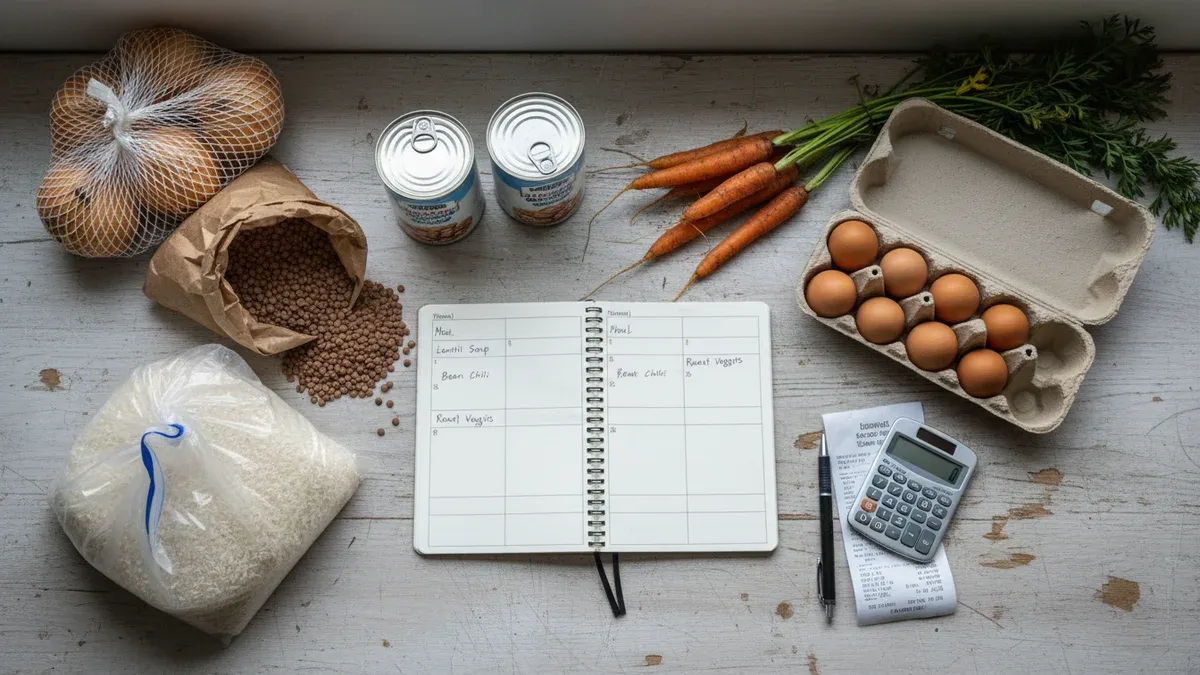
When food prices climb, meal planning becomes the single most effective tool for protecting your grocery budget. By planning meals around what’s on sale, building an inflation-proof pantry, making smart ingredient swaps, and reducing waste, most families can absorb a 15-20% price increase without spending a dollar more. The key isn’t buying less food — it’s buying smarter.
Food inflation hits hardest when you shop reactively: grabbing whatever looks good, replacing staples at full price, and ordering takeout when nothing at home comes together. A 15-minute weekly plan changes all of that.
Key Takeaways
- Meal planning can offset 15-20% food inflation without cutting portion sizes or nutrition
- Building a shelf-stable pantry when prices are low creates a buffer against future price spikes
- Swapping expensive proteins for budget alternatives (chicken thighs, eggs, lentils) saves $20-$40 weekly without sacrificing flavour
- Planning meals around store sales and seasonal produce cuts costs by 25-50% on the most volatile items
- Cooking in batches and repurposing leftovers stretches every ingredient further
In This Article
- Why Food Prices Are Going Up
- Why Meal Planning Is Your Best Defence Against Inflation
- 6 Meal Planning Strategies That Save Money When Prices Rise
- How to Build an Inflation-Proof Pantry
- Smart Swaps: Cheaper Ingredients That Don’t Sacrifice Flavour
- A Sample Budget-Conscious Weekly Meal Plan
- What NOT to Do When Food Prices Rise
- FAQ: Meal Planning During Food Inflation
- Stay Ahead of Rising Prices
Why Food Prices Are Going Up
Food prices don’t exist in a vacuum. When oil prices rise, everything connected to food gets more expensive:
- Transportation: Trucks, ships, and trains that move food from farms to stores run on fuel. Higher oil prices mean higher shipping costs — passed directly to consumers.
- Packaging: Plastics, containers, and wrapping materials are petroleum-based products. Their cost rises with oil.
- Farming inputs: Fertilisers, pesticides, and the fuel that powers farm equipment all track oil prices.
- Processing and refrigeration: Food manufacturing plants and cold chain storage are energy-intensive operations.
The result is a ripple effect. Oil goes up in January, and by March you’re paying more for eggs, bread, and vegetables. Understanding this helps you plan ahead rather than react.
Why Meal Planning Is Your Best Defence Against Inflation
Inflation punishes unplanned spending. Here’s why:
Without a plan, you buy at whatever price the store sets, waste food you forgot about, and order expensive takeout when nothing in your fridge makes a meal. Every one of those behaviours costs more when prices are rising.
With a plan, you buy strategically around sales and seasons, use every ingredient you purchase, and always have a dinner answer — even on exhausting nights.
A family spending $200 per week on groceries who faces a 15% price increase is looking at an extra $30 per week, or $1,560 per year. Meal planning strategies can easily recover that — and more.
For a full beginner’s framework, see our beginner’s guide to meal planning.
6 Meal Planning Strategies That Save Money When Prices Rise
1. Plan Around Sales, Not Recipes
Most people pick recipes first, then buy ingredients at full price. Flip that. Check your store’s weekly circular first, then plan meals around what’s discounted.
How to do it:
- Check the weekly ad every Thursday (most stores release new sales midweek)
- Identify discounted proteins and produce
- Build your week’s meals around those items
- Keep a list of 15-20 “flexible” recipes that work with various proteins
Example: Pork loin is 40% off this week? Plan pulled pork sandwiches Monday, stir-fried pork with rice Wednesday, and pork fried rice from leftovers Friday.
Savings: 25-40% on proteins, which are typically your most expensive grocery category.
2. Cook From Your Pantry First
Before buying anything new, build 1-2 meals per week from what you already have. This is the single fastest way to lower your weekly bill.
How to do it:
- Spend 5 minutes checking your pantry, fridge, and freezer before planning
- Identify items that need using soon (approaching expiry, opened packages)
- Plan meals that use those ingredients as the base
Example: You’ve got canned chickpeas, coconut milk, and rice. That’s a chickpea coconut curry for basically $0 in new spending.
Savings: $15-$30 per week by using what you already own.
For stocking ideas, check our pantry staples checklist.
3. Embrace Protein Swaps
Protein is where inflation bites hardest. Beef, chicken breast, and fish prices swing wildly. Having a mental list of cheaper alternatives keeps your meals satisfying without blowing the budget.
Budget protein hierarchy (cost per serving):
| Protein | Avg. Cost per Serving | Notes |
|---|---|---|
| Dried lentils / beans | $0.25-$0.40 | Highest savings, most shelf-stable |
| Eggs | $0.30-$0.50 | Versatile, quick to cook |
| Canned beans | $0.40-$0.60 | No soaking required |
| Chicken thighs | $0.80-$1.20 | More flavour than breast, cheaper |
| Ground turkey | $1.00-$1.50 | Leaner option, good for batch cooking |
| Whole chicken | $1.00-$1.50 | Roast once, use for 3+ meals |
| Chicken breast | $1.50-$2.50 | Price-volatile, buy on sale only |
| Ground beef | $1.50-$2.50 | Buy in bulk, freeze portions |
| Pork loin/shoulder | $1.00-$2.00 | Great for batch cooking, often on sale |
| Fish (canned tuna/salmon) | $0.75-$1.25 | Shelf-stable, no waste |
Action step: Replace 2-3 meat-heavy dinners per week with lentils, eggs, or beans. A family of four saves $15-$25 weekly — that’s $780-$1,300 annually.
4. Buy Seasonal Produce (and Skip the Rest)
Out-of-season produce is expensive because it’s shipped from far away (remember those rising fuel costs). Seasonal produce is abundant, local, and cheap.
What to buy now (spring):
- Asparagus, peas, strawberries, spinach, radishes, spring onions
What to skip until summer:
- Tomatoes, berries, corn, stone fruit (peaches, plums)
What’s always affordable:
- Cabbage, carrots, onions, potatoes, bananas, frozen vegetables
Frozen vegetables deserve special mention. They’re picked at peak freshness, flash-frozen, and typically cheaper than fresh — with equal or better nutrition. Stock up.
Savings: 30-50% on produce by eating seasonally.
For month-by-month guidance, see our seasonal meal planning guide.
5. Batch Cook and Repurpose Leftovers
Cooking once and eating twice (or three times) is the ultimate inflation hack. You use less energy, less time, and squeeze more meals from the same ingredients.
The repurpose chain:
- Sunday: Roast a whole chicken with vegetables → Sunday roast dinner
- Monday: Shred leftover chicken → chicken wraps or sandwiches for lunch
- Tuesday: Simmer the chicken carcass into broth → base for soup or risotto
- Wednesday: Use broth + any leftover vegetables → hearty chicken soup
One $8-$10 chicken just produced four meals for a family.
More repurpose ideas:
- Taco meat Monday → taco salad or nachos Wednesday
- Roasted vegetables → frittata or grain bowls the next day
- Extra rice → fried rice or rice pudding
Savings: 40-60% reduction in per-meal ingredient costs when you repurpose effectively.
6. Shop Once, Stick to the List
Every unplanned grocery trip costs $15-$30 in impulse buys. When prices are already inflated, those impulse costs compound.
The rule: One trip per week, one list, no deviations.
Tips for sticking to it:
- Eat before you shop (hungry shopping = impulse buying)
- Use a list app or paper list organised by store section
- Set a weekly budget cap and track as you go
- Skip end-cap displays and checkout aisle temptations
Savings: $60-$120 per month by eliminating extra trips and impulse buys.
For list organisation tips, read our guide on organising your grocery list by aisle.
How to Build an Inflation-Proof Pantry
An inflation-proof pantry is your buffer. When prices spike on fresh items, a well-stocked pantry means you can still eat well without paying peak prices.
The Strategy
Buy shelf-stable staples when they’re on sale or at normal prices. Use them to fill gaps when fresh ingredients get expensive.
Your Inflation-Proof Pantry Essentials
Grains and starches (store in airtight containers):
- Rice (white lasts 2+ years)
- Pasta (multiple shapes)
- Oats
- Flour
Canned proteins:
- Canned beans (black, chickpeas, kidney, white)
- Canned tuna and salmon
- Canned chicken
Canned vegetables and sauces:
- Diced tomatoes
- Tomato paste
- Coconut milk
- Broth (chicken and vegetable)
- Corn and green beans
Flavour builders:
- Soy sauce
- Vinegar (apple cider, balsamic)
- Hot sauce
- Olive oil
- Dried herbs and spices
Freezer staples:
- Frozen vegetables (peas, corn, broccoli, spinach, stir-fry mixes)
- Frozen fruit (for smoothies and oatmeal)
- Bread (freezes well for months)
- Butter (freezes up to 12 months)
How to Build It Without a Big Upfront Cost
Don’t try to stock everything at once. Add $10-$15 of shelf-stable items to your regular shop each week. Within two months, you’ll have a solid buffer.
Week 1: Rice, pasta, canned tomatoes, canned beans Week 2: Oats, broth, coconut milk, tuna Week 3: Frozen vegetables (3-4 bags), soy sauce, vinegar Week 4: Spices, olive oil, flour, more beans
When prices spike on fresh items, you’ll lean on your pantry to fill the gap.
Smart Swaps: Cheaper Ingredients That Don’t Sacrifice Flavour
When specific items get expensive, don’t just pay more — swap.
| Expensive Item | Budget Swap | Savings | Flavour Tip |
|---|---|---|---|
| Chicken breast | Chicken thighs | 30-40% | More flavourful, stays juicier |
| Beef mince | Turkey mince or lentils | 25-50% | Season well, mix 50/50 with lentils |
| Fresh berries | Frozen berries | 40-60% | Identical in smoothies and baking |
| Fresh herbs | Dried herbs (use 1/3 the amount) | 80-90% | Add early in cooking for flavour |
| Brand-name cereal | Oats with fruit and honey | 60-70% | More filling, more nutritious |
| Pre-cut vegetables | Whole vegetables (cut yourself) | 40-50% | 5 extra minutes of prep |
| Bagged salad | Whole lettuce + toppings | 50-60% | Lasts longer, less waste |
| Salmon fillets | Canned salmon | 60-70% | Great for patties, salads, pasta |
| Pine nuts | Sunflower seeds or walnuts | 70-80% | Toast them for similar crunch |
| Parmesan wedge | Pecorino or nutritional yeast | 30-50% | Sharp, salty flavour in pasta |
The goal isn’t deprivation. It’s finding ingredients that deliver the same satisfaction at a lower cost.
A Sample Budget-Conscious Weekly Meal Plan
Here’s what a week looks like when you apply these strategies for a family of four:
The Plan
| Day | Dinner | Est. Cost | Strategy Used |
|---|---|---|---|
| Monday | Chicken thigh stir-fry with rice and frozen vegetables | $8 | Sale protein + frozen veg + pantry rice |
| Tuesday | Lentil soup with crusty bread | $4 | Pantry-first + plant protein |
| Wednesday | Leftover chicken fried rice (from Monday extras) | $2 | Repurpose leftovers |
| Thursday | Black bean tacos with cabbage slaw | $5 | Canned protein + affordable produce |
| Friday | Pasta with pantry marinara and a side salad | $5 | Pantry-first cooking |
| Saturday | Whole roast chicken with roasted potatoes and carrots | $10 | Buy whole for value |
| Sunday | Chicken soup from Saturday’s carcass + leftover vegetables | $3 | Repurpose + zero waste |
Weekly dinner total: ~$37 for a family of four
That’s roughly $1.30 per person per dinner. Add breakfast (oatmeal, eggs, toast) and lunch (sandwiches, leftovers, soup) and a full week of meals lands around $100-$130 — well below the average family spend even before inflation.
What NOT to Do When Food Prices Rise
Don’t panic-buy in bulk without a plan. Buying 20 cans of something you’ve never cooked doesn’t save money — it creates waste. Only bulk-buy what you’ll genuinely use.
Don’t cut nutrition to cut costs. Skipping produce or protein to save money backfires. Cheap, nutritious options exist (frozen vegetables, eggs, beans, lentils) — use them.
Don’t stop meal planning because it “takes too long.” Fifteen minutes of planning saves hours of stress and hundreds of dollars monthly. It’s the highest-ROI time you’ll spend all week.
Don’t chase coupons for things you don’t need. A coupon for something you wouldn’t normally buy isn’t a saving — it’s an expense. Only clip coupons for items already on your list.
Don’t assume eating out is always cheaper. Even with rising grocery prices, a home-cooked meal for four costs $5-$10. A restaurant meal or delivery for four costs $40-$80. The maths hasn’t changed.
For more common traps, read our guide on grocery shopping mistakes that waste money.
FAQ: Meal Planning During Food Inflation
How much can meal planning actually save during inflation?
Consistent meal planning typically saves families 30-50% on combined food spending (groceries + dining out). During periods of 10-15% food inflation, these savings more than offset price increases, meaning you can actually spend less than you did before prices rose — if you plan strategically.
What are the best foods to stock up on before prices rise further?
Focus on shelf-stable staples with long shelf lives: rice, pasta, canned beans, canned tomatoes, oats, frozen vegetables, and cooking oils. These items form the base of hundreds of meals and can last months to years when stored properly. Buy gradually — $10-$15 extra per week — rather than in one expensive haul.
Is it cheaper to meal prep or cook fresh every day?
Meal prepping is almost always cheaper. Batch cooking lets you buy ingredients in larger (more economical) quantities, reduces energy costs by cooking once instead of multiple times, and prevents the expensive fallback of takeout on busy nights. A batch-cooked meal costs roughly 40-60% less per serving than cooking individual meals daily.
How do I eat healthy on a budget when food prices are rising?
Prioritise frozen vegetables (equally nutritious as fresh, significantly cheaper), eggs, beans, lentils, oats, and seasonal produce. These foods are nutrient-dense and budget-friendly even during inflation. Avoid processed convenience foods, which carry the highest markups and offer the least nutrition per dollar.
Should I switch to a cheaper grocery store during inflation?
It depends. Discount grocers (Aldi, Lidl, Costco) can save 15-25% on staples. But the bigger savings come from how you shop, not where. A family with a meal plan at a regular grocery store will almost always spend less than a family without a plan at a discount store. Start with the plan; switch stores if you want additional savings on top.
Stay Ahead of Rising Prices
Food inflation is frustrating, but it’s manageable. The families who feel it least aren’t necessarily earning more — they’re planning more. A weekly meal plan, a stocked pantry, and a willingness to swap and adapt are worth more than any coupon book or loyalty card.
Start this week. Check your pantry, look at the store circular, and plan five dinners. Track what you spend. You’ll be surprised how much control you actually have.
Tavola helps busy parents spend less time planning and more time around the table — because every family recipe tells a story worth preserving.