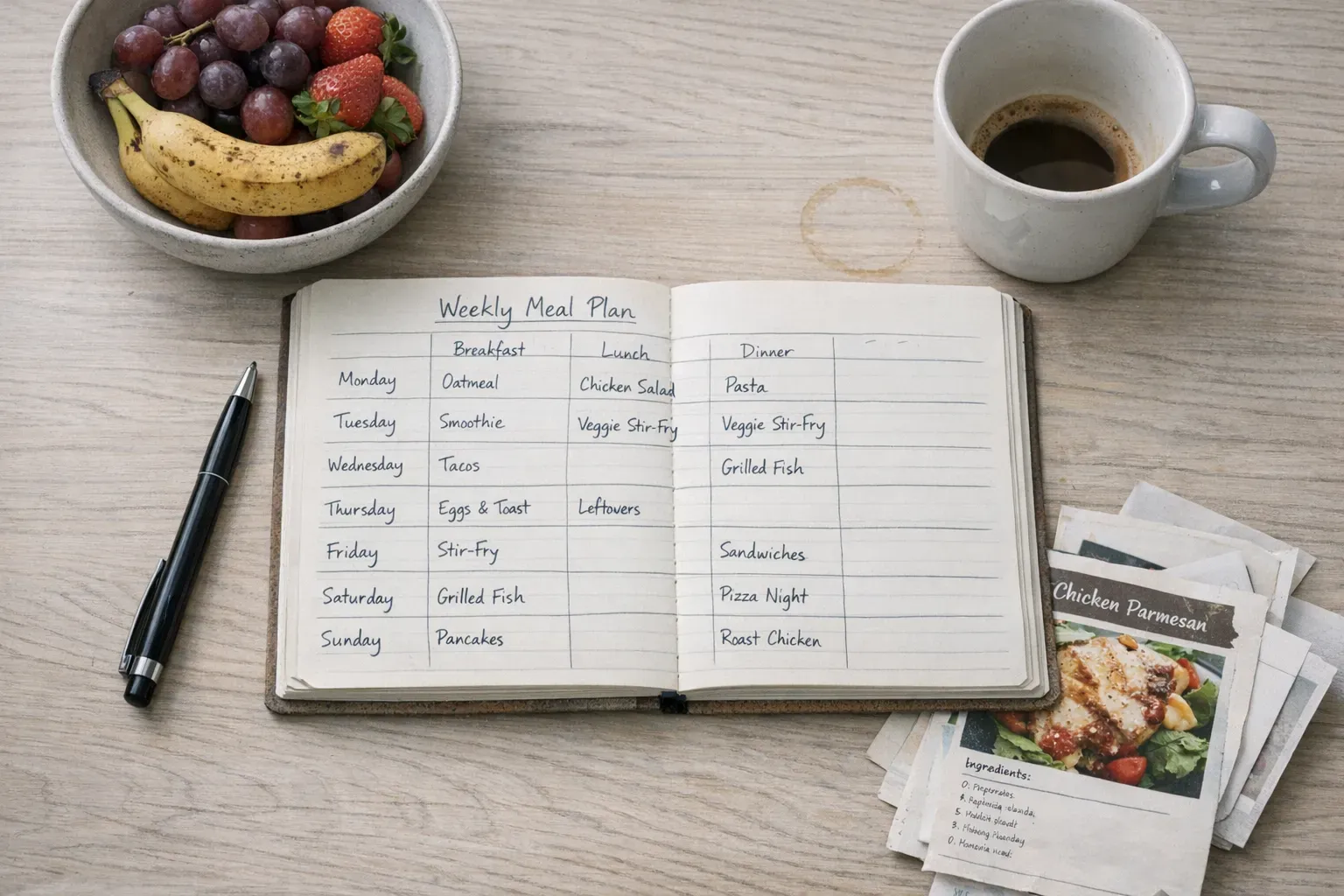
Weekly meal planning is a simple system where you decide what meals you’ll cook for the week ahead, create a shopping list based on those meals, and do your grocery shopping all at once. Instead of standing in front of the fridge every evening wondering “what’s for dinner?”, you already know the answer — and you have all the ingredients ready to go.
This guide will walk you through a straightforward 5-step process that takes about 30-45 minutes once a week but saves you hours of decision-making, multiple trips to the store, and the mental load of daily cooking stress.
Key Takeaways
- Start with just 4-5 dinners per week, not seven — plan for your real life including leftovers and takeout nights
- Match meal complexity to your schedule: quick recipes on busy nights, elaborate ones when you have time
- Use the 80/20 rule: 80% familiar favorites, 20% new recipes to keep things reliable but interesting
- Plan meals with overlapping ingredients (e.g., cilantro for tacos and another dish) to reduce waste and grocery costs
- Expect a 3-4 week learning curve — your first plan won’t be perfect, and that’s normal
In This Article
- Why Meal Plan? The Real Benefits
- What You Need Before You Start
- The 5-Step Weekly Meal Planning Process
- Tips for Sticking With Meal Planning
- Common Meal Planning Mistakes (and How to Avoid Them)
- How Meal Planning Connects to the Full Weekly System
- Beyond the Mechanics: Why This Matters
- Frequently Asked Questions
- Getting Started This Week
Why Meal Plan? The Real Benefits
Before diving into the how, let’s talk about why meal planning works for busy families.
You save actual time. One planning session replaces seven “what should we eat?” conversations. One grocery trip replaces three or four emergency runs for forgotten ingredients. One Sunday of batch prep means Tuesday night dinner takes 15 minutes instead of an hour.
You spend less money. When you plan meals around what you already have, buy only what you need, and actually use the groceries you purchase, your food budget shrinks. Most families save $100-200 per month just by reducing impulse purchases and food waste.
You eat better without trying. Planning lets you balance the week — if Monday is pizza night, you can make sure Wednesday includes vegetables. You can work in the family recipes you love instead of defaulting to the same five convenience meals.
You reduce decision fatigue. The average parent makes over 200 food-related decisions per day. Meal planning eliminates dozens of them, freeing up mental energy for everything else you’re juggling.
Most importantly, meal planning gives you back control of your family’s food story. Instead of outsourcing dinner to whatever restaurant is convenient, you’re choosing meals that matter — the recipes passed down from your grandmother, the Tuesday taco tradition your kids will remember, the Sunday pasta that brings everyone to the table.
What You Need Before You Start
You don’t need fancy planners, apps, or kitchen gadgets to meal plan successfully. Here’s the simple toolkit:
A place to write your plan. This could be a notebook, a note on your phone, a whiteboard on the fridge, or a digital document. All that matters is that you can see the week at a glance and everyone in your household can access it.
Your recipe collection. Pull together your go-to meals — the recipes you make regularly, the family favorites, the reliable weeknight dinners. If they’re scattered across cookbooks, recipe cards, screenshots, and your memory, now’s the time to gather them in one place.
A working grocery list system. Whether it’s pen and paper, a notes app, or your grocery store’s app, you need a way to build your shopping list as you plan.
15-30 minutes of uninterrupted time. Pick a consistent day and time each week. Many people choose Sunday afternoon or evening, but Thursday night or Saturday morning works just as well. What matters is making it a regular habit.
A realistic mindset. Your first meal plan won’t be perfect. You’ll forget ingredients, overestimate cooking time, or realize Tuesday’s recipe takes too long on a busy evening. That’s normal. Meal planning is a skill that improves with practice.
The 5-Step Weekly Meal Planning Process
Here’s the framework that works for beginners and experienced planners alike.
Step 1: Check Your Calendar and Inventory
Start by looking at your week ahead. What nights will you be home for dinner? What evenings are rushed because of activities? When do you have more time to cook?
Open your fridge, freezer, and pantry. What proteins do you have? What vegetables need to be used? What staples are running low? Make note of ingredients that should be used this week and items you’re completely out of.
This step takes 5-10 minutes and prevents two common mistakes: planning elaborate meals on your busiest nights, and buying groceries you already have.
Step 2: Decide How Many Meals to Plan
Most beginners should start with 4-5 dinners per week, not seven.
Plan for your actual life, not an ideal version. If you know you’ll order takeout Friday, your in-laws always host Sunday dinner, and Wednesday is leftover night, you only need to plan four new meals. There’s no meal planning rulebook that says you must cook from scratch every single night.
A realistic starting point:
- 4-5 planned dinners
- 1-2 leftover nights (planned leftovers from bigger batches)
- 1 flex night (takeout, eating out, or simple assembly meals like sandwiches)
As you get comfortable, you can add breakfast planning or lunch prep, but start with just dinners.
Step 3: Choose Your Meals
This is where your recipe collection comes in. For each planned dinner, choose a specific recipe or meal.
Balance cooking effort across the week. Don’t plan five elaborate recipes that each take an hour. Mix it up:
- 1-2 quick meals (20 minutes or less)
- 2-3 moderate meals (30-45 minutes)
- 1 slow cooker or hands-off meal
- 1 intentional leftover meal (make double on Sunday, eat again Tuesday)
Consider your schedule. Put the quickest meals on your busiest nights. Save recipes that need your attention for evenings when you have more time.
Rotate your favorites. You don’t need to cook something new every week. If your family loves a particular recipe, put it in regular rotation. Many successful meal planners use a loose pattern — maybe Taco Tuesday, pasta on Thursdays, and a slow cooker meal on busy Mondays.
Plan around what you have. If you found chicken thighs in the freezer and bell peppers that need to be used, choose recipes that feature those ingredients.
Here’s a sample week to illustrate the balance:
| Day | Meal | Cooking Time | Notes |
|---|---|---|---|
| Monday | Slow Cooker Chicken Tacos | 15 min prep, slow cook | Set up in morning |
| Tuesday | One-Pot Pasta Primavera | 25 minutes | Quick, uses vegetables |
| Wednesday | Leftover Tacos (taco bowls) | 10 minutes | Use Monday’s chicken |
| Thursday | Grandma’s Meatloaf + Roasted Vegetables | 60 minutes | More time available |
| Friday | Takeout | - | Family tradition |
| Saturday | Homemade Pizza Night | 30 minutes | Kids help |
| Sunday | Leftover Meatloaf Sandwiches | 10 minutes | Easy end to weekend |
Notice this plan includes only 4 cooked meals, 2 leftover repurposings, and 1 takeout night. That’s realistic and sustainable.
Step 4: Make Your Grocery List
Go through each planned meal and write down every ingredient you need. Then cross-reference with your pantry inventory from Step 1 — only add items you don’t already have.
Organize your list by store section to make shopping faster:
- Produce
- Meat/Seafood
- Dairy
- Frozen
- Pantry/Dry Goods
- Bread/Bakery
Don’t forget the non-recipe essentials: breakfast items, lunch supplies, snacks, household staples. These should be added to your meal-based list.
For a more detailed approach to building an organized grocery list, check out our ultimate grocery list template for healthy eating.
Step 5: Shop Once, Stick to the List
With your organized list in hand, do one focused grocery shopping trip for the week. This is usually done right after planning (same day) or the next morning.
The key is to shop your list. Meal planning only saves money and reduces stress if you actually buy what you planned and stick to those meals during the week.
That doesn’t mean you can’t adjust if plans change — life happens, and flexibility is fine. But impulse purchases of ingredients for meals you might make someday are how pantries get cluttered and budgets get blown.
Tips for Sticking With Meal Planning
Make it a weekly ritual. Choose the same day and time each week. Many people pair meal planning with another weekly routine — Sunday morning coffee, Saturday afternoon after errands, Thursday evening before the weekend rush.
Keep it visible. Post your meal plan where everyone can see it. A simple note on the fridge works perfectly. When family members ask “what’s for dinner?”, they can check the plan themselves.
Build a rotation of favorite meals. You don’t need infinite variety. Ten to fifteen reliable recipes that your family enjoys is enough to rotate through without getting bored. As you meal plan week after week, you’ll naturally discover which meals belong in your regular rotation.
Prep on the same day you shop. If you have energy after grocery shopping, wash and chop vegetables, portion proteins, or prepare components for the week ahead. Even 20 minutes of prep makes weeknight cooking significantly easier. For a complete approach, read our guide to Meal Prep Sunday.
Theme nights reduce decision-making. Taco Tuesday, Meatless Monday, Pizza Friday — themes give you a framework. Instead of “what should we have?”, it’s “which taco recipe this week?”
Start small and build. Four dinners is better than an abandoned plan for seven perfect meals. Master the basics first, then expand to breakfasts, lunches, or more elaborate dinners as it becomes habit.
Common Meal Planning Mistakes (and How to Avoid Them)
Mistake 1: Planning meals you’ve never made before. Every meal on your plan is an experiment, so you don’t know how long it takes or if your family will like it.
Fix: Use the 80/20 rule. Plan mostly familiar favorites (80%) with one new recipe to try (20%).
Mistake 2: Ignoring your actual schedule. You plan a 90-minute roast on Tuesday, then remember you have evening meetings every Tuesday.
Fix: Start with your calendar. Match meal complexity to available time.
Mistake 3: Planning like you’re a restaurant. Seven completely different meals with no ingredient overlap means a huge grocery list and potential waste.
Fix: Plan meals with ingredient overlap. If you’re buying cilantro for tacos, also plan a recipe that uses cilantro. If you’re roasting a chicken, plan a second meal using the leftovers.
Mistake 4: Not planning for leftovers. You make fresh meals every night, creating more work and more dishes.
Fix: Intentionally cook larger portions of certain meals and schedule leftover nights. Double Monday’s recipe, eat it again Wednesday.
Mistake 5: Forgetting about breakfast, lunch, and snacks. You plan dinners perfectly but still make multiple grocery runs for morning and midday needs.
Fix: Once dinner planning is a habit, add a simple breakfast/lunch/snack section to your list. It doesn’t need to be as detailed — just ensuring you have yogurt, bread, fruit, sandwich supplies, etc.
Mistake 6: Giving up after one imperfect week. Your first plan doesn’t go perfectly, so you decide meal planning doesn’t work for you.
Fix: Expect a learning curve. After three to four weeks, you’ll understand your patterns, know your timing, and have a system that fits your life.
How Meal Planning Connects to the Full Weekly System
Meal planning is just one piece of an integrated weekly system. Once you’re comfortable with planning, the natural next steps are:
Building efficient grocery lists that save time shopping and ensure you get everything you need. Our grocery list template provides a comprehensive framework organized by category.
Adding meal prep to batch-cook components and set yourself up for success during the week. The Meal Prep Sunday guide walks through a complete Sunday routine from start to finish.
Working within a budget while still feeding your family well. Check out how to meal plan for a family of four on a budget with practical strategies and real examples.
Creating a complete weekly system that ties planning, shopping, prepping, and cooking into one smooth cycle. The complete weekly system guide shows how all these pieces work together.
But start with the basics in this guide first. Master weekly meal planning, get comfortable with the rhythm, and then layer in additional strategies.
Beyond the Mechanics: Why This Matters
Meal planning isn’t really about efficiency, though it is efficient. It’s not really about budgets, though it saves money.
At its core, meal planning is about being intentional with one of the most important daily rituals we have — gathering around food.
When you plan Grandma’s Sunday sauce or Dad’s famous chili, you’re choosing to keep those recipes alive. When you schedule Taco Tuesday, you’re creating the kind of predictable family tradition that kids carry into adulthood. When you deliberately work vegetables into Thursday’s meal because Monday was pizza, you’re quietly teaching your children how to balance enjoyment and nutrition.
The fifteen minutes you spend planning on Sunday is an investment in dozens of small moments throughout the week — less stress, more presence, better food, preserved traditions.
That’s what makes meal planning worth the effort.
Frequently Asked Questions
How long does meal planning take each week?
For beginners, expect 30-45 minutes to plan meals and create a grocery list. As you get faster and build your recipe rotation, this drops to 15-20 minutes. The time you spend planning saves multiple hours during the week in decision-making, shopping trips, and cooking time.
What if plans change and we don’t eat what I planned?
Life happens. If Tuesday’s plan doesn’t work, swap it with Thursday’s or push it to next week. Flexibility is built into good meal planning. The goal is a framework, not a rigid schedule. Most ingredients will keep for several days, so adjusting the order of meals is easy.
Do I need to plan breakfast and lunch too?
Start with just dinners. Once that becomes a comfortable habit (usually after 3-4 weeks), you can add a simple breakfast and lunch plan. Many families keep breakfast and lunch very simple with repeating staples, and only plan dinners in detail.
How do I meal plan when family members have different preferences?
Focus on meals with flexible components. Taco night lets everyone build their own. Pasta with various toppings works. Deconstructed bowls (rice, protein, vegetables served separately) let people customize. You’re not running a restaurant, but building in choice reduces complaints.
Should I plan the same meals every week or try new recipes?
Both. Most successful meal planners use a core rotation of 10-15 family favorites and try one new recipe every week or two. Repeating meals isn’t boring — it’s efficient. Your family probably has breakfast and lunch favorites they eat repeatedly without complaint. Dinner can work the same way.
Getting Started This Week
You don’t need a perfect plan. You just need to start.
This Sunday, set aside 30 minutes. Look at your week ahead. Check what you have in the fridge and freezer. Choose four meals you know how to make. Write down what you need from the store. Shop Monday morning.
That’s it. That’s your first meal plan.
Next week, you’ll do it again, a little faster and with more confidence. The week after that, you’ll start recognizing patterns — which meals work on busy nights, which ingredients you can batch prep, which recipes your family requests again.
Within a month, meal planning stops being a project and becomes a simple weekly habit that makes everything else easier.
Tavola helps busy parents spend less time planning and more time around the table — because every family recipe tells a story worth preserving.