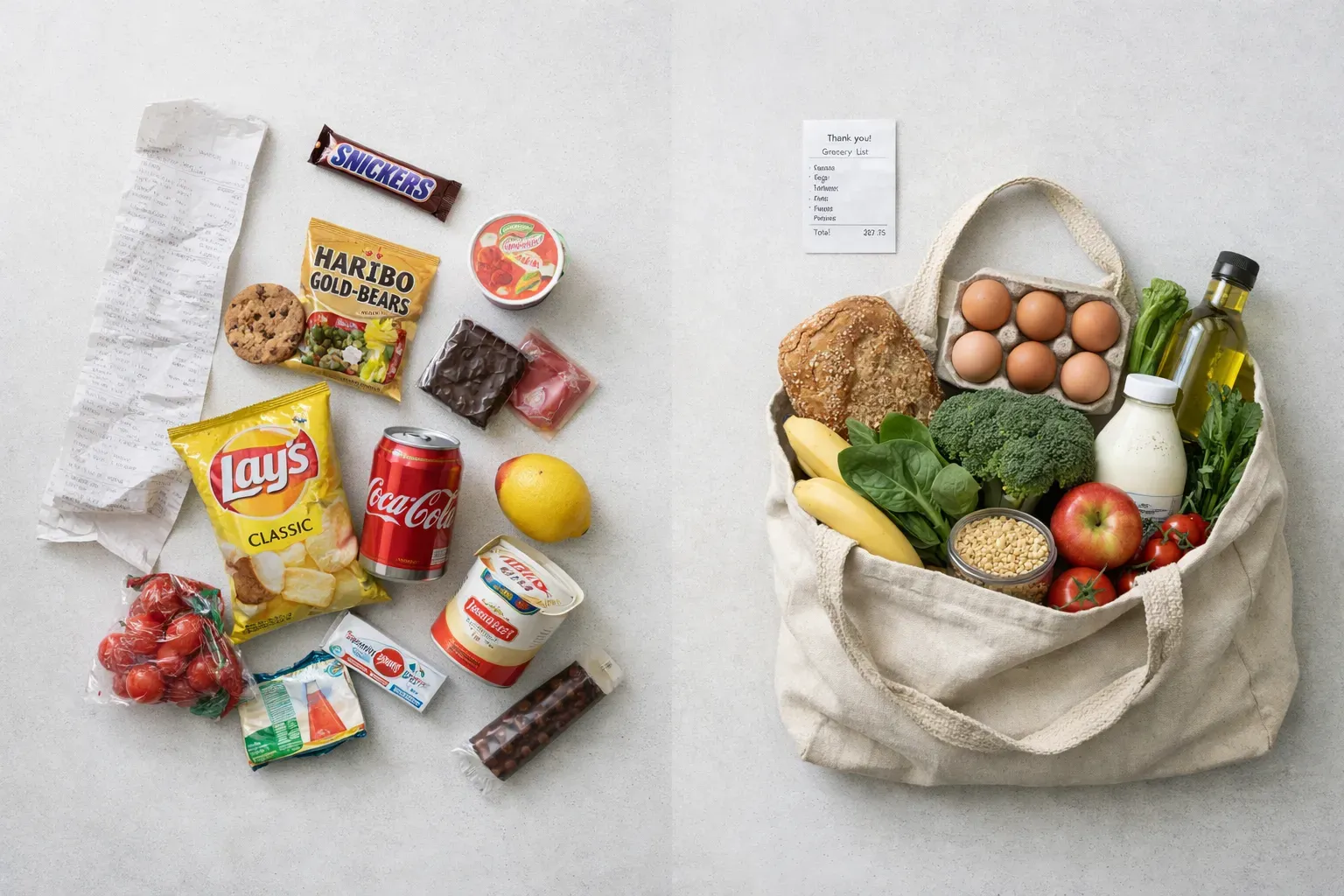
You can cut your grocery bill by 40-50% through meal planning by eliminating food waste (which accounts for 30-40% of grocery spending), shopping with a detailed list based on planned meals, buying only what you’ll actually use, and planning meals around sales and seasonal produce. The average family spending $250 weekly can reduce that to $125-150 through consistent meal planning without sacrificing nutrition or satisfaction.
Meal planning isn’t about restrictive eating or complicated systems. It’s about being intentional with your grocery dollars so nothing goes to waste and every purchase serves a purpose.
Key Takeaways
- Families without a meal plan waste $4,700-$7,300 annually on food waste, impulse buys, emergency takeout, and duplicate purchases
- Plan meals around weekly store sales and seasonal produce to cut protein costs by 25-35% and produce costs by 30-50%
- Add 2-3 vegetarian dinners per week using beans, lentils, and eggs — saving $780-$1,300 annually compared to all-meat meals
- Shop once per week with a complete list; each extra trip adds $15-$30 in unplanned purchases
- Intentionally cook extra and schedule leftover-remix nights to get 2-3 meals from one batch of ingredients
In This Article
- The Real Cost of Not Planning
- How Meal Planning Cuts Costs
- 10 Meal Planning Strategies to Slash Your Grocery Bill
- Before and After: Real Budget Comparison
- Your Weekly Meal Planning Process
- Common Meal Planning Budget Mistakes to Avoid
- How to Start Saving This Week
- Meal Planning for Different Budget Levels
- Track Your Savings
- FAQ: Cutting Grocery Bills with Meal Planning
- Your Grocery Budget Transformation Starts Now
The Real Cost of Not Planning
Before exploring solutions, let’s quantify the problem. Families who don’t meal plan lose money in four major ways:
1. Food Waste: $1,500-$2,000 Annually
The USDA reports Americans waste 30-40% of the food supply. For a family spending $200 weekly on groceries, that’s $60-$80 thrown directly in the trash each week.
Why it happens without planning: You buy ingredients without specific meal plans, produce spoils before you use it, and leftovers get forgotten in the back of the fridge.
2. Impulse Purchases: $800-$1,200 Annually
Studies show shoppers without lists spend 40-60% more than those with detailed plans. That’s an extra $30-$60 per $100 spent on items you didn’t need and won’t use.
Why it happens without planning: Everything looks appealing when you’re wandering aisles without purpose. You grab items “in case” you need them, accumulating random ingredients that never become complete meals.
3. Emergency Takeout: $2,000-$3,500 Annually
When there’s no dinner plan at 6 PM, you order pizza, pick up Chinese food, or hit the drive-through. At $30-$50 per meal, three times weekly, that’s $4,680-$7,800 annually.
Why it happens without planning: Without a meal plan, you haven’t shopped for ingredients, you don’t have anything thawing, and you’re too exhausted to figure it out in the moment.
4. Duplicate Purchases: $400-$600 Annually
You buy another jar of minced garlic because you couldn’t remember if you had one at home. You purchase pasta when you already have six boxes in the pantry.
Why it happens without planning: Shopping without checking your inventory first leads to unnecessary duplicates.
Total annual waste from not planning: $4,700-$7,300
That’s money literally thrown away that meal planning can save.
How Meal Planning Cuts Costs
Meal planning attacks every source of waste simultaneously:
Eliminates food waste: You buy only what specific recipes require, ensuring everything gets used
Prevents impulse buys: A detailed shopping list keeps you focused and intentional
Stops emergency takeout: You always know what’s for dinner and have ingredients ready
Avoids duplicates: Planning requires pantry inventory, so you know what you have
The result? Most families cut grocery spending by 40-50% within the first month of consistent meal planning.
10 Meal Planning Strategies to Slash Your Grocery Bill
1. Plan Meals Around Sales
How it works: Check your grocery store’s weekly circular before planning meals. Build your menu around discounted proteins and produce.
Example: Chicken thighs on sale for $1.99/lb instead of $4.99/lb? Plan 2-3 chicken-based meals that week. Ground beef at 30% off? Make tacos, spaghetti sauce, and stuffed peppers.
Savings impact: 25-35% reduction on protein costs, your biggest grocery expense.
Action step: Subscribe to your primary grocery store’s weekly ad emails. Check sales every Thursday before planning your weekend shopping trip.
2. Use What You Already Have
How it works: Before planning any meals, inventory your pantry, freezer, and refrigerator. Build meals around ingredients you already own.
Example: Found frozen chicken breasts and rice in your pantry? That’s chicken stir-fry, chicken and rice soup, or chicken fried rice. Found canned beans and tomatoes? That’s chili, tacos, or bean soup.
Savings impact: Using existing inventory prevents waste and can eliminate $20-$40 from your weekly shopping bill.
Action step: Spend 5 minutes before meal planning checking what needs using. Prioritize meals that incorporate these ingredients.
For a comprehensive checklist of essentials to keep stocked, see our pantry staples checklist.
3. Batch Cook and Freeze
How it works: Double or triple recipes and freeze portions for future meals. One cooking session yields multiple dinners.
Example: Make a triple batch of spaghetti sauce, chili, or lasagna. Freeze in family-size portions. You’ve just created three future dinners for the cost of slightly more ingredients.
Savings impact: Bulk ingredient buying saves 15-20%. More importantly, having ready-made meals prevents expensive takeout on exhausting evenings.
Action step: Choose one weekend monthly to batch cook 2-3 freezer-friendly meals. Label with contents and date.
4. Repurpose Leftovers into New Meals
How it works: Plan meals that transform into entirely different dishes the next day.
Examples:
- Monday’s roasted chicken → Wednesday’s chicken fried rice
- Tuesday’s taco meat → Thursday’s taco salad or nachos
- Sunday’s roasted vegetables → Tuesday’s vegetable soup
- Wednesday’s grilled steak → Friday’s steak quesadillas
Savings impact: Gets 2-3 meals from ingredients for one meal, effectively cutting per-meal costs by 50-66%.
Action step: Intentionally cook extra protein (1.5x what you need) for Monday and Wednesday dinners. Plan Thursday and Friday meals around those leftovers.
5. Eat Seasonally
How it works: Buy produce when it’s in peak season in your region. Seasonal produce costs 30-50% less than out-of-season items.
Examples:
- Summer: Tomatoes, zucchini, corn, berries, watermelon
- Fall: Squash, apples, pears, Brussels sprouts, sweet potatoes
- Winter: Citrus, root vegetables, winter greens, pomegranates
- Spring: Asparagus, strawberries, peas, artichokes, spring greens
Savings impact: 30-50% savings on produce, plus better flavor and nutrition.
Action step: Google “what’s in season [your state] [current month]” and build weekly meals around those items.
6. Reduce Meat-Based Meals
How it works: Incorporate 2-3 vegetarian dinners weekly. Plant-based proteins (beans, lentils, eggs) cost 50-70% less than meat.
Budget-friendly vegetarian meals:
- Black bean tacos: $0.50-$0.75 per serving
- Lentil soup: $0.60 per serving
- Chickpea curry: $0.80 per serving
- Pasta primavera: $0.90 per serving
- Bean and cheese quesadillas: $0.70 per serving
Comparison: Chicken dinners average $2.50-$3.50 per serving, beef dinners $4-$6 per serving.
Savings impact: Switching three weekly dinners from meat to beans saves $15-$25 weekly, or $780-$1,300 annually.
Action step: Start with one meatless Monday meal. Once comfortable, add a second vegetarian dinner.
7. Buy Store Brands
How it works: Purchase store/generic brands instead of name brands on staple items.
Best items for store brands:
- Canned goods (beans, tomatoes, vegetables)
- Pasta and rice
- Flour, sugar, and baking supplies
- Frozen vegetables
- Dairy products
- Condiments
- Cleaning supplies
Savings impact: 20-40% savings on these items. For a family spending $150 weekly, switching 50% of purchases to store brands saves $15-$30 weekly, or $780-$1,560 annually.
Action step: This week, buy store brand versions of five items you normally buy name brand. Compare quality. If you can’t tell the difference, make the permanent switch.
8. Compare Unit Prices
How it works: Check the price per ounce/pound on shelf labels rather than total price. Bigger packages aren’t always better deals.
Example:
- 16 oz name brand pasta: $2.99 ($0.19/oz)
- 32 oz store brand pasta: $3.49 ($0.11/oz)
- 16 oz store brand pasta: $1.69 ($0.11/oz)
The best deal is the 16 oz store brand, not the largest package.
Savings impact: Checking unit prices prevents overpaying by 30-50% on identical products in different packaging.
Action step: Spend an extra 10 seconds per item checking the unit price on shelf tags.
9. Plan One “Leftovers & Pantry Cleanout” Night Weekly
How it works: Designate one night (usually Thursday or Friday) as the night you eat all leftovers and/or create a meal from whatever’s in the pantry.
Why it works: Prevents leftovers from being forgotten and wasted. Clears out pantry odds and ends before they expire.
Examples:
- “Buffet night”: Reheat all week’s leftovers, everyone picks what they want
- “Pasta bar”: Cook pasta, put out various sauces and toppings from pantry/fridge
- “Grain bowl night”: Cook quinoa or rice, add any vegetables and proteins from the week
Savings impact: Ensures you maximize every grocery dollar by using everything you buy.
Action step: Block Friday as “leftover night” on your meal plan. Don’t plan or shop for a new meal that night.
10. Shop Once Weekly with a Complete List
How it works: Plan all meals for the week, create one comprehensive shopping list, and make one grocery trip.
Why it works: Multiple weekly store visits lead to impulse purchases. Each extra trip costs an average $15-$30 in unplanned items.
Savings impact: Reducing from 3 weekly trips to 1 saves $30-$60 weekly in impulse purchases, or $1,560-$3,120 annually.
Action step: Choose your shopping day (Saturday or Sunday works for most families). Plan the full week’s meals before that day. Make one complete list organized by store section.
Learn how to organize your shopping list for maximum efficiency in our guide on organizing grocery lists by aisle.
Before and After: Real Budget Comparison
Let’s compare a family of 4’s grocery spending with and without meal planning:
Without Meal Planning ($243/week average)
| Expense Category | Weekly Cost | Annual Cost |
|---|---|---|
| Unplanned grocery shopping (3 trips) | $180 | $9,360 |
| Food waste | $55 | $2,860 |
| Takeout/dining out (3x weekly) | $105 | $5,460 |
| Duplicate purchases | $10 | $520 |
| Total | $350 | $18,200 |
With Meal Planning ($125/week average)
| Expense Category | Weekly Cost | Annual Cost |
|---|---|---|
| Planned grocery shopping (1 trip) | $115 | $5,980 |
| Minimal food waste | $10 | $520 |
| Occasional takeout (1x weekly) | $35 | $1,820 |
| No duplicates | $0 | $0 |
| Total | $160 | $8,320 |
Annual savings: $9,880
Even achieving half these results saves nearly $5,000 annually.
Your Weekly Meal Planning Process
Here’s a simple 15-minute process to implement these strategies:
Sunday (or your chosen planning day):
-
Check inventory (3 minutes): What’s in pantry, fridge, freezer? What needs using?
-
Review store sales (2 minutes): What proteins and produce are discounted this week?
-
Plan 5-6 dinners (5 minutes):
- 1-2 meals using inventory items
- 2-3 meals featuring sale proteins
- 1-2 vegetarian meals
- 1 leftover night
-
Create shopping list (3 minutes): List only items you need for planned meals plus breakfast/lunch staples
-
Organize list by store section (2 minutes): Group produce, proteins, dairy, pantry, etc.
Shopping day:
- Eat before shopping
- Stick to your list
- Check unit prices
- Buy store brands
For a complete beginner’s system, read our beginner’s guide to meal planning.
Common Meal Planning Budget Mistakes to Avoid
Planning too many elaborate new recipes: Stick to familiar meals during budget weeks. Experimental cooking requires specialty ingredients you’ll use once.
Not accounting for real eating habits: If you realistically cook 4 nights weekly, don’t plan 7 dinners. Unused ingredients become waste.
Buying in bulk without a plan: Only bulk-buy items you’ll definitely use. Waste negates bulk savings.
Forgetting about lunch: Plan lunches too, or you’ll spend $10-$15 daily eating out, destroying your grocery savings.
Being too restrictive: An overly tight budget leads to burnout and expensive “screw it” moments. Allow occasional treats.
Not tracking results: Spend your first month tracking grocery spending to see actual savings. This motivates continued effort.
For more money-wasting mistakes to avoid, check out our article on grocery shopping mistakes that waste money.
How to Start Saving This Week
Don’t try implementing everything at once. Start with these three high-impact changes:
Week 1: Plan just 3-4 dinners, create a shopping list, and shop once. Notice the reduced stress and spending.
Week 2: Add sales-based planning and one leftover remix night.
Week 3: Add one vegetarian meal and start using store brands on 5 items.
Week 4: Full implementation of all strategies.
By month two, these habits become automatic and savings become significant.
Meal Planning for Different Budget Levels
Ultra-budget ($75-$95 weekly for family of 4):
- 3-4 vegetarian meals
- 2-3 chicken-based meals (using sales)
- 1 leftover night
- Focus on beans, rice, pasta, eggs, seasonal produce
- No specialty ingredients or convenience items
Moderate budget ($125-$150 weekly):
- 2 vegetarian meals
- 3-4 varied protein meals
- 1 leftover night
- Mix of fresh and frozen produce
- Some convenience items (rotisserie chicken, pre-washed greens)
Comfortable budget ($175-$200 weekly):
- Flexibility on protein choices
- More fresh produce
- Occasional specialty ingredients
- Some organic items
- More convenience products
The strategies remain the same regardless of budget level. You’re simply choosing different ingredients within your parameters.
See a detailed budget meal plan example in our guide on meal planning for a family of 4 on a budget.
Track Your Savings
Create a simple tracking system to stay motivated:
Month 1: Save all grocery receipts. Note total spending weekly. This is your baseline.
Month 2-3: Implement meal planning. Save receipts and note spending. Compare to baseline.
Calculate savings: Most families see 30-50% reduction within 8 weeks.
Use savings for family experiences, emergency fund contributions, or debt payoff.
FAQ: Cutting Grocery Bills with Meal Planning
How much money does meal planning save?
Families who consistently meal plan save 40-50% on combined grocery and dining out expenses. For a family currently spending $250 weekly on groceries and $120 on takeout, meal planning can reduce that to $160 total, saving $210 weekly or $10,920 annually.
How can I cut my grocery bill in half?
Combine meal planning with these strategies: shop sales, use what you already have, buy store brands, reduce meat-based meals, eliminate food waste, and shop once weekly with a detailed list. These methods together typically cut grocery spending by 40-50%.
Does meal planning really save time and money?
Yes. While planning takes 15-20 minutes weekly, it eliminates daily “what’s for dinner” stress, prevents multiple store trips, and stops expensive last-minute takeout orders. Most families save 3-5 hours weekly and $100-$200 by planning ahead.
What are the biggest ways people waste money on groceries?
The biggest money-wasters are food waste (30-40% of purchases), shopping without a list (leading to 40-60% overspending), impulse purchases, buying pre-cut produce, not comparing unit prices, and resorting to expensive emergency takeout. Meal planning directly addresses all of these.
How do I meal plan on a tight budget?
Focus on inexpensive proteins (eggs, beans, chicken thighs, ground turkey), plan meals around sales, buy seasonal produce, use store brands, incorporate leftover remix meals, and cook vegetarian dinners 2-3 times weekly. Create a rotating menu of 10-12 budget-friendly family favorites rather than constantly trying new recipes.
Your Grocery Budget Transformation Starts Now
Cutting your grocery bill isn’t about extreme couponing, eating boring food, or spending hours planning. It’s about being intentional with your food budget through simple weekly planning.
The 15 minutes you invest in meal planning saves hours of stress, prevents thousands of dollars in waste, and ensures your family eats better for less.
Start with one planned week. Track your spending. Notice the difference.
Tavola helps busy parents spend less time planning and more time around the table — because every family recipe tells a story worth preserving, and smart planning means more money for making those memories together.