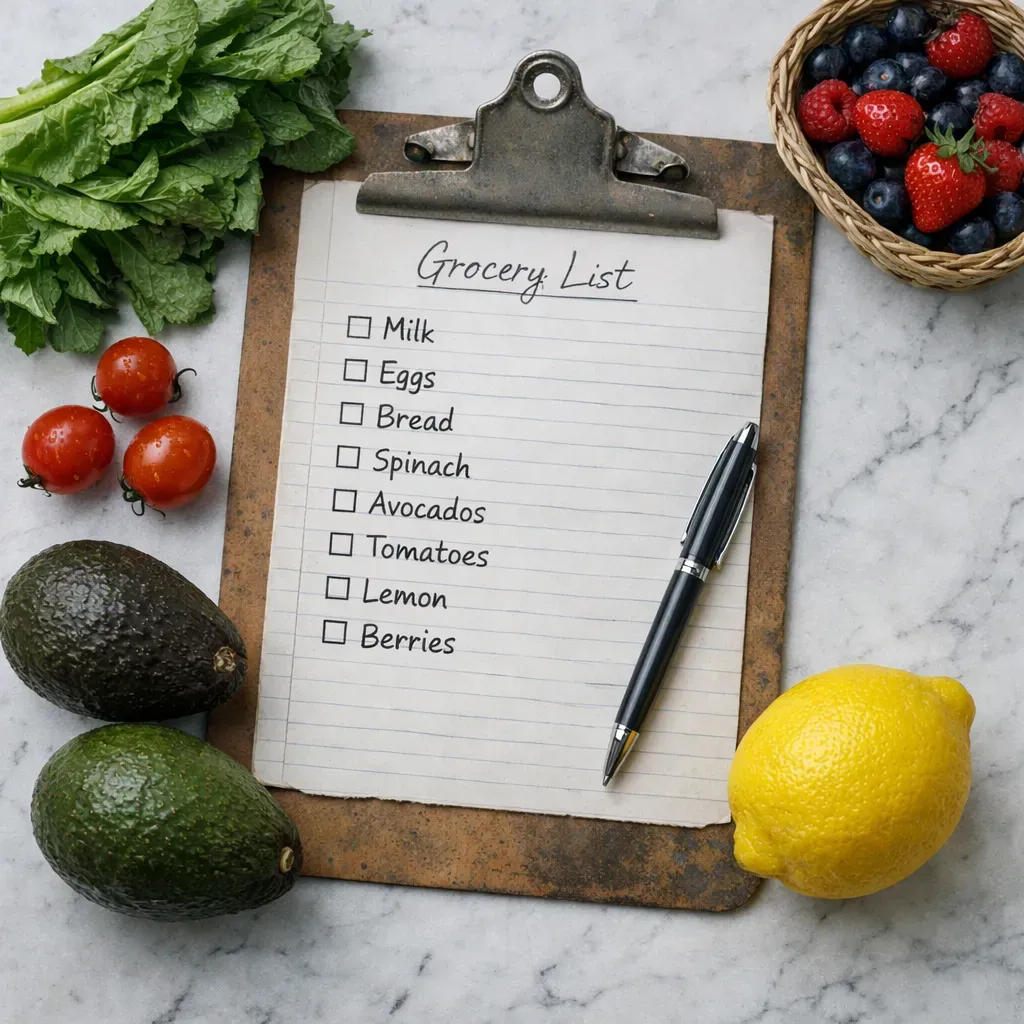
A well-organized grocery list template is a master list of healthy staples organized by category that you can customize each week based on your meal plan and what you already have. Instead of building a shopping list from scratch every week or wandering the store hoping you remember everything, you work from a proven template — checking off what you need and skipping what you don’t.
This guide provides a comprehensive grocery list framework covering every section of the store, plus strategies for customizing it to your family’s dietary needs and preferences. Use this as your foundation for faster shopping, healthier eating, and less food waste.
Key Takeaways
- Use a master template organized by store section (produce, protein, dairy, grains, pantry, frozen, snacks) so you never forget essentials or waste time backtracking
- Identify 20-30 “always buy” staples your family eats weekly, then add meal-plan-specific ingredients on top each week
- Mix fresh, frozen, and canned produce to balance nutrition, cost, and shelf life — frozen vegetables are flash-frozen at peak ripeness and require zero prep
- Refine your template monthly: remove items you never buy, add items you keep forgetting, and adjust quantities based on actual usage
- Shoppers with lists spend 23% less on unplanned items — the template pays for itself immediately
In This Article
- Why a Template Makes Healthy Eating Easier
- The Comprehensive Grocery List Template
- How to Customize This Template for Your Needs
- Organizing Your List by Store Layout
- Using the Template Weekly
- Avoiding Common Grocery Shopping Mistakes
- How This Template Fits Into the Full System
- Making It Sustainable Long-Term
- Beyond Efficiency: The Deeper Value
- Frequently Asked Questions
- Your Template Starts This Week
Why a Template Makes Healthy Eating Easier
Most people don’t fail at healthy eating because they lack willpower. They fail because they don’t have the right ingredients when hunger strikes.
You plan to make a vegetable stir-fry for dinner, but you’re out of soy sauce, so you order pizza instead. You want to pack a healthy lunch, but you didn’t buy lettuce or deli meat, so you hit the drive-through. Your kids ask for a snack, but the only options are crackers and cookies because you forgot to buy fruit.
A grocery list template solves this by ensuring you consistently stock the building blocks of healthy meals. When your pantry, fridge, and freezer contain wholesome staples, healthy choices become the easy default.
You save time shopping. A categorized list organized by store layout means you move through the aisles efficiently, grabbing what you need without backtracking or wandering.
You reduce impulse purchases. Shopping with a specific list keeps you focused. Studies show shoppers with lists spend 23% less on unplanned items than those who shop without one.
You eliminate the mental load. No more standing in the produce section wondering what vegetables you should buy or staring at the meat case deciding what proteins to purchase. Your template tells you.
You ensure nutritional balance. A template that includes produce, proteins, whole grains, and healthy fats naturally leads to more balanced eating than reactive shopping based on cravings.
Most importantly, a template becomes a reusable framework. After several weeks of using the same basic structure, you’ll refine it to perfectly match your family’s needs — removing items you never buy, adding items you always need, adjusting quantities as you learn your patterns.
The Comprehensive Grocery List Template
Here’s a complete template organized by store section. Use this as your starting point, then customize based on what you actually eat and need.
Produce Section
Fresh fruits and vegetables should make up the largest portion of your cart. Aim for a variety of colors — different colors provide different nutrients.
Fresh Vegetables:
- Leafy greens (spinach, kale, romaine, mixed greens)
- Salad vegetables (tomatoes, cucumbers, bell peppers, carrots)
- Cooking vegetables (onions, garlic, broccoli, cauliflower)
- Root vegetables (potatoes, sweet potatoes, carrots, beets)
- Squash (zucchini, yellow squash, butternut squash)
- Fresh herbs (parsley, cilantro, basil)
Fresh Fruits:
- Berries (strawberries, blueberries, raspberries)
- Apples and pears
- Citrus (oranges, lemons, limes, grapefruit)
- Bananas
- Stone fruits (peaches, plums, nectarines — seasonal)
- Grapes
- Melons (seasonal)
- Avocados
Produce Tips: Buy what you’ll actually use within 3-5 days for delicate items like berries and leafy greens. Hardier items like apples, carrots, and cabbage last 1-2 weeks. Mix fresh and frozen to reduce waste.
Protein Section
Lean proteins are essential for healthy eating. Plan for one protein source per dinner plus proteins for breakfast and lunch.
Fresh Proteins:
- Chicken breasts or thighs (boneless or bone-in)
- Ground turkey or chicken
- Lean ground beef (90% lean or higher)
- Pork tenderloin or chops
- Fish fillets (salmon, cod, tilapia, mahi-mahi)
- Shrimp
Deli/Prepared Proteins:
- Deli turkey or chicken (low-sodium)
- Deli ham (low-sodium)
- Rotisserie chicken
- Hard-boiled eggs (many stores sell pre-cooked)
Plant-Based Proteins:
- Tofu (firm or extra-firm)
- Tempeh
- Canned beans (black beans, chickpeas, kidney beans, white beans)
- Dried beans and lentils
Protein Tips: Buy proteins on sale and freeze extras. Portion and label before freezing for easy weeknight use. Canned beans and dried lentils are budget-friendly protein staples with long shelf life.
Dairy and Alternatives
Dairy provides calcium, protein, and healthy fats. Choose low-fat or full-fat based on your dietary preferences — both can be part of healthy eating.
Milk and Milk Alternatives:
- Regular milk (whole, 2%, skim)
- Almond milk, oat milk, or soy milk (unsweetened)
Yogurt:
- Plain Greek yogurt (full-fat or low-fat)
- Regular yogurt (plain, vanilla, or fruit varieties)
- Plant-based yogurt alternatives
Cheese:
- Cheddar or your preferred hard cheese
- Mozzarella (block or shredded)
- Parmesan
- Feta or goat cheese
- Cream cheese
Other Dairy:
- Butter (salted or unsalted)
- Eggs (large)
- Cottage cheese
- Sour cream or Greek yogurt substitute
Dairy Tips: Plain yogurt is more versatile than flavored — add your own fruit and a drizzle of honey. Block cheese costs less and lasts longer than pre-shredded. Plant-based alternatives work well for those avoiding dairy.
Grains and Bread
Whole grains provide fiber, vitamins, and sustained energy. Choose whole grain versions whenever possible.
Bread:
- Whole wheat or whole grain bread
- English muffins or bagels
- Tortillas (whole wheat or corn)
- Pita bread
Rice and Grains:
- Brown rice
- White rice (basmati or jasmine)
- Quinoa
- Farro or barley
- Oats (rolled or steel-cut)
Pasta:
- Whole wheat pasta (penne, spaghetti, or your preferred shapes)
- Regular pasta
- Rice noodles or alternative grain pasta
Grains Tips: Buy grains in bulk to save money. Store in airtight containers to maintain freshness. Mix whole grains with white rice or regular pasta if your family is transitioning to whole grains.
Pantry Staples
A well-stocked pantry makes healthy cooking possible on any night. These shelf-stable items should be replenished regularly.
Cooking Oils and Vinegars:
- Olive oil (extra virgin for dressing, regular for cooking)
- Vegetable oil or avocado oil
- Coconut oil
- Balsamic vinegar
- Red wine vinegar or apple cider vinegar
Canned and Jarred Goods:
- Diced tomatoes
- Tomato sauce and paste
- Chicken or vegetable broth
- Canned tuna or salmon
- Nut butter (peanut butter, almond butter)
- Jam or honey
Baking Essentials:
- All-purpose flour
- Whole wheat flour
- Baking powder and baking soda
- Vanilla extract
- Sugar (white and brown)
Condiments and Sauces:
- Soy sauce or tamari
- Hot sauce or sriracha
- Mustard (Dijon and yellow)
- Mayonnaise
- Ketchup
- Salad dressings (or ingredients to make your own)
Spices and Seasonings:
- Salt and pepper
- Garlic powder and onion powder
- Paprika, cumin, chili powder
- Italian seasoning or oregano and basil
- Cinnamon
- Red pepper flakes
Pantry Tips: Check your pantry before shopping — many items last months and don’t need weekly replacement. Keep a running list on your phone of pantry items as they run low. For a detailed checklist of essential pantry items, see our pantry staples checklist.
Frozen Foods
The freezer is your friend for healthy eating. Frozen produce is flash-frozen at peak ripeness and often more affordable than fresh.
Frozen Vegetables:
- Broccoli florets
- Mixed vegetables (peas, carrots, corn, green beans)
- Spinach
- Cauliflower rice
- Stir-fry vegetable mix
Frozen Fruits:
- Mixed berries
- Strawberries
- Mango chunks
- Pineapple
Frozen Proteins:
- Chicken breasts or thighs
- Ground beef or turkey
- Fish fillets
- Shrimp
- Meatballs (or homemade frozen)
Other Frozen Items:
- Whole grain waffles or pancakes
- Frozen brown rice or quinoa (for quick sides)
- Edamame
Frozen Tips: Frozen vegetables are perfect for weeknight cooking — no washing or chopping required. Stock proteins on sale and freeze them. Frozen fruit is ideal for smoothies and costs less than fresh berries year-round.
Snacks and Convenience Items
Healthy snacks prevent the vending machine or drive-through temptation. Focus on whole foods with protein, fiber, or healthy fats.
Healthy Snacks:
- Nuts (almonds, cashews, walnuts, mixed nuts)
- Seeds (pumpkin seeds, sunflower seeds)
- Dried fruit (raisins, cranberries, apricots — no added sugar)
- Popcorn kernels or air-popped popcorn
- Rice cakes or whole grain crackers
- Hummus
- Energy bars or granola bars (check for low sugar)
- Dark chocolate (70% cacao or higher)
Beverages:
- Coffee or tea
- Sparkling water or seltzer
- 100% fruit juice (in moderation)
Snack Tips: Pre-portion nuts into small containers or bags to control serving sizes. Pair carbohydrate snacks (crackers, fruit) with protein (cheese, nut butter) for sustained energy.
How to Customize This Template for Your Needs
This comprehensive list includes hundreds of items. You won’t buy everything every week — that’s the point of a template. Here’s how to make it work for you.
Step 1: Identify Your Core Staples
Go through the template and highlight 20-30 items your family eats every single week. These are your “always buy” staples — milk, eggs, bread, favorite fruits, proteins you cook regularly, etc.
These items form the foundation of your weekly list. You’ll check off most of them each shopping trip.
Step 2: Add Your Meal Plan Items
Each week, after you’ve planned your meals (see our beginner’s guide to meal planning), go through each recipe and add specific ingredients to your template.
If you’re making chicken stir-fry, you’ll check off chicken, vegetables, soy sauce, and rice. If you’re making taco night, you’ll check off ground beef, tortillas, cheese, lettuce, and tomatoes.
Step 3: Remove What You Don’t Use
After using this template for 3-4 weeks, edit it. Delete items you never buy. Add items you purchase every week that aren’t included. Adjust quantities — if you learned you need two cartons of eggs per week instead of one, note that.
Your customized template should eventually become a perfect reflection of your actual eating patterns.
Step 4: Account for Dietary Needs
Gluten-free: Replace regular bread, pasta, and flour with gluten-free alternatives. Add gluten-free oats, rice crackers, and alternative flours like almond flour.
Dairy-free: Swap dairy milk for plant-based milk. Replace butter with vegan butter or olive oil. Use coconut yogurt or cashew cheese alternatives.
Vegetarian: Increase beans, lentils, tofu, and tempeh. Add meat alternatives like veggie burgers if desired. Focus on protein-rich plant foods.
Vegan: All of the above, plus remove eggs and honey. Add nutritional yeast for cheesy flavor and B12.
Low-carb/Keto: Increase proteins and healthy fats. Focus on non-starchy vegetables. Replace rice and pasta with cauliflower rice and zucchini noodles. Add more avocados, olive oil, nuts, and full-fat dairy.
Paleo: Remove grains, legumes, and dairy. Increase vegetables, fruits, nuts, and seeds. Focus on unprocessed proteins and produce.
The template structure stays the same — you just swap in appropriate alternatives for your dietary approach.
Organizing Your List by Store Layout
To make shopping even faster, organize your customized template to match your primary grocery store’s layout. Most stores follow a similar pattern:
- Produce (often first or around the perimeter)
- Deli and prepared foods
- Meat and seafood
- Dairy and eggs
- Frozen foods
- Center aisles (pantry staples, canned goods, baking, snacks)
- Bread and bakery
By arranging your list in this order, you move through the store efficiently without backtracking. For detailed strategies on organizing by aisle, check our guide on how to organize grocery lists by aisle.
Many grocery apps let you create custom lists sorted by your preferred store. If you prefer paper, rewrite your master template in store order and photocopy it for weekly use.
Using the Template Weekly
Here’s how to put this template to work each week:
Sunday (or your planning day): Review your meal plan for the week. Go through each planned recipe and check off needed ingredients on your template. Add your regular staples (milk, eggs, bread, fruit, etc.). Cross off items you already have in your pantry or fridge.
Shopping day: Take your completed list (digital or printed) to the store. Shop your list in order. Buy what’s checked, skip what’s not.
After shopping: When you get home, do a quick 10-minute inventory — note any staples that are running low so you remember to add them next week.
Next week: Start with your master template again. The template never changes, but what you check off varies based on that week’s meal plan.
This cycle creates a sustainable system. You’re not reinventing the wheel every week — you’re working from a proven framework and customizing it based on current needs.
Avoiding Common Grocery Shopping Mistakes
Even with a great template, certain pitfalls can derail healthy eating and budget goals.
Mistake 1: Shopping when hungry. You’re far more likely to buy junk food and impulse items when your stomach is empty.
Fix: Eat a snack or meal before shopping. If you must shop hungry, stick even more rigidly to your list.
Mistake 2: Not checking what you have first. You buy duplicate items you already own, wasting money and creating pantry clutter.
Fix: Spend 5 minutes before creating your list checking fridge, freezer, and pantry. Cross off items you already have.
Mistake 3: Buying aspirational ingredients. You buy kale and quinoa thinking you’ll eat healthier, but they sit unused and spoil.
Fix: Only buy ingredients you have specific plans to use. Healthy eating requires ingredients you’ll actually cook, not items you wish you’d cook.
Mistake 4: Skipping frozen and canned options. You think fresh is always better, but fresh produce spoils before you use it.
Fix: Embrace frozen vegetables and canned beans. They’re nutritious, affordable, and last months. A mix of fresh, frozen, and canned reduces waste.
Mistake 5: Not buying enough produce. You buy two apples and a head of lettuce for a week, run out by Wednesday, and resort to less healthy options.
Fix: Be generous with produce. Most families need 3-5 servings of vegetables per person per day. That’s a lot of vegetables for a week.
For a deeper dive into grocery shopping pitfalls, read about common grocery shopping mistakes and how to avoid them.
How This Template Fits Into the Full System
A grocery list template doesn’t exist in isolation. It’s one component of an integrated weekly system:
Meal planning comes first. Your grocery list is based on the meals you’ve planned. The beginner’s guide to meal planning shows you how to create a weekly meal plan that drives your shopping list.
Meal prep extends your template. After shopping, smart meal prep means washing vegetables, portioning proteins, and prepping ingredients so healthy meals come together quickly. Our Meal Prep Sunday guide walks through the full prep process.
The complete weekly cycle ties it all together. Planning → shopping → prepping → cooking is a system. Each component makes the others easier. The complete weekly system guide shows how all these pieces work in harmony.
Start with this grocery list template as your foundation. As you build the habit of template-based shopping, layer in meal planning and meal prep for maximum impact.
Making It Sustainable Long-Term
The best grocery list template is one you’ll actually use week after week. Here’s how to make it stick:
Keep it simple. Don’t create a complicated spreadsheet with color-coding and categories within categories. Simple works. A notes app or basic checklist is enough.
Review and refine monthly. Once a month, look at your template. Remove items you haven’t bought in weeks. Add items you keep forgetting. Small adjustments keep it accurate.
Share with family members. If others in your household shop, they should have access to the template and understand the system. Shared notes apps or a whiteboard list work well.
Prepare for flexibility. Your template is a framework, not a rigid rule. If strawberries look terrible but blueberries are beautiful, make the swap. If salmon is on sale but you planned chicken, adjust. Flexibility within structure is the goal.
Celebrate small wins. Notice when you get through the week without emergency store runs. Acknowledge when your shopping trip takes 30 minutes instead of an hour. Recognize when healthy ingredients are readily available when you need them. These small wins reinforce the habit.
Beyond Efficiency: The Deeper Value
A grocery list template saves time and money. But its real value is deeper.
When you walk into the store with a clear plan, you’re not a passive consumer reacting to marketing and impulse. You’re making intentional choices about what your family will eat.
When your template includes the ingredients for Grandma’s Sunday sauce or your family’s traditional holiday dishes, you’re ensuring those recipes stay alive — not because you happened to remember the ingredients, but because they’re built into your system.
When your fridge and pantry contain wholesome staples, you’re setting up an environment where healthy eating is the easy path, not the hard one. Your kids ask for a snack and the answer is fruit and cheese, not because you’re a perfect parent, but because that’s what you bought.
The ten minutes you spend customizing this template and the hour you spend shopping with purpose each week is an investment in hundreds of meals, dozens of family dinners, and the quiet preservation of food traditions that matter.
That’s worth far more than the time saved.
Frequently Asked Questions
How often should I shop using this template?
Most families do one major shopping trip per week, with possibly one quick mid-week run for fresh items like bread, milk, or produce. Weekly shopping is most efficient and reduces the temptation for impulse purchases that happen with frequent small trips.
Should I buy organic produce?
If budget allows, follow the Dirty Dozen and Clean Fifteen guide — buy organic for produce with high pesticide residue (strawberries, spinach, apples, etc.) and conventional for items with low residue (avocados, onions, cabbage, etc.). Eating non-organic produce is far better than not eating produce at all.
How do I handle sale items that aren’t on my list?
If it’s a staple you regularly use and it’s truly on sale, buying extra makes sense — stock up on canned beans, pasta, or proteins you can freeze. If it’s something you rarely buy, it’s not a deal, it’s an impulse purchase. The test: would you buy this at full price next week if you needed it?
What if my store doesn’t have everything on my list?
Have backup options. If they’re out of chicken breasts, chicken thighs work. If salmon looks bad, buy cod. If romaine lettuce is wilted, choose spinach. Your meal plan stays the same, ingredients can flex.
Can I use grocery delivery or pickup with this template?
Absolutely. This template works perfectly with online ordering. Copy and paste your list into the store’s app or website, or manually add items to your digital cart. Many shoppers find pickup or delivery reduces impulse purchases since you can’t wander the aisles.
Your Template Starts This Week
Don’t wait for the perfect moment to start using a template. Take the comprehensive list in this guide and customize it right now.
Delete items you’ll never buy. Highlight items you purchase every week. Organize it by your store’s layout if you want. Save it in a notes app or print several copies.
This week, use it. Check off what you need based on your meal plan and regular staples. Shop your list. Notice how much faster and more focused the trip becomes.
Next week, use it again and refine it based on what worked and what didn’t. After a month, you’ll have a personalized template that perfectly matches your family’s eating patterns.
The template isn’t about perfection. It’s about creating a simple, reusable system that makes healthy eating easier week after week.
Tavola helps busy parents spend less time planning and more time around the table — because the recipes you make matter, and having the right ingredients makes them possible.