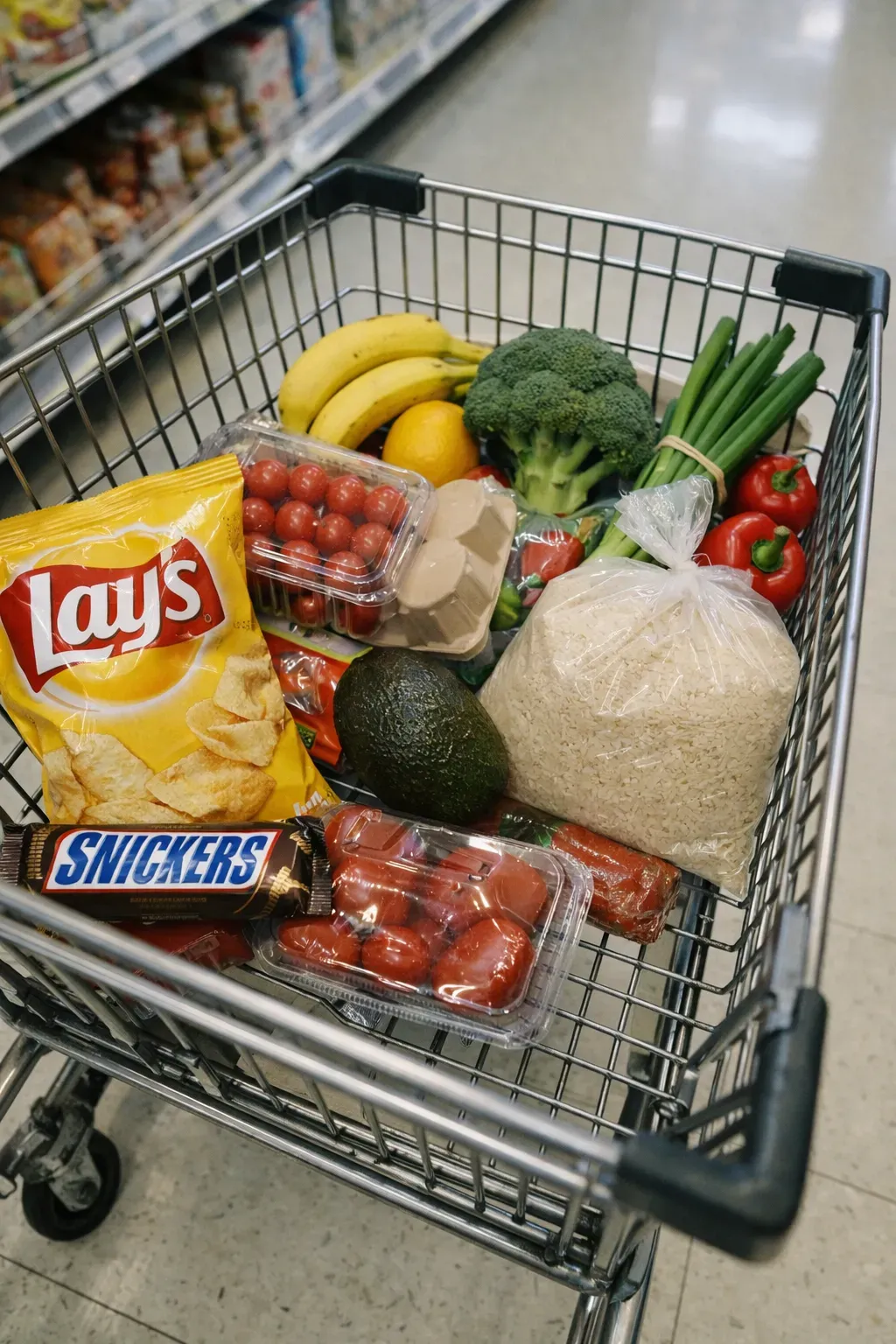
The average family wastes $1,800 annually on avoidable grocery shopping mistakes. The most costly errors include shopping without a list (leading to 40-60% overspending), shopping while hungry (increasing impulse buys by 64%), ignoring unit prices (overpaying by 30-50% on identical products), and buying pre-cut produce (paying 2-3x more for convenience).
These aren’t small inefficiencies. They’re budget killers that add up to thousands of dollars every year. The good news? Every single mistake has a simple fix.
Key Takeaways
- Shopping without a list causes 40-60% overspending — always build a list from your meal plan before leaving home
- Check unit prices (price per ounce/pound), not package prices — “family size” packages sometimes cost more per unit than regular sizes
- Switch to store brands on staples like canned goods, pasta, and frozen vegetables to save 20-40% with no quality difference
- Buy whole produce instead of pre-cut to save 2-4x, and prep it yourself on Sunday for the same weeknight convenience
- A 5-minute pre-shopping routine (check pantry, review sales, finalize list, eat a snack) can save hundreds per month
In This Article
- 1. Shopping Without a List
- 2. Shopping While Hungry
- 3. Ignoring Unit Prices
- 4. Not Checking Your Pantry First
- 5. Buying Pre-Cut Produce
- 6. Not Using Store Loyalty Programs
- 7. Impulse Buying at Checkout
- 8. Not Buying Store Brands
- 9. Overbuying Perishables
- 10. Not Planning Meals Around Sales
- How Much Can You Actually Save?
- Your 5-Minute Pre-Shopping Routine
- Start With Three Changes
- FAQ: Avoiding Grocery Shopping Mistakes
- Make Your Next Shopping Trip Your Best One
1. Shopping Without a List
The Mistake: Walking into the store without a written plan of exactly what you need.
Why It’s Costly: Studies show shoppers without lists spend 40-60% more than planned. You wander aisles grabbing whatever looks appealing, forgetting half of what you actually need, and ending up with random ingredients that never become complete meals.
The Fix: Create a detailed shopping list organized by store section before leaving home. Base it on a weekly meal plan, not random ideas. Check your pantry first to avoid buying duplicates.
For efficient list organization that speeds up shopping and reduces impulse buys, see our guide on how to organize your grocery list by aisle.
2. Shopping While Hungry
The Mistake: Going to the grocery store on an empty stomach.
Why It’s Costly: Research shows hungry shoppers buy 64% more high-calorie, impulse items than those who shop after eating. Everything looks appealing when you’re starving, especially expensive convenience foods and snacks you didn’t plan to buy.
The Fix: Eat a meal or substantial snack 30-60 minutes before grocery shopping. If you must shop hungry, bring water and a granola bar to curb cravings while you shop.
3. Ignoring Unit Prices
The Mistake: Comparing total prices instead of price per unit (ounce, pound, count).
Why It’s Costly: Bigger packages aren’t always better deals. That “family size” box might cost more per ounce than the regular size. Without checking unit prices, you overpay by 30-50% on identical products simply packaged differently.
The Fix: Check the unit price label on the shelf (usually small text below the main price). Compare price per ounce or pound across brands and sizes. Your phone calculator can verify deals quickly.
4. Not Checking Your Pantry First
The Mistake: Shopping without inventorying what you already have at home.
Why It’s Costly: You end up buying duplicates of items you already own, wasting money while perfectly good food sits unused in your pantry. Meanwhile, items you actually need get forgotten.
The Fix: Before creating your shopping list, spend 5 minutes checking your pantry, refrigerator, and freezer. Note what you have, what needs using soon, and what’s actually running low. Plan meals around ingredients you already own.
Build your pantry strategically with our pantry staples checklist to always have meal-making essentials on hand.
5. Buying Pre-Cut Produce
The Mistake: Purchasing pre-chopped vegetables, pre-washed lettuce, and pre-sliced fruits for convenience.
Why It’s Costly: Pre-cut produce costs 2-4 times more than whole produce. A bag of pre-cut broccoli florets might cost $4.99 while a whole broccoli head costs $1.99. You’re paying $3 for 60 seconds of knife work.
The Fix: Buy whole produce and spend 10-15 minutes prepping it yourself on Sunday. Wash lettuce, chop vegetables, and store them in containers. You get the same convenience throughout the week at a fraction of the cost.
If time is genuinely tight, prioritize which items are worth pre-cutting. Pre-washed salad greens might be worth it if it means you’ll actually eat salads. Pre-cut butternut squash? Probably not worth the premium.
6. Not Using Store Loyalty Programs
The Mistake: Skipping store loyalty cards and digital coupons because they seem like too much hassle.
Why It’s Costly: Store loyalty programs offer 10-30% savings on regular purchases through member-only prices, digital coupons, and personalized deals. That’s $15-$40+ savings per $150 shopping trip.
The Fix: Sign up for loyalty programs at stores you regularly visit. Download their apps and spend 2 minutes before shopping to “clip” digital coupons. Many apps automatically apply deals at checkout.
Focus on programs for your primary 1-2 stores rather than trying to maximize every program everywhere.
7. Impulse Buying at Checkout
The Mistake: Adding candy, magazines, drinks, and other impulse items while waiting in line.
Why It’s Costly: Checkout lanes are strategically designed for impulse purchases. Those “small” $2-$5 items add $10-$20 to your cart without providing real value.
The Fix: Use self-checkout lanes that typically have fewer impulse items. If you must use regular checkout, review your list or phone while waiting. Make it a rule: if it’s not on your list, it doesn’t go in your cart.
8. Not Buying Store Brands
The Mistake: Automatically reaching for name brands out of habit or perceived quality differences.
Why It’s Costly: Store brands cost 20-40% less than name brands, often for identical products made in the same facilities. Over a year, switching to store brands on just 10 staple items saves $400-$800.
The Fix: Try store brand versions of:
- Canned goods
- Pasta and rice
- Flour and sugar
- Frozen vegetables
- Milk and dairy
- Cleaning supplies
- Paper products
Compare ingredient lists. If they’re identical (they usually are), buy the cheaper option. Only stick with name brands for items where you genuinely taste a difference.
9. Overbuying Perishables
The Mistake: Buying more fresh produce, meat, and dairy than you’ll realistically use before it spoils.
Why It’s Costly: Americans throw away 30-40% of their food supply, with most waste being perishables that spoiled before use. If you spend $150 weekly, you’re potentially throwing $45-$60 in the trash.
The Fix: Plan your meals before shopping so you buy exactly what you need. Be realistic about how many times you’ll actually cook. If you realistically cook 4 nights weekly, don’t buy ingredients for 7 dinners.
Freeze proteins immediately if you won’t use them within 2-3 days. Buy hardy vegetables (carrots, cabbage, potatoes) that last 1-2 weeks rather than delicate greens that wilt in days.
For a complete approach to reducing food waste through planning, check out our guide on meal planning for a family of 4 on a budget.
10. Not Planning Meals Around Sales
The Mistake: Planning your weekly menu first, then shopping wherever for those specific ingredients regardless of price.
Why It’s Costly: You miss 30-50% savings by not adapting your meals to what’s on sale. When chicken is $2/lb instead of $5/lb, that’s the week to make chicken dishes.
The Fix: Reverse your process:
- Check weekly store circulars and sales
- Plan meals around discounted proteins and produce
- Build your shopping list based on that plan
This flexibility requires a repertoire of go-to recipes rather than rigid weekly menus. Keep 10-15 family favorites that work with different proteins and vegetables.
How Much Can You Actually Save?
Let’s calculate the impact of fixing these mistakes:
| Mistake | Weekly Savings | Annual Savings |
|---|---|---|
| Shopping without a list | $25-$40 | $1,300-$2,080 |
| Shopping hungry | $15-$25 | $780-$1,300 |
| Ignoring unit prices | $10-$15 | $520-$780 |
| Buying pre-cut produce | $8-$12 | $416-$624 |
| No loyalty programs | $12-$20 | $624-$1,040 |
| Checkout impulse buys | $8-$15 | $416-$780 |
| Not buying store brands | $20-$30 | $1,040-$1,560 |
| Overbuying perishables | $15-$25 | $780-$1,300 |
| Not shopping sales | $20-$30 | $1,040-$1,560 |
Total potential annual savings: $6,916-$11,024
Even fixing half these mistakes saves $3,000-$5,000 annually.
Your 5-Minute Pre-Shopping Routine
Make these habits automatic:
- Check pantry and fridge (2 minutes): Know what you have and what needs using
- Review sales circular (1 minute): Note good deals on proteins and produce
- Finalize shopping list (1 minute): Organize by store section
- Eat a snack (1 minute): Avoid shopping hungry
Those 5 minutes save you hundreds per month.
Start With Three Changes
Don’t try fixing everything at once. Pick your three biggest money-wasters and focus on those:
Quick wins: Always shop with a list, never shop hungry, use store loyalty programs
Medium effort: Buy store brands, check unit prices, avoid pre-cut produce
Requires planning: Shop sales, reduce perishable waste, skip impulse checkout items
Once three become habits, add three more.
FAQ: Avoiding Grocery Shopping Mistakes
What is the biggest mistake people make grocery shopping?
Shopping without a list is the costliest mistake, leading to 40-60% overspending and significant food waste. Without a plan, shoppers buy random ingredients that never become complete meals, forget items they actually need, and grab impulse purchases they don’t need.
How can I stop overspending at the grocery store?
Create a detailed shopping list based on a meal plan, eat before shopping, stick to your list ruthlessly, buy store brands, check unit prices, and avoid the checkout lane impulse zone. These strategies combined can cut grocery spending by 30-50%. Learn more strategies in our article about cutting your grocery bill with meal planning.
Is it really cheaper to buy whole produce instead of pre-cut?
Yes. Pre-cut produce costs 200-400% more than whole produce. A container of pre-cut watermelon might cost $7 while a whole watermelon costs $5 and yields 3x more fruit. Unless you genuinely won’t eat produce that requires cutting, whole is always more economical.
Should I always buy the biggest size to save money?
Not necessarily. Check unit prices carefully. Sometimes “family size” packages actually cost more per ounce than regular sizes. Only buy bulk quantities of non-perishables you’ll definitely use, otherwise you’re wasting money when items spoil or go stale.
How much does shopping without a meal plan cost me?
Studies show families without meal plans spend $2,000-$4,000 more annually on groceries and takeout compared to families who plan. Without a plan, you buy random items, waste food, and resort to expensive last-minute takeout. Check our healthy grocery list template to start planning better.
Make Your Next Shopping Trip Your Best One
You don’t need extreme couponing or hours of planning to save significantly. Just avoiding these 10 common mistakes transforms your grocery budget.
Start with one shopping trip. Make a list, eat first, check unit prices. Notice the difference.
Tavola helps busy parents spend less time planning and more time around the table — because every family recipe tells a story worth preserving, and smart shopping means more money for making memories.