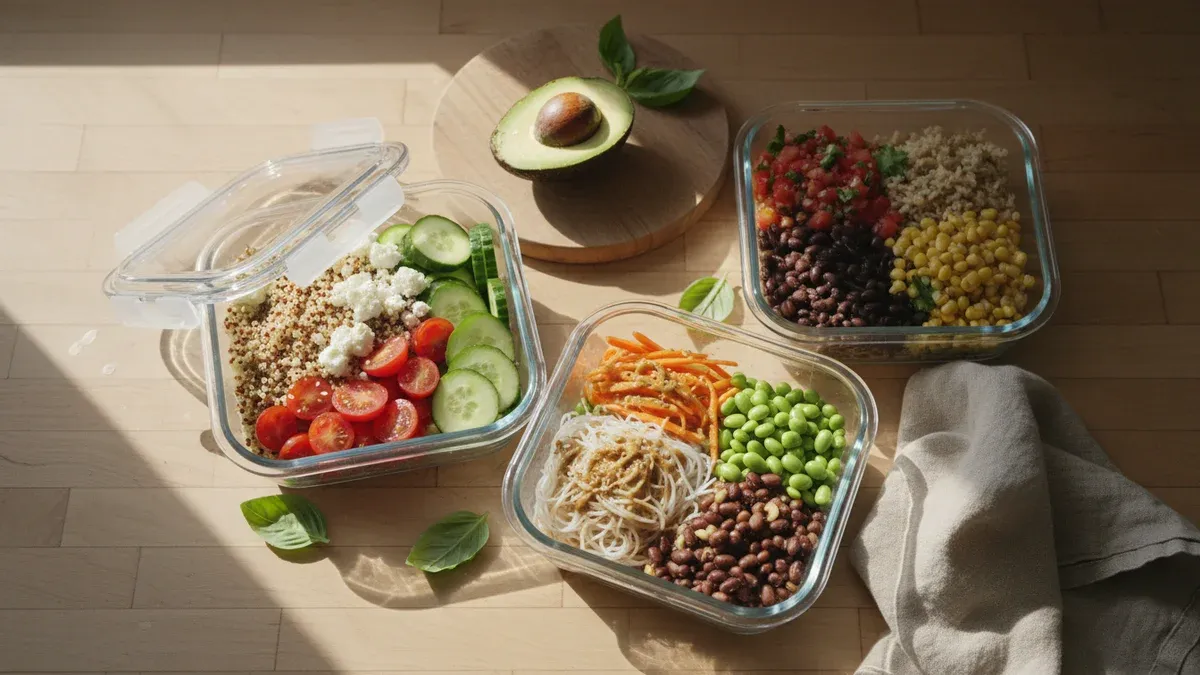
Planning healthy lunches for the week comes down to three things: prepping versatile components on Sunday, building meals around a balanced plate (protein + fiber + healthy fat), and keeping at least two “no-cook” options in rotation for the days you can’t be bothered. The biggest mistake people make with lunch planning isn’t choosing the wrong recipes — it’s not planning lunch at all.
Most meal plans focus on dinner. Lunch gets treated as an afterthought, which means you end up eating random snacks at your desk, spending $15 on a mediocre salad, or skipping it entirely and crashing at 3 PM.
Key Takeaways
- Plan lunch separately from dinner — it has different constraints (portability, no-reheat options, speed)
- Use the balanced plate formula: 1/3 protein, 1/3 complex carbs or fiber, 1/3 vegetables, plus a healthy fat
- Prep 2-3 lunch components on Sunday (a protein, a grain, and cut vegetables) and mix-and-match all week
- Keep at least two “emergency lunches” that require zero prep: canned tuna + crackers, hummus + vegetables, or deli meat wraps
- Repurposing dinner leftovers as next-day lunch cuts planning effort in half
In This Article
- Why Is Lunch So Hard to Plan?
- What Makes a Good Weekday Lunch?
- 7 Healthy Lunch Ideas for Every Day of the Week
- How to Batch-Prep Lunches Without Sunday Burnout
- The Dinner-to-Lunch Pipeline
- How to Keep Packed Lunches Fresh and Safe
- Lunch Planning for Different Lifestyles
- FAQ: Healthy Weekly Lunches
- Make Lunch the Easiest Meal of Your Day
Why Is Lunch So Hard to Plan?
Lunch has constraints that dinner doesn’t:
Portability. Most lunches need to travel — to an office, a school, or at least out of the kitchen to wherever you’re working from home.
Time pressure. You usually have 15-30 minutes to eat, not the leisurely hour you might spend on dinner.
No-cook limitations. Many workplaces have a microwave at best. Some have nothing. Your lunch needs to work within those constraints.
Decision fatigue. By noon, you’ve already made dozens of decisions. Choosing what to eat feels like one too many — which is why so many people default to takeout or skipping lunch entirely.
Nobody plans it. Dinner gets all the meal planning attention. Lunch is left to fend for itself, which usually means it doesn’t happen well.
The fix isn’t willpower. It’s building a simple system that removes decisions from the equation.
What Makes a Good Weekday Lunch?
A lunch that keeps you full and focused until dinner follows a simple formula:
The Balanced Plate Framework
| Component | Portion | Examples | Why It Matters |
|---|---|---|---|
| Protein | ~1/3 of plate | Chicken, tuna, eggs, chickpeas, tofu | Sustains energy, prevents 3 PM crash |
| Complex carbs / fiber | ~1/3 of plate | Brown rice, quinoa, whole wheat bread, sweet potato | Steady blood sugar, keeps you full |
| Vegetables | ~1/3 of plate | Leafy greens, roasted vegetables, raw veggies | Fiber, nutrients, volume without excess calories |
| Healthy fat | Small addition | Avocado, olive oil, nuts, cheese | Satiety, flavor, nutrient absorption |
You don’t need to measure this precisely. Just glance at your container: roughly equal parts protein, carbs, and vegetables, plus a source of fat. That’s it.
What to Avoid
- All-carb lunches (pasta with bread, plain rice bowl) — you’ll crash by 2 PM
- Tiny “diet” lunches (a sad side salad) — you’ll be starving and snacking by 3 PM
- Meals that need perfect reheating — fish and certain pastas don’t survive a microwave well
7 Healthy Lunch Ideas for Every Day of the Week
These are designed to be prepped in batches, travel well, and actually taste good on day 3.
1. Mediterranean Grain Bowl
Components: Quinoa, grilled chicken, cucumber, cherry tomatoes, kalamata olives, feta, lemon-herb vinaigrette
Why it works: Tastes better cold than hot. The vinaigrette soaks into the quinoa over time, which actually improves the flavor. Keeps well for 4-5 days.
Prep tip: Make a double batch of quinoa — use half for this, half for another lunch later in the week.
2. Chicken and Black Bean Burrito Bowl
Components: Brown rice, seasoned chicken, black beans, corn, salsa, avocado (add day-of), Greek yogurt instead of sour cream
Why it works: Hearty enough to keep you full, travels well in a container, and the beans add fiber that most lunches lack. Swap chicken for ground turkey if you prefer.
3. Asian-Inspired Noodle Salad
Components: Soba noodles or rice noodles, shredded chicken or tofu, shredded carrots, edamame, cabbage, peanut-sesame dressing
Why it works: Served cold, so no microwave needed. The peanut dressing coats the noodles and prevents them from drying out. Add crushed peanuts day-of for crunch.
4. Turkey and Hummus Wrap
Components: Whole wheat tortilla, sliced turkey, hummus, spinach, roasted red peppers, cucumber
Why it works: Zero cooking required. Assemble in 3 minutes the night before or morning-of. The hummus acts as both spread and protein boost.
5. Mason Jar Salad
Components: Dressing on the bottom, then chickpeas, then hearty vegetables (bell peppers, carrots, cucumber), then grains, then greens on top
Why it works: The layering order keeps greens crisp until you’re ready to eat. Shake to dress. Lasts 4-5 days in the fridge without getting soggy.
6. Egg and Vegetable Muffin Cups
Components: Whisked eggs baked in a muffin tin with spinach, bell peppers, onions, and cheese
Why it works: Make 12 on Sunday, eat 2-3 per lunch with whole grain toast or fruit. Grab-and-go, reheats in 30 seconds, and you can vary the fillings weekly. Pairs well with a simple side salad.
7. Upgraded Tuna Salad
Components: Canned tuna, white beans, cherry tomatoes, red onion, lemon juice, olive oil, fresh herbs
Why it works: No cooking whatsoever. The white beans add protein and fiber that regular tuna salad lacks. Serve over greens, in a wrap, or with whole grain crackers.
For more ideas on keeping prepped meals interesting, check out our guide to meal prep without getting bored.
How to Batch-Prep Lunches Without Sunday Burnout
You don’t need to spend 3 hours on Sunday making elaborate lunches. The trick is prepping components, not complete meals.
The 45-Minute Sunday Prep
Minutes 1-10: Start a pot of grains (rice, quinoa, or pasta). While it cooks, move on.
Minutes 10-25: Cook your protein. Grill or bake chicken breasts, hard-boil eggs, or brown ground turkey. Season simply — you’ll add sauces later.
Minutes 25-40: Chop vegetables for the week. Wash greens. Slice cucumbers, bell peppers, and tomatoes. Store in separate containers with a paper towel to absorb moisture.
Minutes 40-45: Portion into containers or store components separately for mix-and-match assembly.
That’s it. Under an hour, and you have lunch components for 4-5 days.
The Component Method vs. Complete Meals
| Approach | Pros | Cons |
|---|---|---|
| Complete meals (fully assembled in containers) | Grab-and-go, zero morning effort | Gets boring fast, less flexible |
| Components (protein, grain, veg stored separately) | Mix-and-match variety, add fresh items daily | Requires 3-5 minutes of assembly |
The component method wins for most people because it prevents the “I can’t eat this same thing again” feeling that kills lunch prep habits by Wednesday. It’s the same strategy that works for avoiding meal prep boredom — prep the building blocks, vary the combinations.
Prep Schedule for Non-Sunday People
Not everyone wants to prep on Sunday. Alternatives:
- Wednesday + Sunday split: Prep 3 days of lunches each time
- Nightly 10-minute prep: Make tomorrow’s lunch while cleaning up dinner
- Monday batch cook: Use fresh motivation at the start of the week
The best prep schedule is the one you’ll actually follow.
The Dinner-to-Lunch Pipeline
The most underrated lunch strategy: cook extra dinner and repurpose it the next day.
How to Make Leftovers Feel Like a New Meal
| Dinner | Next-Day Lunch Transformation |
|---|---|
| Grilled chicken + roasted vegetables | Chicken grain bowl with fresh greens and different dressing |
| Taco night (ground beef, salsa, toppings) | Burrito bowl over rice with added beans |
| Stir-fry with rice | Cold noodle salad with the same vegetables and a peanut sauce |
| Pasta with meat sauce | Pasta salad with added fresh vegetables and Italian dressing |
| Roasted salmon | Salmon salad over greens with avocado |
The key is changing the format and adding one fresh element. Yesterday’s dinner in a new context doesn’t feel like leftovers — it feels like lunch.
The “Cook Once, Eat Twice” Rule
When making dinner, cook 50% more protein than you need. The extra goes directly into tomorrow’s lunch container before anyone takes seconds. This single habit eliminates 3-4 lunches per week from your planning.
For more on building efficient weekly systems, see our complete weekly plan, shop, prep, cook guide.
How to Keep Packed Lunches Fresh and Safe
Nothing kills the lunch prep habit faster than opening a container of soggy, questionable food.
Storage Tips That Actually Matter
- Keep dressings separate until you’re ready to eat. A small leak-proof container or jar works perfectly.
- Layer strategically in mason jars: wet ingredients on the bottom, dry and delicate on top.
- Use airtight containers. Glass containers keep food fresher longer than plastic and don’t absorb odors.
- Add a paper towel to containers with greens — it absorbs excess moisture and prevents wilting.
- Freeze smoothie ingredients in individual bags for grab-and-go blending.
How Long Do Prepped Lunches Last?
| Food | Fridge Life | Notes |
|---|---|---|
| Cooked chicken | 3-4 days | Slice or shred for faster cooling |
| Cooked grains | 4-5 days | Fluff with a fork before storing |
| Cut raw vegetables | 4-5 days | Store with paper towel |
| Hard-boiled eggs | 5 days | Peel right before eating |
| Assembled grain bowls | 3-4 days | Keep dressing separate |
| Wraps and sandwiches | 1-2 days | Best assembled morning-of |
Rule of thumb: Prep components for 4-5 days maximum. If you want lunches for the full work week, prep twice (Sunday and Wednesday) or use the dinner-to-lunch pipeline for days 4-5.
Lunch Planning for Different Lifestyles
Office Workers (With Microwave)
You have the most flexibility. Soups, grain bowls, pasta dishes, and anything that reheats well is fair game. Invest in a quality insulated lunch bag and leak-proof containers.
Office Workers (No Microwave)
Focus on cold lunches: grain salads, wraps, mason jar salads, and cold noodle dishes. These are actually easier to prep because you don’t need to worry about reheating quality.
Work-From-Home
Your biggest risk isn’t lack of options — it’s grazing instead of eating a real lunch. Pre-portion your lunch in a container even though your kitchen is right there. This prevents the “handful of crackers and cheese at 2 PM” pattern.
Parents Packing for Kids + Themselves
Make the same base components work for both. Kids get a simpler version (plain chicken, rice, and fruit), you get the adult version (chicken grain bowl with spicy dressing and greens). Same prep, two lunches. Check out our tips on planning meals for picky eaters for more on feeding the whole family from one prep session.
FAQ: Healthy Weekly Lunches
What is the healthiest lunch to eat every day?
There’s no single “healthiest” lunch, but the most consistently nutritious option is a grain bowl with lean protein (chicken, fish, or legumes), a variety of colorful vegetables, a whole grain base, and a healthy fat like avocado or olive oil. Rotate your protein and vegetables weekly to cover a broad spectrum of nutrients.
How do I stop spending so much on lunch?
The average American spends $11-15 per bought lunch versus $3-5 for a homemade one. That’s $1,500-2,500 per year in savings by packing lunch. Start by packing lunch just 3 days per week — you’ll save $1,000+ annually without feeling deprived of the occasional restaurant lunch.
How far in advance can I meal prep lunches?
Most prepped lunch components last 4-5 days in the fridge. Assembled meals with dressing or sauces last 3-4 days. For a full 5-day work week, either prep twice (Sunday + Wednesday) or use the dinner-to-lunch pipeline for the second half of the week. Some items like egg muffin cups and grain salads hold up well for the full 5 days.
What are good lunches that don’t need reheating?
Cold grain bowls, wraps, mason jar salads, cold noodle salads, tuna or chicken salad with crackers, hummus and vegetable plates, and upgraded sandwiches on whole grain bread. Cold lunches are often easier to prep and transport than hot ones.
How do I meal plan lunch and dinner without it taking forever?
Use the dinner-to-lunch pipeline: cook extra dinner protein and repurpose it for the next day’s lunch in a different format. This means you’re really only planning dinner — lunch follows automatically. For the remaining days, keep 2-3 simple no-cook lunch templates (wraps, salads, tuna + crackers) that don’t require separate planning.
Make Lunch the Easiest Meal of Your Day
Start this week with one change: pick two lunches from the list above and prep the components on Sunday. That’s 45 minutes of work for two days of lunches you’ll actually enjoy eating.
Next week, add a third. Use the dinner-to-lunch pipeline to cover the remaining days.
Within a month, you’ll have a lunch system that runs on autopilot — no daily decisions, no $15 salads, no 3 PM energy crashes.
Tavola helps busy parents spend less time planning and more time around the table — because every family recipe tells a story worth preserving.