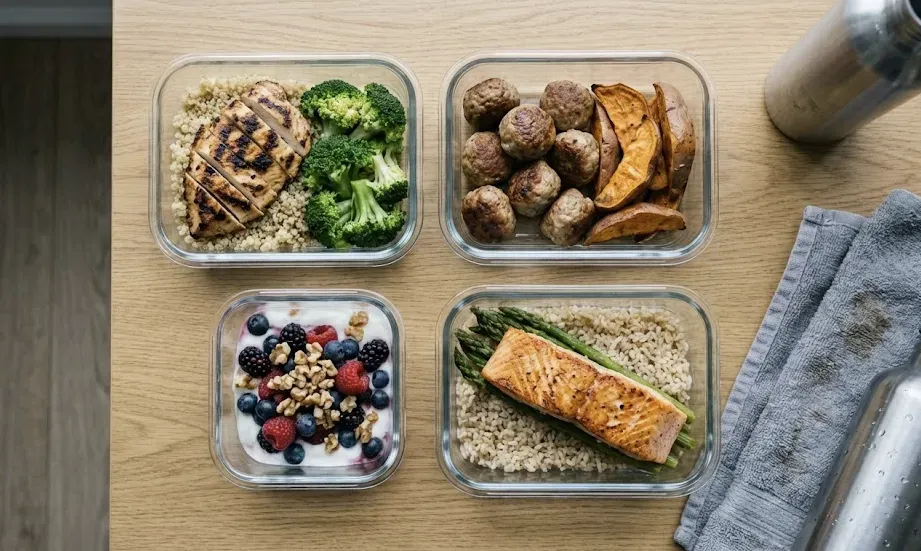
High-protein meal prep recipes should contain 25-40 grams of protein per serving, use lean proteins that store well (chicken, turkey, fish, tofu, eggs), and pair with complex carbs and vegetables for balanced nutrition. The recipes below meet these criteria and stay fresh for 4-5 days when stored properly.
For muscle building, aim for 1.6-2.2 grams of protein per kilogram of body weight daily, split across 4-5 meals. For weight loss, target 1.2-1.6 g/kg body weight to preserve muscle while in a calorie deficit.
Key Takeaways
- Target 30-40g protein per main meal and 20-30g at breakfast — distribute protein across 4-5 meals rather than loading it into one or two
- Prep Sunday for Monday-Wednesday meals, then freeze Thursday-Friday meals and thaw Wednesday night to keep proteins fresh
- Prevent dry reheated chicken by cooking to exactly 165 degrees F (not beyond), storing with a tablespoon of broth, and microwaving at 50% power
- Start with just 2-3 recipes (e.g., egg muffins + teriyaki chicken bowls) and add one new recipe each week to build a sustainable rotation
- Use zero-calorie flavor boosters (hot sauce, mustard, lemon juice, fresh herbs, spice blends) to keep high-protein meals from getting bland
In This Article
- Understanding Protein Needs
- High-Protein Breakfast Recipes
- High-Protein Lunch Recipes
- High-Protein Dinner Recipes
- High-Protein Snack Options
- Meal Prep Tips for High-Protein Success
- Protein Supplement Considerations
- Sample High-Protein Meal Prep Week
- Common High-Protein Meal Prep Questions
- Start With Simple, High-Impact Recipes
Understanding Protein Needs
Before diving into recipes, understand how much protein you actually need.
Protein Requirements by Goal
Muscle building (bulking):
- Target: 1.6-2.2 g protein per kg body weight
- Example: 180 lb (82 kg) person = 131-180 g protein daily
- Distribution: 25-40 g per meal across 4-5 meals
Weight loss (cutting):
- Target: 1.2-1.6 g protein per kg body weight
- Example: 180 lb (82 kg) person = 98-131 g protein daily
- Higher protein preserves muscle mass during calorie deficit
General fitness/maintenance:
- Target: 1.0-1.2 g protein per kg body weight
- Example: 180 lb (82 kg) person = 82-98 g protein daily
Sedentary/general health:
- Target: 0.8 g protein per kg body weight
- Example: 180 lb (82 kg) person = 66 g protein daily
Protein Per Serving Targets
For meal prep, target these protein amounts per meal:
Main meals (lunch/dinner): 30-40 g protein Breakfast: 20-30 g protein Snacks: 10-20 g protein
This distribution helps with muscle protein synthesis throughout the day rather than loading all protein into one or two meals.
Best Proteins for Meal Prep
High-protein, low-fat:
- Chicken breast: 31 g protein per 4 oz
- Turkey breast: 34 g protein per 4 oz
- White fish (cod, tilapia): 28 g protein per 4 oz
- Shrimp: 24 g protein per 4 oz
- Egg whites: 18 g protein per cup
Moderate fat, high protein:
- Salmon: 25 g protein per 4 oz
- Ground turkey (93% lean): 28 g protein per 4 oz
- Eggs (whole): 12 g protein per 2 eggs
- Greek yogurt (plain, nonfat): 17 g protein per cup
- Cottage cheese (low-fat): 24 g protein per cup
Plant-based high protein:
- Tofu (firm): 20 g protein per cup
- Tempeh: 31 g protein per cup
- Lentils (cooked): 18 g protein per cup
- Black beans (cooked): 15 g protein per cup
- Edamame: 17 g protein per cup
High-Protein Breakfast Recipes
These breakfast options prep well and deliver 25-35 g protein to start your day.
1. Egg White and Veggie Muffins
Protein per serving: 28 g
Ingredients:
- 16 egg whites (2 cups liquid egg whites)
- 1 cup chopped spinach
- 1/2 cup diced bell peppers
- 1/2 cup diced onion
- 1 cup shredded low-fat cheese
- Salt, pepper, garlic powder
Prep:
- Preheat oven to 350°F
- Mix all ingredients in a large bowl
- Pour into greased muffin tin (makes 12 muffins)
- Bake 20-25 minutes until set
- Cool and store in containers (3 muffins per serving)
Prep time: 10 min | Cook time: 25 min | Storage: 5 days refrigerated
Serving suggestion: Pair with whole-grain toast for carbs, or eat as-is for low-carb.
2. Greek Yogurt Protein Bowls
Protein per serving: 32 g
Ingredients (per serving):
- 1 cup plain nonfat Greek yogurt (17 g protein)
- 1 scoop vanilla protein powder (15 g protein, varies by brand)
- 1/2 cup berries
- 2 tbsp granola
- 1 tbsp chia seeds
Prep:
- Portion Greek yogurt into containers
- Add protein powder and mix (do this fresh, not in advance)
- Top with berries
- Store granola and chia seeds separately, add just before eating
Prep time: 5 min per serving | Storage: 4 days refrigerated
Note: Mix protein powder in fresh each morning to maintain texture.
3. Overnight Protein Oats
Protein per serving: 26 g
Ingredients (per serving):
- 1/2 cup old-fashioned oats
- 1 scoop vanilla or chocolate protein powder (20 g protein)
- 1 cup unsweetened almond milk
- 1 tbsp peanut butter (4 g protein)
- 1 tsp honey
- Pinch of cinnamon
Prep:
- Mix oats, protein powder, almond milk, and cinnamon in container
- Refrigerate overnight
- In the morning, stir in peanut butter and honey
Prep time: 5 min per serving | Storage: 3 days refrigerated
Variations: Add banana slices, berries, or dark chocolate chips for variety.
High-Protein Lunch Recipes
These lunches pack 30-40 g protein and stay fresh all week.
4. Teriyaki Chicken and Broccoli Bowls
Protein per serving: 38 g
Ingredients (4 servings):
- 1.5 lbs chicken breast (38 g protein per serving)
- 4 cups broccoli florets
- 2 cups cooked brown rice
- 1/2 cup teriyaki sauce (low-sodium)
- 1 tbsp sesame oil
- Sesame seeds for garnish
Prep:
- Cut chicken into bite-sized pieces
- Cook in sesame oil until done, about 8-10 minutes
- Steam broccoli until tender-crisp, 5 minutes
- Portion rice, chicken, and broccoli into containers
- Drizzle teriyaki sauce over chicken
- Top with sesame seeds
Prep time: 20 min | Storage: 5 days refrigerated
Macros per serving: 38 g protein, 35 g carbs, 8 g fat (approx. 370 calories)
5. Turkey and Quinoa Power Bowls
Protein per serving: 42 g
Ingredients (4 servings):
- 1.5 lbs lean ground turkey (40 g protein per serving)
- 2 cups cooked quinoa
- 2 cups chopped kale
- 1 cup cherry tomatoes, halved
- 1/2 cup feta cheese
- Lemon-herb dressing
Prep:
- Brown ground turkey with garlic and Italian seasoning
- Massage kale with olive oil to soften
- Cook quinoa according to package directions
- Portion quinoa as base, add turkey, kale, tomatoes, and feta
- Store dressing separately, add before eating
Prep time: 25 min | Storage: 4 days refrigerated
Macros per serving: 42 g protein, 28 g carbs, 12 g fat (approx. 390 calories)
6. Salmon and Sweet Potato Meal Prep
Protein per serving: 34 g
Ingredients (4 servings):
- 1.5 lbs salmon fillets (34 g protein per serving)
- 2 large sweet potatoes, cubed
- 4 cups green beans
- 2 tbsp olive oil
- Lemon, dill, garlic powder
Prep:
- Cube sweet potatoes, toss with 1 tbsp olive oil, roast at 400°F for 25 min
- Season salmon with dill, garlic powder, lemon
- Bake salmon at 400°F for 12-15 min
- Steam green beans for 5 minutes
- Portion sweet potato, salmon, and green beans into containers
Prep time: 15 min | Cook time: 25 min | Storage: 4 days refrigerated
Macros per serving: 34 g protein, 32 g carbs, 14 g fat (approx. 395 calories)
7. Chicken Fajita Bowls
Protein per serving: 36 g
Ingredients (5 servings):
- 1.75 lbs chicken breast, sliced (36 g protein per serving)
- 3 bell peppers, sliced
- 1 large onion, sliced
- 2 cups cooked brown rice
- 1 cup black beans
- Fajita seasoning
- Optional: salsa, Greek yogurt (as sour cream), shredded cheese
Prep:
- Slice chicken and vegetables
- Cook chicken with fajita seasoning until done
- Sauté peppers and onions until tender
- Warm black beans
- Portion rice, top with chicken, peppers, onions, and beans
- Store toppings separately, add fresh
Prep time: 25 min | Storage: 5 days refrigerated
Macros per serving: 36 g protein, 40 g carbs, 6 g fat (approx. 360 calories)
For more meal prep strategies, check out our Meal Prep Sunday guide.
High-Protein Dinner Recipes
These dinners deliver serious protein while keeping prep simple.
8. Beef and Veggie Stir-Fry
Protein per serving: 35 g
Ingredients (4 servings):
- 1.5 lbs lean beef (sirloin or flank steak), sliced thin (35 g protein per serving)
- 4 cups mixed stir-fry vegetables (broccoli, snap peas, carrots, bell pepper)
- 2 cups cooked jasmine rice
- 1/4 cup soy sauce (low-sodium)
- 2 tbsp ginger, minced
- 2 cloves garlic, minced
- 1 tbsp sesame oil
Prep:
- Slice beef thinly against the grain
- Heat sesame oil in wok or large pan
- Cook beef in batches until browned, remove
- Stir-fry vegetables with ginger and garlic
- Return beef to pan, add soy sauce, toss to combine
- Portion rice and top with beef and vegetables
Prep time: 25 min | Storage: 4 days refrigerated
Macros per serving: 35 g protein, 36 g carbs, 10 g fat (approx. 380 calories)
9. Lemon Herb Chicken with Roasted Vegetables
Protein per serving: 40 g
Ingredients (5 servings):
- 2 lbs chicken breast (40 g protein per serving)
- 2 lbs mixed vegetables (zucchini, bell peppers, red onion)
- 3 tbsp olive oil
- Juice of 2 lemons
- Fresh herbs (rosemary, thyme, parsley)
- Garlic powder, salt, pepper
Prep:
- Marinate chicken in lemon juice, herbs, garlic powder for 30 min
- Chop vegetables, toss with olive oil, salt, pepper
- Spread vegetables on baking sheet, place chicken on top
- Bake at 425°F for 25-30 minutes
- Let chicken rest, then slice
- Portion vegetables and chicken into containers
Prep time: 15 min + 30 min marinating | Cook time: 30 min | Storage: 5 days refrigerated
Macros per serving: 40 g protein, 15 g carbs, 11 g fat (approx. 320 calories)
10. Shrimp and Cauliflower Rice Bowls
Protein per serving: 32 g
Ingredients (4 servings):
- 1.5 lbs large shrimp, peeled and deveined (32 g protein per serving)
- 4 cups cauliflower rice (fresh or frozen)
- 2 cups edamame (adds extra protein)
- 2 tbsp coconut oil
- Curry powder or Thai seasoning
- Lime wedges
Prep:
- Season shrimp with curry powder
- Sauté cauliflower rice in coconut oil for 5 minutes
- Cook shrimp in the same pan, 2-3 minutes per side
- Steam or microwave edamame
- Portion cauliflower rice, top with shrimp and edamame
- Store lime wedges separately to squeeze fresh
Prep time: 20 min | Storage: 3 days refrigerated (shrimp has shorter shelf life)
Macros per serving: 32 g protein, 18 g carbs, 10 g fat (approx. 290 calories)
High-Protein Snack Options
Bridge the gap between meals with these protein-packed snacks.
11. Turkey and Cheese Roll-Ups
Protein per serving: 18 g
Ingredients (per serving):
- 4 slices deli turkey breast (14 g protein)
- 1 slice low-fat cheese (4 g protein)
- Mustard
- Lettuce or spinach leaves
Prep:
- Lay turkey slices flat
- Place cheese on turkey, spread with mustard
- Add lettuce, roll up tightly
- Secure with toothpick if needed
Prep time: 3 min | Storage: 3 days refrigerated
Serving suggestion: Pair with cucumber slices or cherry tomatoes.
12. Cottage Cheese and Fruit Bowls
Protein per serving: 24 g
Ingredients (per serving):
- 1 cup low-fat cottage cheese (24 g protein)
- 1/2 cup pineapple or berries
- 1 tbsp sliced almonds
- Cinnamon
Prep:
- Portion cottage cheese into containers
- Top with fruit, almonds, and cinnamon
- Store up to 4 days
Prep time: 3 min | Storage: 4 days refrigerated
Note: This works as a high-protein breakfast alternative too.
Meal Prep Tips for High-Protein Success
Making high-protein meal prep work requires specific strategies.
Protein Distribution Throughout the Day
Don’t load all protein into one meal. Your body can only synthesize 25-40 g of protein for muscle building in one sitting. Excess gets used for energy or stored as fat.
Optimal distribution:
- Breakfast: 25-30 g
- Lunch: 30-40 g
- Dinner: 30-40 g
- Snacks: 10-20 g each (1-2 snacks)
This keeps protein synthesis elevated throughout the day.
Storage for Maximum Freshness
Chicken and turkey: 5 days refrigerated Beef: 4-5 days refrigerated Fish and seafood: 3 days refrigerated (freeze if prepping for later in week) Eggs: 5-7 days refrigerated Plant proteins (tofu, tempeh, beans): 5 days refrigerated
Pro tip: Prep Sunday for Monday-Wednesday meals. Freeze Thursday-Friday meals and thaw Wednesday night.
Preventing Dry Protein
Cook to proper temperature, not beyond:
- Chicken: 165°F internal temp
- Fish: 145°F internal temp
- Beef: 145°F for medium-rare
Store with moisture: Add a tablespoon of broth or sauce to containers to prevent drying during storage.
Reheat properly: Microwave at 50% power for longer rather than full power for shorter time. This heats evenly without overcooking edges.
Flavor Without Extra Calories
High-protein meal prep can be bland if you rely only on plain grilled chicken.
Zero/low-calorie flavor boosters:
- Hot sauce
- Mustard
- Vinegar (balsamic, red wine, apple cider)
- Lemon and lime juice
- Fresh herbs
- Spice blends (everything bagel, cajun, Italian)
- Low-sodium soy sauce or tamari
Slightly higher calorie but worthwhile:
- Salsa (10-15 calories per 2 tbsp)
- Greek yogurt-based sauces (20-30 calories per 2 tbsp)
- Pesto (40-60 calories per tbsp, use sparingly)
Check out our guide on meal prepping without getting bored for more variety strategies.
Protein Supplement Considerations
Sometimes whole foods alone don’t hit protein targets efficiently.
When to Use Protein Powder
It’s useful when:
- You need quick protein post-workout
- You’re short on time for meal prep
- You’re struggling to hit daily protein goals with food alone
- You want a low-calorie protein boost (shakes are ~120-150 calories for 20-25 g protein)
It’s not necessary when:
- You can hit protein goals with whole foods
- You have time to cook
- You prefer eating over drinking calories
Best applications in meal prep:
- Mixed into overnight oats
- Blended into Greek yogurt
- Added to pancake or muffin batter
- Post-workout shakes
Choosing Quality Protein Powder
Look for:
- 20-25 g protein per serving
- Low sugar (under 5 g per serving)
- Minimal additives
- Third-party testing (NSF Certified for Sport, Informed-Sport)
Types:
- Whey protein: Fast-absorbing, complete amino acid profile, dairy-based
- Casein protein: Slow-absorbing, good before bed, dairy-based
- Plant-based (pea, rice, hemp blend): Dairy-free, complete profile when blended
- Egg white protein: Dairy-free, complete profile
For more container guidance for your meal prep, see our meal prep containers guide.
Sample High-Protein Meal Prep Week
Here’s what a complete week looks like with the recipes above.
Sunday prep (2.5 hours):
- Make egg white muffins (Recipe 1)
- Prep overnight protein oats for Monday-Wednesday (Recipe 3)
- Make teriyaki chicken bowls for Monday-Tuesday lunch (Recipe 4)
- Make turkey quinoa bowls for Wednesday-Thursday lunch (Recipe 5)
- Make lemon herb chicken with vegetables for Monday-Wednesday dinner (Recipe 9)
- Make beef stir-fry for Thursday-Friday dinner (Recipe 8)
- Prep turkey roll-ups for snacks (Recipe 11)
Daily protein breakdown (example for 180 lb/82 kg person targeting 150 g protein):
Breakfast: Egg white muffins (28 g protein) Snack: Turkey roll-ups (18 g protein) Lunch: Teriyaki chicken bowl (38 g protein) Snack: Cottage cheese and fruit (24 g protein) Dinner: Lemon herb chicken with vegetables (40 g protein)
Total: 148 g protein (hits target)
Common High-Protein Meal Prep Questions
Will eating this much protein hurt my kidneys?
For healthy individuals, high protein intake (up to 2.2 g/kg body weight) is safe. If you have existing kidney disease, consult your doctor before increasing protein significantly.
Can I build muscle with plant-based proteins?
Yes. Ensure you’re eating complete proteins (quinoa, soy/tofu, or combinations like beans + rice) and hitting your daily protein targets. You may need slightly higher total intake (2.0-2.2 g/kg) compared to animal protein.
How do I hit protein goals while cutting calories?
Focus on lean proteins (chicken breast, white fish, egg whites, low-fat Greek yogurt) that deliver high protein with minimal fat and calories. Add protein powder to meals for calorie-efficient protein boosts.
Do I need to eat protein immediately after working out?
The “30-minute anabolic window” is less critical than once thought. Consuming protein within 2-3 hours post-workout is sufficient. Total daily protein matters more than precise timing.
Can I freeze these high-protein meals?
Yes, most can be frozen for up to 3 months. Fish-based meals (salmon, shrimp) freeze particularly well. Egg-based meals can become watery when thawed—better eaten fresh within the week.
Start With Simple, High-Impact Recipes
You don’t need to make all 12 recipes immediately. Start with 2-3 that sound appealing and fit your lifestyle.
Beginner approach:
- Week 1: Try one breakfast recipe (egg muffins) and one lunch recipe (teriyaki chicken bowls)
- Week 2: Add one dinner recipe (lemon herb chicken) and continue breakfast/lunch from Week 1
- Week 3: Rotate to new recipes to prevent boredom
Track your results. Weigh yourself weekly at the same time, take progress photos, and note strength gains in the gym. High-protein meal prep combined with consistent training produces visible results within 4-6 weeks.
High-protein meal prep doesn’t have to be bland chicken and rice every day. With strategic recipe selection, proper storage, and flavor variety, you can hit your protein goals while actually enjoying your food. These recipes provide the foundation—adapt them to your tastes, rotate them to prevent boredom, and adjust portions based on your specific protein needs.
Tavola helps you track protein macros across your weekly meal plan, ensuring you hit your targets without manually calculating every meal. Input your goals and let AI suggest high-protein recipes from your collection or these tested options.