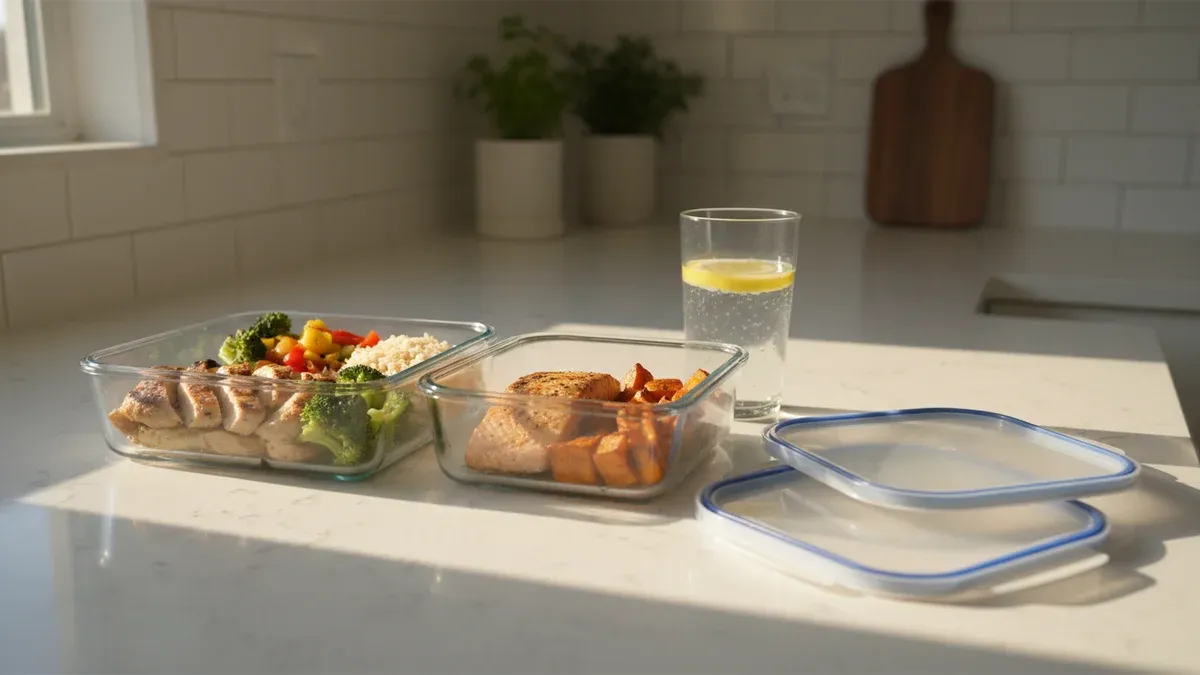
An intermittent fasting meal plan is simply a regular meal plan with a shorter eating window. The most popular schedule — 16:8 — means you eat during an 8-hour window and fast for the remaining 16 hours. For most people, that looks like skipping breakfast, eating your first meal around noon, and finishing dinner by 8 PM. The planning challenge isn’t what to eat (it’s normal food), it’s fitting enough nutrition into fewer meals.
This guide covers the practical side of planning and prepping meals around a fasting schedule. It is not medical advice. If you have health conditions or take medication, consult your doctor before changing your eating pattern.
Key Takeaways
- 16:8 intermittent fasting means eating within an 8-hour window — most commonly noon to 8 PM
- You’re eating the same amount of food, just in fewer, larger meals — don’t undereat
- Focus on nutrient-dense meals: protein, healthy fats, and fiber keep you satisfied through the fasting window
- Meal prep is especially important for IF because skipping prep often means skipping meals entirely
- Coffee, tea, and water are fine during the fasting window
In This Article
What Does a 16:8 Eating Schedule Actually Look Like?
The 16:8 schedule is popular because it fits naturally into how many people already eat — you’re basically skipping breakfast and not snacking after dinner.
Here’s what a typical day looks like:
| Time | What’s Happening |
|---|---|
| 6:00-7:00 AM | Wake up. Black coffee or tea. Water. |
| 7:00 AM-12:00 PM | Fasting window continues. Coffee, tea, sparkling water all fine. |
| 12:00-12:30 PM | Meal 1: Large, balanced lunch |
| 3:00-3:30 PM | Snack: Something substantial — not a handful of crackers |
| 7:00-7:30 PM | Meal 2: Full dinner |
| 8:00 PM | Eating window closes |
| 8:00 PM-12:00 PM | Fasting window (sleep covers most of it) |
Choosing Your Window
The noon-to-8 PM window is the most common, but it’s not the only option. Pick a window that fits your life:
| Window | Best For |
|---|---|
| 12:00-8:00 PM | Most people — aligns with lunch and dinner |
| 11:00 AM-7:00 PM | Early dinner families, people who go to bed early |
| 10:00 AM-6:00 PM | Those who can’t skip a late morning meal |
| 1:00-9:00 PM | Late risers, people who eat dinner late |
The “best” window is whichever one you’ll actually stick with. Don’t fight your natural schedule.
How to Structure Your Meals for IF
With only 2 meals and a snack to work with, each meal needs to carry more weight than a typical breakfast-lunch-dinner split. The biggest mistake people make is eating the same-sized meals they always did — and ending up underfed.
What Each Meal Should Include
Meal 1 (breaking the fast):
- A solid protein source (30-40g): chicken, fish, eggs, tofu, beans
- Complex carbs: rice, sweet potato, whole grain bread, quinoa
- Vegetables: at least a cup — they add volume and fiber
- Healthy fat: avocado, olive oil, nuts
Snack:
- Protein + fat combo to bridge the gap: Greek yogurt with nuts, apple with peanut butter, cheese and crackers, hummus with vegetables
- This isn’t a token snack — it’s a real mini-meal (200-400 calories)
Meal 2 (dinner):
- Same structure as Meal 1: protein, carbs, vegetables, fat
- This is your last meal for 16 hours, so don’t skimp
Foods That Keep You Full Longer
During the fasting window, hunger is mainly an issue in the first week. Choosing the right foods at dinner helps:
- High fiber: beans, lentils, oats, vegetables, whole grains
- Protein: slows digestion, keeps you satiated
- Healthy fats: avocado, nuts, olive oil — high satiety per calorie
- Avoid: sugary or highly processed foods for your last meal — they spike blood sugar and leave you hungry faster
Sample 7-Day Intermittent Fasting Meal Plan
All meals fit within a noon-to-8 PM eating window.
| Day | Meal 1 (12 PM) | Snack (3 PM) | Meal 2 (7 PM) |
|---|---|---|---|
| Mon | Chicken grain bowl with rice, roasted vegetables, avocado | Greek yogurt with berries and granola | Salmon with sweet potato and steamed broccoli |
| Tue | Turkey and avocado wrap with a side salad | Apple slices with peanut butter | Beef stir-fry with brown rice and mixed vegetables |
| Wed | Large veggie omelette (4 eggs) with toast and fruit | Hummus with carrots and pita | Chicken thighs with roasted potatoes and green beans |
| Thu | Tuna salad on whole grain bread with a cup of soup | Trail mix and a banana | Pasta with meat sauce, side salad with olive oil dressing |
| Fri | Burrito bowl: rice, black beans, chicken, salsa, cheese, lettuce | Cheese and crackers with grapes | Grilled fish tacos with slaw and rice |
| Sat | Eggs Benedict or a large brunch (eating window can shift to 11-7) | Smoothie with protein powder, banana, peanut butter | Homemade pizza with a side salad |
| Sun | Big salad with grilled chicken, quinoa, nuts, feta, and vinaigrette | Cottage cheese with fruit | Slow cooker pot roast with root vegetables |
A Note on Portions
These are not diet-sized meals. If you’re eating two meals instead of three, each meal should be roughly 40-50% of your daily calories. A typical lunch on this plan is 600-800 calories, dinner is 600-800 calories, and the snack is 200-400 calories. That’s a normal day’s worth of food — just compressed.
Intermittent Fasting Grocery List
You don’t need special foods for IF. Here’s a practical weekly grocery list based on the meal plan above.
Proteins
- Chicken breasts and thighs (2-3 lbs)
- Salmon fillets (2-3 portions)
- Ground beef or turkey (1 lb)
- Eggs (1 dozen)
- Canned tuna (2-3 cans)
- Deli turkey
- Greek yogurt
- Cottage cheese
Carbs & Grains
- Brown rice or white rice
- Whole grain bread
- Whole wheat tortillas
- Pasta
- Quinoa
- Sweet potatoes
- Oats (for granola or smoothies)
Fruits & Vegetables
- Mixed salad greens
- Broccoli
- Green beans
- Bell peppers
- Carrots
- Avocados (3-4)
- Bananas
- Apples
- Berries (fresh or frozen)
- Grapes
- Tomatoes
- Onions
Pantry & Fats
- Olive oil
- Peanut butter or almond butter
- Hummus
- Nuts and trail mix
- Cheese (block and shredded)
- Salsa
- Canned black beans
- Soy sauce
- Coffee and tea
This list covers the full week for about $60-80 depending on your location. For more grocery shopping strategies, check out our guide on organizing your grocery list by aisle.
How to Meal Prep for Intermittent Fasting
Meal prep matters more with IF than with a regular eating schedule. When your eating window opens at noon and you have nothing ready, you end up grabbing fast food or snacking on whatever’s around — which defeats the purpose of planning.
Sunday Prep Session (60-90 minutes)
Step 1: Cook proteins in bulk
- Grill or bake 2-3 lbs of chicken (use for grain bowls, wraps, salads)
- Cook ground beef or turkey for stir-fries and pasta sauce
- Hard-boil 6 eggs for quick snacks
Step 2: Prepare grains
- Cook a large batch of rice (4-6 cups dry)
- Cook quinoa if using
Step 3: Chop and prep vegetables
- Wash and chop salad greens
- Cut broccoli, bell peppers, carrots, green beans
- Slice avocado only when you’re ready to eat (it browns fast)
Step 4: Portion snacks
- Divide trail mix into daily portions
- Pre-portion hummus into small containers
- Wash grapes and berries
Step 5: Assemble what you can
- Build Monday-Wednesday grain bowls and wraps
- Store components separately for Thursday-Sunday meals
For a complete breakdown of batch prep, see our Meal Prep Sunday guide.
Mid-Week Refresh (Wednesday Evening, 20 Minutes)
- Cook fresh protein for Thursday-Sunday (or thaw frozen portions)
- Refresh salad greens
- Check what needs restocking
Common Mistakes When Starting IF
1. Not Eating Enough
This is the most common mistake. People treat IF as a calorie restriction diet. It’s not — it’s a timing strategy. If you normally eat 2,000 calories across three meals, you should still eat 2,000 calories across two meals and a snack. Undereating leads to fatigue, irritability, and eventually quitting.
2. Breaking the Fast With Junk Food
When noon hits and you’re hungry, it’s tempting to grab whatever’s fastest. But a bag of chips and a soda is a terrible way to start your eating window. Your first meal sets the tone — make it a real meal with protein and vegetables.
3. Overcomplicating It
You don’t need to calculate macros, buy supplements, or follow a strict protocol. Just eat normal, balanced meals within your window. That’s it. If you’re already following a weekly meal plan, shifting the timing is the only change.
4. Being Rigid on Weekends
Social life doesn’t run on a 16:8 schedule. If Saturday brunch is at 10 AM, eat at 10 AM. Shift your window for the day or just eat normally. One flexible day doesn’t undo anything. Consistency over weeks matters more than perfection every day.
5. Forgetting to Hydrate During the Fast
You can (and should) drink plenty of water, black coffee, and unsweetened tea during the fasting window. Dehydration is often mistaken for hunger. A glass of water at 10 AM can make the difference between cruising to noon and raiding the pantry at 11.
FAQ: Intermittent Fasting Meal Planning
Can I drink coffee during the fasting window?
Yes — black coffee, plain tea, and water are fine during the fast. Avoid adding cream, sugar, or milk, as these contain calories that technically break the fast. If you can’t stand black coffee, a tiny splash of milk is unlikely to make a practical difference, but purists will disagree.
Will I lose muscle on intermittent fasting?
Not if you eat enough protein during your eating window. Aim for at least 25-30g of protein per meal. The concern about muscle loss comes from prolonged fasting (24+ hours), not a 16-hour overnight fast. Most of your fasting time is spent sleeping.
What if I work out in the morning before my eating window?
Many people train fasted successfully. If morning workouts feel fine, keep doing them and eat a protein-rich meal 1 when your window opens. If you feel weak or lightheaded, shift your eating window earlier (e.g., 10 AM-6 PM) or have a small pre-workout snack and adjust.
How long does it take to adjust to intermittent fasting?
Most people adjust within 1-2 weeks. The first 3-5 days are the hardest — you’ll feel hungry in the morning out of habit, not genuine need. By week two, your body adapts and morning hunger fades. Staying hydrated and keeping busy in the morning speeds up the transition.
Is intermittent fasting safe for everyone?
IF is not recommended for pregnant or breastfeeding women, people with a history of eating disorders, anyone under 18, or people with diabetes or blood sugar regulation issues. If you have any health conditions or take medication, talk to your doctor before starting. This guide covers meal planning logistics, not medical advice.
Intermittent fasting doesn’t require special food, expensive supplements, or a complicated system. It’s regular cooking on a different clock. Plan two solid meals and a real snack, prep on Sunday, and the schedule handles itself.
Tavola helps busy parents spend less time planning and more time around the table — because every family recipe tells a story worth preserving.