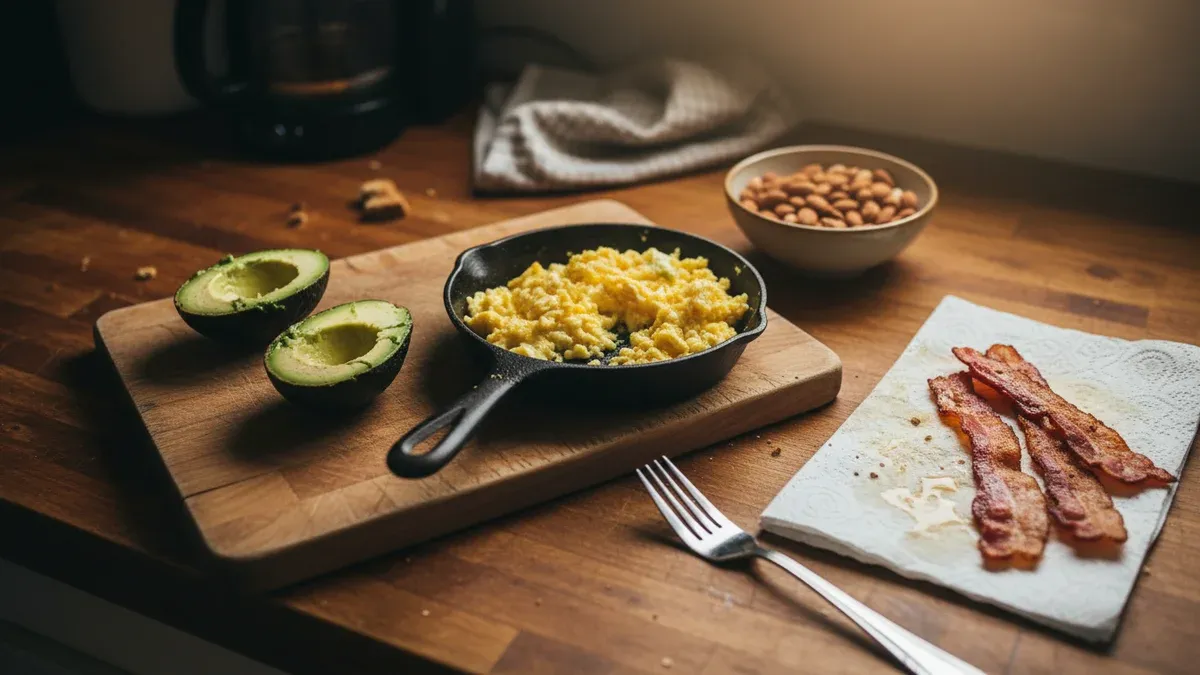
A keto diet meal plan focuses on high-fat, moderate-protein, and very low-carb foods — typically under 20-50 grams of net carbs per day. When you drastically reduce carbs, your body enters ketosis, a metabolic state where it burns fat for fuel instead of glucose. The result for most people is steady weight loss, reduced hunger between meals, and more stable energy throughout the day.
The problem with most keto meal plans online is that they’re either unrealistically expensive (grass-fed ribeye every night), overly complicated (17-ingredient fat bombs), or so restrictive they’re impossible to sustain past week one. This guide takes a different approach: simple meals, affordable ingredients, and a realistic plan you can actually follow.
Key Takeaways
- Aim for 70% fat, 25% protein, and 5% carbs — roughly 20-50g net carbs per day for most people
- Stock your kitchen with eggs, avocados, olive oil, cheese, and above-ground vegetables as keto staples
- The first week is the hardest — “keto flu” symptoms like fatigue and headaches are normal and pass within 3-7 days
- Keto doesn’t have to be expensive — eggs, ground beef, butter, and frozen vegetables are affordable keto-friendly staples
- Meal prep is essential for keto success — batch-cook proteins and pre-portion snacks to avoid carb-heavy convenience foods
In This Article
What Is a Keto Diet?
The ketogenic diet works by shifting your body’s primary fuel source from carbohydrates to fat. Normally, your body breaks down carbs into glucose for energy. When you eat very few carbs (typically under 50g per day), your liver starts converting fat into molecules called ketones, which your brain and body use as fuel instead.
This metabolic switch — called ketosis — typically happens within 2-7 days of significantly reducing carbs.
The Keto Macro Breakdown
| Macronutrient | % of Daily Calories | Example (2,000 cal/day) |
|---|---|---|
| Fat | 70-75% | 155-167 g |
| Protein | 20-25% | 100-125 g |
| Net Carbs | 5-10% | 20-50 g |
Net carbs = total carbs minus fiber. This distinction matters because fiber doesn’t spike blood sugar or affect ketosis. A cup of broccoli has 6g total carbs but only 3.5g net carbs — perfectly keto-friendly.
What Can You Eat on Keto?
Eat freely:
- Meat and poultry (beef, chicken, pork, turkey)
- Fish and seafood (salmon, tuna, shrimp)
- Eggs
- High-fat dairy (cheese, butter, heavy cream)
- Nuts and seeds (almonds, walnuts, chia seeds)
- Healthy oils (olive oil, coconut oil, avocado oil)
- Above-ground vegetables (broccoli, spinach, zucchini, cauliflower, peppers)
- Avocados
Avoid or strictly limit:
- Bread, pasta, rice, cereals
- Sugar (including honey, maple syrup, agave)
- Fruit (except small portions of berries)
- Potatoes, sweet potatoes, corn
- Beans and legumes
- Beer, sweetened cocktails, juice
- Most processed and packaged foods
How to Build a Keto Meal Plan
Step 1: Start With Protein
Every meal needs a protein anchor. Choose one:
- 2-3 eggs (any style)
- 4-6 oz meat or fish
- A handful of deli meat with cheese
Protein keeps you full and preserves muscle mass during weight loss. Aim for 1.2-1.6 g per kg of body weight — roughly the same target as any weight loss meal plan.
Step 2: Add Healthy Fat
Fat is your primary fuel on keto. This feels counterintuitive if you’ve spent years avoiding it, but fat is what keeps you satisfied and energized.
Easy ways to add fat:
- Cook with butter or olive oil (1-2 tbsp per meal)
- Add half an avocado to any meal
- Top salads with olive oil dressing and cheese
- Snack on nuts or cheese
- Use full-fat dairy instead of low-fat versions
Step 3: Fill the Rest With Low-Carb Vegetables
Above-ground vegetables are your friends on keto. They provide fiber, vitamins, and volume without blowing your carb budget.
Best keto vegetables (net carbs per cup):
- Spinach: 0.4g
- Lettuce: 0.5g
- Zucchini: 2.4g
- Cauliflower: 2.9g
- Broccoli: 3.5g
- Bell peppers: 3.6g
- Asparagus: 2.4g
- Mushrooms: 1.6g
Step 4: Track Net Carbs (At Least Initially)
For the first 2-3 weeks, track your net carbs to calibrate your sense of portions. Most beginners are surprised at how quickly carbs add up — a single banana has 24g net carbs (nearly your entire daily budget). After a few weeks, you’ll develop an intuitive sense for what fits and what doesn’t.
Keto Grocery List Essentials
A well-stocked kitchen makes keto dramatically easier. Here’s what to buy for your first week.
Proteins
- Eggs (2 dozen — you’ll use more than you think)
- Chicken thighs (bone-in, skin-on is cheapest and most flavorful)
- Ground beef (80/20 blend — you need the fat)
- Bacon
- Canned tuna or salmon
Fats and Oils
- Butter (unsalted)
- Olive oil (for dressings and low-heat cooking)
- Coconut oil (for high-heat cooking)
- Avocados (3-4)
Dairy
- Shredded cheese (cheddar, mozzarella)
- Cream cheese
- Heavy cream
- Full-fat Greek yogurt (small portions — check carb count)
Vegetables
- Spinach or mixed greens
- Broccoli
- Cauliflower
- Zucchini
- Bell peppers
- Onions (use sparingly — higher in carbs)
- Garlic
Pantry Staples
- Almonds or mixed nuts (unsweetened)
- Almond flour (for keto-friendly baking)
- Coconut flour
- Low-carb hot sauce
- Mustard
- Soy sauce or coconut aminos
- Salt, pepper, garlic powder, paprika, Italian seasoning
For a broader pantry guide, see our pantry staples checklist and adapt it for keto.
7-Day Keto Meal Plan for Beginners
This plan averages 1,600-1,800 calories and 20-30g net carbs per day. Adjust portions based on your personal needs.
| Day | Breakfast | Lunch | Dinner | Snack |
|---|---|---|---|---|
| Mon | Scrambled eggs (3) with cheddar cheese and spinach, cooked in butter | Chicken thigh salad with avocado, olive oil dressing, and mixed greens | Ground beef stir-fry with broccoli, bell peppers, and soy sauce | Handful of almonds |
| Tue | Bacon (3 strips) and eggs (2) with sliced avocado | Tuna salad lettuce wraps with celery and mayo | Baked chicken thighs with roasted cauliflower and garlic butter | Celery sticks with cream cheese |
| Wed | Keto coffee (coffee + 1 tbsp butter + 1 tbsp coconut oil) + 2 hard-boiled eggs | Leftover chicken with zucchini sautéed in olive oil | Bunless burger patties with cheese, mushrooms, and a side salad | String cheese + a few olives |
| Thu | Veggie egg scramble (3 eggs, mushrooms, peppers) with shredded cheese | Cobb salad with chicken, bacon, egg, avocado, and blue cheese dressing | Pan-seared salmon with asparagus and lemon butter | Handful of walnuts |
| Fri | Greek yogurt (full-fat, 1/2 cup) with a few raspberries and chia seeds | Ground beef taco bowl — seasoned beef, lettuce, cheese, sour cream, salsa (no shell) | Pork chops with creamed spinach | Cucumber slices with guacamole |
| Sat | Bacon and cheese omelette (3 eggs) | Salmon salad with avocado, cucumber, and olive oil | Slow cooker chicken with mushroom cream sauce and steamed broccoli | Dark chocolate (85%+, 2 squares) |
| Sun | Eggs Benedict on portobello mushroom caps (skip the English muffin) | Leftover chicken with mixed greens and ranch dressing | Grilled steak with roasted zucchini and a side of Caesar salad (no croutons) | Almond butter on celery |
Notice: Every meal has a clear protein, plenty of fat, and a vegetable. No exotic ingredients. No complicated recipes. Most of these take under 20 minutes.
Keto on a Budget
With grocery prices climbing, eating keto on a budget takes some strategy. The good news: keto staples like eggs, butter, and frozen vegetables are still among the cheapest foods per calorie.
Cheapest Keto Foods (Cost per Serving)
| Food | Approx. Cost/Serving | Net Carbs |
|---|---|---|
| Eggs | $0.30-0.50 | <1g |
| Canned tuna | $0.80-1.00 | 0g |
| Ground beef (80/20) | $1.50-2.00 | 0g |
| Chicken thighs (bone-in) | $0.80-1.20 | 0g |
| Frozen broccoli | $0.40-0.60 | 3.5g |
| Butter | $0.20-0.30 per tbsp | 0g |
| Cabbage | $0.30-0.50 | 3g |
| Cheese (block, not pre-shredded) | $0.50-0.80 | <1g |
Budget Keto Tips
Buy eggs in bulk. At 6g protein and 5g fat per egg with virtually zero carbs, eggs are the most cost-effective keto food. Scrambled, fried, hard-boiled, in omelettes — they’re infinitely versatile.
Choose chicken thighs over breasts. Thighs are cheaper, fattier (which you want on keto), and more forgiving when cooking. Bone-in, skin-on is the best value.
Use frozen vegetables. Frozen broccoli, cauliflower, and spinach are just as nutritious as fresh, cost 30-50% less, and don’t go bad in your crisper. Keep a few bags on hand at all times.
Buy cheese in blocks. Pre-shredded cheese costs 30-40% more and contains anti-caking agents (potato starch — which adds hidden carbs). Block cheese is cheaper and melts better.
Skip “keto products.” Keto bread, keto cookies, keto ice cream — these specialty products are expensive, often taste disappointing, and can stall weight loss. Stick to real food.
For more ways to keep grocery costs down, check out our guide on beating rising food prices with meal planning.
Common Keto Mistakes to Avoid
Not Eating Enough Fat
This is the most common beginner mistake. Coming from a standard diet, it feels wrong to cook eggs in butter, pour olive oil on everything, and eat the chicken skin. But on keto, fat is your fuel. If you cut both carbs AND fat, you’ll be hungry, tired, and miserable. Eat the fat.
Ignoring Electrolytes
When you cut carbs, your body flushes water and electrolytes — sodium, potassium, and magnesium in particular. This causes the “keto flu”: headaches, fatigue, muscle cramps, and brain fog during the first week.
The fix:
- Salt your food generously (don’t fear sodium on keto)
- Eat avocados and leafy greens (potassium)
- Consider a magnesium supplement (200-400mg daily)
- Drink bone broth — it’s warm, salty, and hits all three electrolytes
Eating Too Much Protein
Keto is high-fat, not high-protein. Excess protein can be converted to glucose through a process called gluconeogenesis, potentially slowing ketosis. Moderate your protein to 20-25% of total calories. For detailed protein guidance, see our high-protein meal prep recipes and scale down slightly for keto ratios.
Snacking Too Much (Even on Keto Foods)
Nuts, cheese, and dark chocolate are keto-friendly but calorie-dense. A “handful” of almonds can easily be 300 calories. If weight loss stalls, snacking is often the culprit. Eat satisfying meals and you shouldn’t need to snack much at all.
Expecting Overnight Results
The first week on keto, you’ll likely lose 3-7 lbs. Most of this is water weight — don’t get too excited. Real fat loss happens at 1-2 lbs per week after the initial drop. Give it at least 4-6 weeks before judging whether keto works for you.
FAQ: Keto Diet Meal Plan
How long does it take to get into ketosis?
Most people enter ketosis within 2-7 days of eating under 20-50g net carbs per day. The speed depends on your activity level, metabolism, and how strictly you limit carbs. You’ll know you’re in ketosis when your appetite decreases noticeably and you can go longer between meals without hunger.
Can I do keto without eating meat?
Yes, though it requires more planning. Vegetarian keto relies on eggs, cheese, nuts, seeds, avocados, coconut, and tofu. Vegan keto is harder but possible with nuts, seeds, avocados, coconut products, and low-carb vegetables cooked in coconut or olive oil. Your fat sources become even more important.
Will I gain the weight back if I stop keto?
If you return to your previous eating habits, yes — you’ll likely regain some weight, especially the initial water weight. Many people transition to a moderate low-carb diet (75-100g carbs/day) after reaching their goal weight, which maintains most benefits without strict keto restrictions.
Is keto safe long-term?
For most healthy adults, keto is safe for 6-12 months. Long-term studies beyond that are limited. People with kidney disease, liver disease, or type 1 diabetes should consult a doctor before starting keto. If you’re on blood sugar or blood pressure medication, work with your doctor — keto can change your medication needs quickly.
What about keto and cholesterol?
Some people see a temporary increase in LDL cholesterol on keto, while others see improvements across all markers. Triglycerides and HDL typically improve. If you have a history of heart disease or familial hypercholesterolemia, get bloodwork done before starting and at 3 months to monitor changes.
Keep It Simple, Keep It Sustainable
Starting keto doesn’t require a kitchen overhaul or a nutrition degree. Eggs, meat, cheese, vegetables, and healthy fats — that’s really all it takes. The 7-day plan above is a starting point. After the first week, you’ll develop a sense for what works and start building your own rotation of go-to meals.
The biggest predictor of keto success isn’t willpower — it’s preparation. When your fridge is stocked with keto-friendly ingredients and you know what you’re eating for dinner, you don’t reach for the bread. For a full guide on building that weekly habit, check out our beginner’s guide to meal planning.
Tavola helps busy parents spend less time planning and more time around the table — because every family recipe tells a story worth preserving.