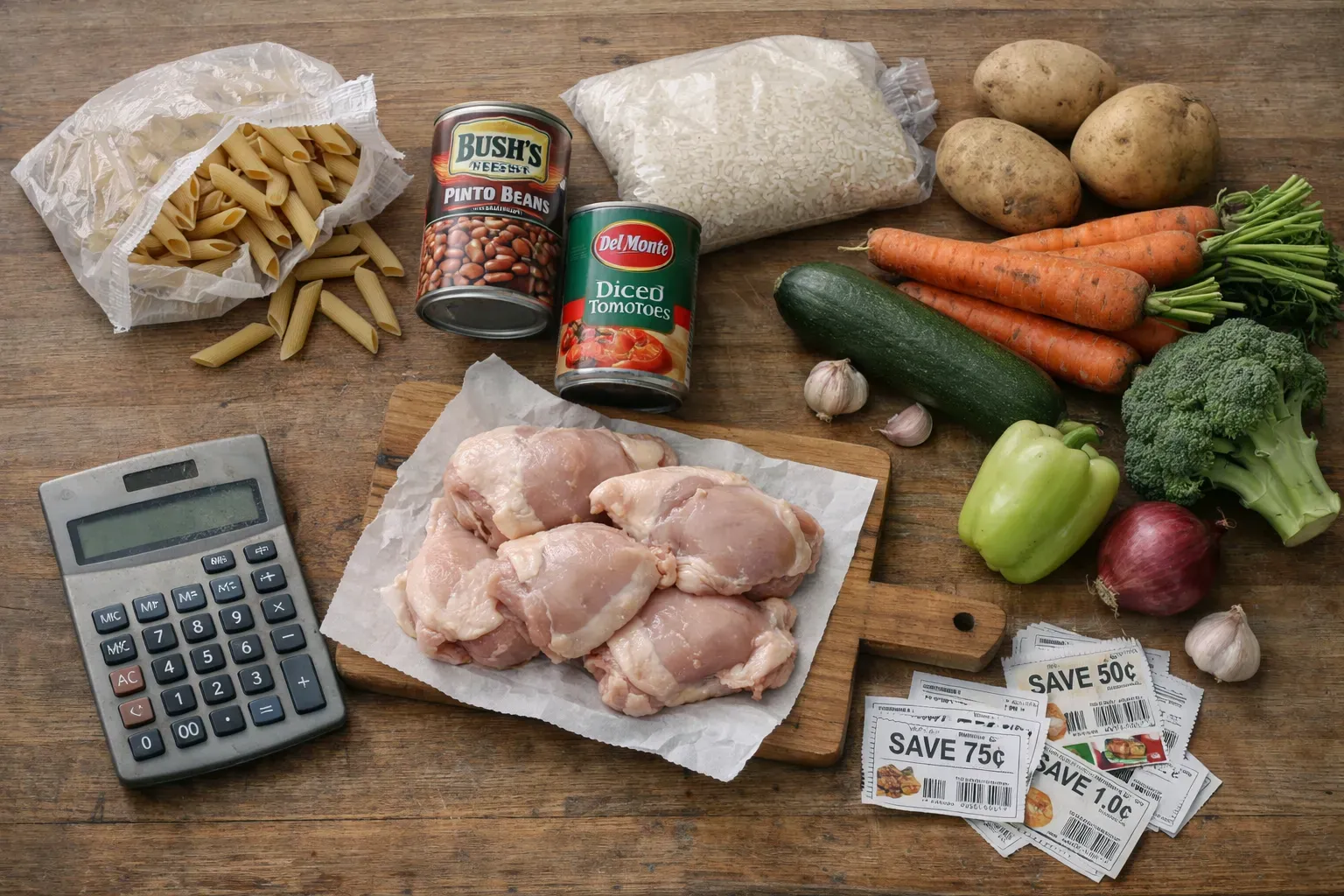
You can feed a family of 4 on $75 to $125 per week by planning meals around seasonal produce, buying versatile pantry staples, repurposing leftovers into new meals, and shopping with a detailed grocery list. The key is planning before you shop, not after.
Most families spend $200-$300 per week on groceries without a plan. That’s $800-$1,200 monthly. By implementing strategic meal planning, you can cut that spending in half while still eating nutritious, satisfying meals your family will actually enjoy.
Key Takeaways
- A family of 4 can eat well on $95-$125/week by planning meals around sales, reusing ingredients across dishes, and shopping with a detailed list
- The biggest budget killers are food waste ($1,500/year average), impulse purchases, and last-minute takeout — meal planning eliminates all three
- Choose meals with ingredient overlap (one rotisserie chicken = tacos, chicken salad, and soup) and include a weekly “leftover remix” night to stretch your dollars further
- Stock budget-friendly proteins like eggs ($0.25 each), dried beans ($0.30/serving), and chicken thighs ($1.50/serving), and add 2-3 meatless dinners per week
- Start small: plan just 3-4 dinners for next week, track your savings, then expand from there
In This Article
- What’s a Realistic Weekly Budget for a Family of 4?
- How Does Meal Planning Save Money?
- Sample Budget Weekly Meal Plan with Costs
- The Budget Meal Planning Strategy
- Money-Saving Tips for Family Meal Planning
- Sample Budget Grocery List with Estimated Costs
- Common Budget Meal Planning Mistakes to Avoid
- How to Stick to Your Budget Long-Term
- FAQ: Budget Meal Planning for Families
- Start Saving This Week
What’s a Realistic Weekly Budget for a Family of 4?
According to USDA food cost guidelines, here’s what families typically spend:
- Thrifty Plan: $75-$95 per week
- Low-Cost Plan: $95-$125 per week
- Moderate Plan: $125-$175 per week
- Liberal Plan: $175-$250+ per week
For most families, the $75-$125 range is achievable with meal planning. The difference between spending $75 and $200 per week? A solid plan.
How Does Meal Planning Save Money?
Meal planning eliminates the three biggest budget killers:
1. Food waste: The average family throws away $1,500 worth of food annually. When you plan meals, you buy exactly what you need.
2. Impulse purchases: Shopping without a plan leads to grabbing whatever looks good. That’s how you end up with random ingredients that never become actual meals.
3. Last-minute takeout: No plan means scrambling at 6 PM and ordering pizza. That’s $30-$50 you didn’t budget for.
Planning meals before shopping transforms your grocery budget from reactive to intentional.
Sample Budget Weekly Meal Plan with Costs
Here’s a realistic week of dinners for a family of 4, targeting the $95-$125 range:
| Day | Dinner | Estimated Cost |
|---|---|---|
| Monday | Sheet Pan Chicken Thighs with Roasted Vegetables | $12 |
| Tuesday | Spaghetti with Meat Sauce & Garlic Bread | $10 |
| Wednesday | Slow Cooker Black Bean Tacos | $8 |
| Thursday | Chicken Fried Rice (using Monday’s leftover chicken) | $7 |
| Friday | Homemade Pizza Night | $11 |
| Saturday | Beef & Vegetable Stir-Fry over Rice | $13 |
| Sunday | Baked Ziti with Side Salad | $9 |
| Total | $70 |
This leaves $25-$55 for breakfasts, lunches, and snacks, bringing your weekly total to $95-$125.
The Budget Meal Planning Strategy
Step 1: Check What You Already Have
Before planning anything, inventory your:
- Pantry staples
- Freezer items
- Fresh produce that needs using
- Proteins approaching expiration dates
Build meals around what you already own. Found chicken in the freezer and rice in the pantry? That’s at least two meals right there.
Step 2: Plan Around Sales and Seasons
Check your grocery store’s weekly circular before planning. If chicken thighs are on sale, plan 2-3 chicken-based meals. When strawberries are in season and cheap, make them your fruit for the week.
Seasonal eating saves 30-40% compared to buying out-of-season produce.
Step 3: Choose Meals with Ingredient Overlap
The most budget-friendly meal plans reuse ingredients across multiple meals:
- Buy a rotisserie chicken: Use for tacos Monday, chicken salad sandwiches Tuesday, chicken noodle soup Wednesday
- Ground beef: Tacos Tuesday, spaghetti sauce Thursday, stuffed peppers Saturday
- Bell peppers: Fajitas, stir-fry, stuffed peppers, omelet filling
This approach minimizes waste and maximizes value.
Step 4: Include One “Leftover Remix” Night
Never let leftovers go to waste. Wednesday or Thursday becomes “leftover remix night”:
- Monday’s roasted chicken becomes Thursday’s fried rice
- Tuesday’s taco meat becomes Friday’s nachos or taco salad
- Sunday’s roasted vegetables get blended into soup
For more strategies on turning leftovers into new meals, check out our beginner’s guide to meal planning.
Step 5: Build Your Grocery List by Category
Organize your list by store section to avoid backtracking (which leads to impulse buys). Learn more about efficient list organization in our guide on how to organize your grocery list by aisle.
Money-Saving Tips for Family Meal Planning
Buy Store Brands
Store brands cost 20-40% less than name brands for identical quality. Switch on:
- Canned goods
- Pasta
- Rice
- Flour and baking supplies
- Frozen vegetables
Stock Budget-Friendly Proteins
The cheapest proteins per serving:
- Eggs: $0.25-$0.40 per egg
- Canned tuna: $1.00 per serving
- Dried beans: $0.30 per serving
- Chicken thighs: $1.50 per serving
- Ground turkey: $2.00 per serving
Limit expensive proteins (beef steaks, fresh fish) to once weekly or special occasions.
Master Pantry Staples
A well-stocked pantry means you can create meals without buying everything from scratch. Essential budget staples include:
- Rice (white and brown)
- Pasta (multiple shapes)
- Canned tomatoes
- Beans (canned and dried)
- Cooking oil
- Flour
- Onions and garlic
- Spices and seasonings
See our complete pantry staples checklist for a comprehensive list.
Embrace Meatless Meals
Incorporate 2-3 vegetarian dinners weekly. Bean-based meals cost 50-70% less than meat-based ones:
- Black bean tacos
- Lentil soup
- Chickpea curry
- Vegetable stir-fry with tofu
- Pasta primavera
Buy in Bulk (Strategically)
Only buy bulk quantities of items you’ll actually use:
- Rice and pasta (long shelf life)
- Canned goods on sale
- Frozen vegetables
- Ground meat (freeze in portions)
Avoid bulk buying fresh produce unless you have specific plans for it.
Prep Once, Eat Multiple Times
Batch cooking saves money by reducing the temptation to order out:
- Double your lasagna recipe and freeze one
- Make large pots of soup or chili
- Cook a week’s worth of rice or quinoa
- Prep overnight oats for quick breakfasts
Sample Budget Grocery List with Estimated Costs
Based on the weekly meal plan above, here’s what you’d buy:
Proteins ($28)
- 2 lbs chicken thighs: $6
- 1 lb ground beef: $5
- 1 dozen eggs: $4
- 2 cans black beans: $2
- 1 lb ground turkey (for pizza): $5
- 1 lb beef stir-fry strips: $6
Produce ($18)
- Onions (3 lbs): $3
- Carrots (2 lbs): $2
- Broccoli (1 bunch): $3
- Bell peppers (4): $4
- Lettuce (1 head): $2
- Seasonal vegetables: $4
Pantry/Grains ($12)
- Pasta (2 boxes): $3
- Rice (1 bag): $4
- Taco shells: $3
- Bread: $2
Dairy ($10)
- Mozzarella cheese: $4
- Cheddar cheese: $3
- Milk: $3
Pantry Items ($6)
- Pasta sauce (2 jars): $4
- Salsa: $2
Total: $74
Add $20-$50 for breakfast items (oatmeal, cereal, yogurt), lunch supplies (bread, deli meat, snacks), and you’re at $94-$124 for the week.
Common Budget Meal Planning Mistakes to Avoid
Shopping without a list: This is the #1 budget killer. You’ll overspend by 40-60% without a plan. Read about more grocery shopping mistakes that waste money.
Planning too many new recipes: Stick to familiar meals during budget weeks. Experimental cooking often requires specialty ingredients you’ll use once.
Forgetting about lunch: Plan lunches too, or you’ll spend $10-$15 daily eating out.
Not accounting for snacks: Kids need snacks. Budget $15-$20 weekly for fruits, crackers, cheese sticks, and other grab-and-go options.
Being too restrictive: An overly strict budget leads to burnout and pizza orders. Allow occasional treats.
How to Stick to Your Budget Long-Term
Track spending for 2-3 weeks: Before setting a budget, track what you actually spend. This reveals your baseline.
Adjust gradually: If you currently spend $250 weekly, don’t immediately drop to $100. Try $200 first, then $150.
Plan weekly, not monthly: Weekly planning is more manageable and adapts to changing sales and needs.
Keep a price book: Note prices of items you buy regularly. This helps you recognize genuine sales versus fake discounts.
Review and refine: After each week, assess what worked and what didn’t. Adjust your next plan accordingly.
FAQ: Budget Meal Planning for Families
How much should a family of 4 spend on groceries per week?
A realistic budget for a family of 4 ranges from $95-$125 per week for all meals and snacks. This assumes you’re cooking at home, planning meals, and shopping sales. Very frugal families can achieve $75-$95, while those prioritizing organic or specialty items might spend $150-$175.
What’s the cheapest meal to feed a family of 4?
The most budget-friendly family meals include spaghetti with marinara sauce ($6-$8), black bean tacos ($7-$9), fried rice with eggs and vegetables ($8-$10), and bean and cheese quesadillas ($6-$8). These meals rely on inexpensive pantry staples and can feed four people for under $10.
How can I meal plan with no money?
If you’re between paychecks, plan meals exclusively around what’s already in your pantry, freezer, and fridge. Get creative with combinations: pasta with canned tomatoes and frozen vegetables, rice with beans and spices, eggs with whatever vegetables you have. Check our healthy grocery list template for essential items to keep on hand.
Is meal planning actually cheaper?
Yes. Families who meal plan save an average of $2,000-$4,000 annually compared to those who don’t. The savings come from eliminating food waste, avoiding impulse purchases, reducing takeout orders, and shopping sales strategically. Learn more about how to cut your grocery bill with meal planning.
How do I meal plan when everything is expensive?
Focus on budget-friendly proteins (eggs, beans, chicken thighs), shop seasonal produce, buy store brands, incorporate meatless meals, and plan around weekly sales. Build a rotation of 10-15 affordable meals your family enjoys, then rotate through them based on what’s on sale each week.
Start Saving This Week
Budget meal planning isn’t about deprivation or eating boring food. It’s about being intentional with your grocery dollars so you can feed your family well without financial stress.
Start small: Plan just 3-4 dinners for next week. See how much you save. Then expand from there.
Tavola helps busy parents spend less time planning and more time around the table — because every family recipe tells a story worth preserving, and that story shouldn’t break the bank.