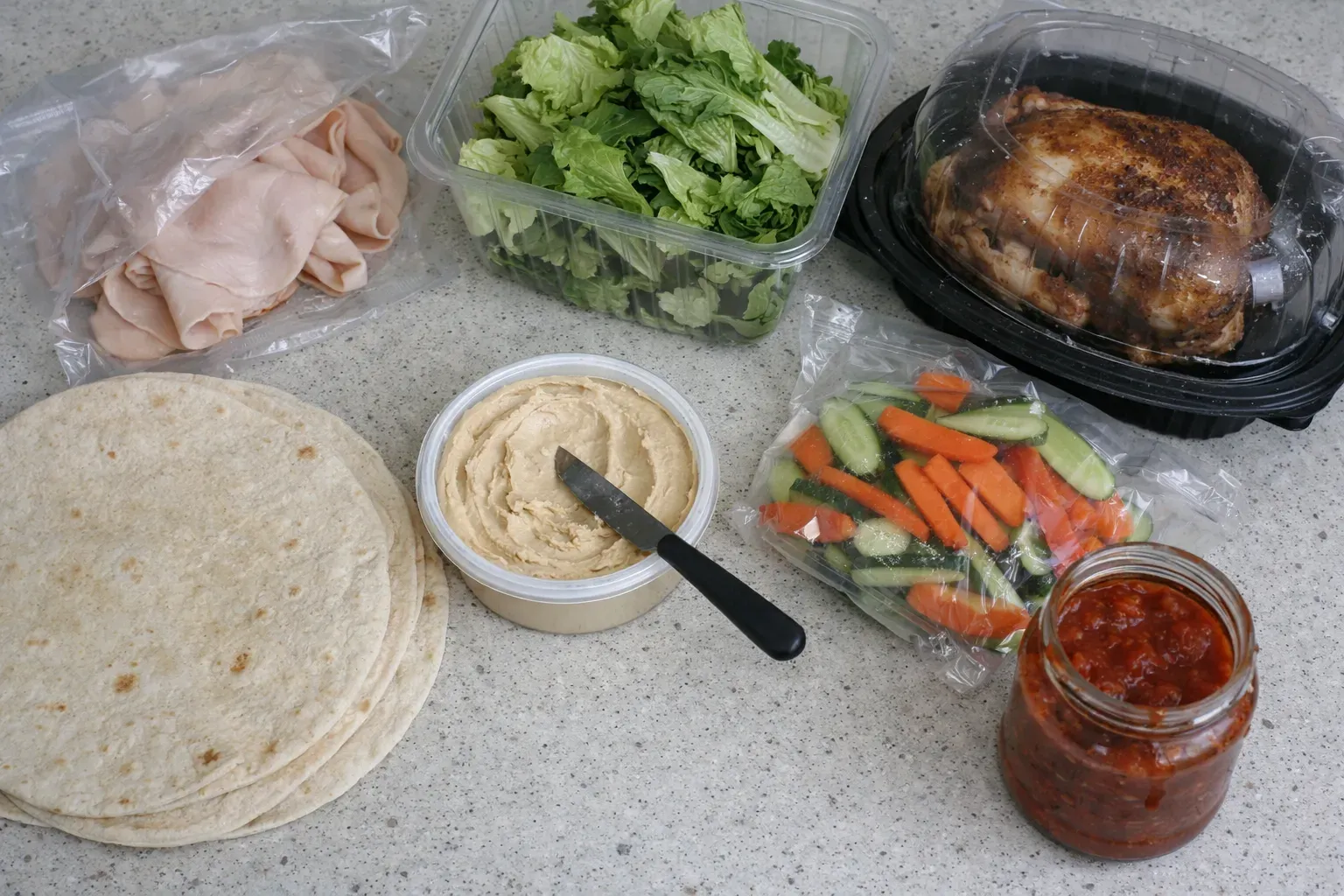
You can absolutely meal plan even if you hate cooking. The key is focusing on assembly-based meals, strategic shortcuts, and minimal-effort recipes that don’t require you to spend hours in the kitchen. Meal planning actually saves you more time when you don’t enjoy cooking because it eliminates daily decision fatigue and reduces how often you need to stand over a stove.
Key Takeaways
- Assembly meals (rotisserie chicken + bagged salad, canned beans + microwaved rice + salsa) require zero cooking and take under 5 minutes to prepare
- With a good plan, you only need to actively cook 2-3 times per week — the rest is assembly, leftovers, or intentional takeout
- Cook double portions whenever you do cook, and use a single rotisserie chicken for 3 different meals across the week
- Pre-made items like pre-cut vegetables and pre-marinated proteins cost more per unit, but they prevent food waste and reduce expensive takeout orders
- Start with just 3 planned dinners: one batch-friendly meal, one assembly meal, and one takeout night
In This Article
- Why Meal Plan If You Hate Cooking?
- The Assembly Meal Approach
- 5-Ingredient (or Less) Minimal-Effort Meals
- Batch-Friendly Strategy: Cook Once, Eat Multiple Times
- Strategic Use of Pre-Made Items
- Simple Weekly Template for Non-Cooks
- Quick Tips for Cooking-Averse Meal Planners
- How to Actually Stick With It
- FAQ
- Start Small, Not Perfect
Why Meal Plan If You Hate Cooking?
If cooking isn’t your thing, meal planning might seem counterintuitive. Why plan meals you don’t want to cook? Here’s why it actually makes your life easier:
Decision fatigue disappears. The “what’s for dinner?” question at 6 PM causes stress whether you like cooking or not. Planning eliminates that daily panic.
You’ll cook less, not more. When you plan strategically, you can batch tasks, use leftovers intentionally, and rely on no-cook meals. Many non-cooks actually spend more time cooking because they’re constantly starting from scratch.
Takeout becomes intentional, not default. Instead of ordering delivery because you didn’t plan, you can budget for takeout nights and feel good about the choice.
Your grocery bill drops significantly. Without a plan, you either buy random ingredients that go bad or order expensive takeout. Planning helps you buy only what you’ll actually use.
The Assembly Meal Approach
Assembly meals require zero actual cooking. You’re combining pre-made or minimally prepped ingredients into complete meals.
Ready-to-Eat Assembly Ideas
- Rotisserie chicken + bagged salad + store-bought dressing — Shred the chicken, toss everything together. Done in 5 minutes.
- Canned beans + pre-cooked rice + salsa + shredded cheese — Microwave the rice and beans separately, combine, top with salsa and cheese. Burrito bowl without the burrito.
- Deli turkey + whole wheat wraps + baby carrots + hummus — Roll the turkey in the wrap, dip carrots in hummus. Lunch or light dinner.
- Pre-cooked frozen meatballs + marinara sauce + frozen garlic bread — Microwave meatballs with sauce, toast the bread. Tastes like you tried.
- Smoked salmon + cream cheese + bagels + cucumber slices — Classic bagel spread that feels fancy but requires zero cooking.
Shopping List for Assembly Meals
Focus on these pre-made staples:
- Rotisserie chicken (use for 2-3 meals throughout the week)
- Pre-cooked grains (microwaveable rice, quinoa pouches)
- Bagged salad kits (dressing included)
- Canned beans (black, chickpea, kidney)
- Frozen pre-cooked proteins (meatballs, grilled chicken strips, shrimp)
- Pre-cut vegetables (carrots, celery, bell peppers)
- Store-bought hummus, guacamole, salsa
- Whole grain wraps, pita bread
- Cheese (shredded or sliced)
5-Ingredient (or Less) Minimal-Effort Meals
When you do need to cook, stick to recipes with 5 ingredients or fewer. These meals require minimal prep and cleanup.
Dump-and-Go Recipes
These recipes involve putting everything in one pot or pan and walking away:
Sheet Pan Sausage and Vegetables
- Smoked sausage, pre-cut bell peppers, red onion, olive oil, salt
- Toss everything on a sheet pan, bake at 400°F for 25 minutes. One pan, zero monitoring.
Slow Cooker Salsa Chicken
- Chicken breasts, jar of salsa
- Put chicken and salsa in slow cooker on low for 6 hours. Shred with forks. Use for tacos, rice bowls, or salads.
One-Pot Pasta
- Pasta, canned tomatoes, garlic powder, olive oil, water
- Combine in a pot, boil until pasta is cooked and sauce thickens (about 12 minutes). One pot, no draining.
Baked Salmon
- Salmon fillet, lemon, olive oil, salt, pepper
- Place salmon on foil, drizzle with oil and lemon, bake at 375°F for 15 minutes. Serve with microwaved rice and frozen vegetables.
For more simple recipe ideas, check out our guide to 5-ingredient recipes.
Batch-Friendly Strategy: Cook Once, Eat Multiple Times
The best way to minimize cooking when you hate it is to cook larger portions once and eat them throughout the week.
Smart Batching Without Feeling Like Meal Prep
You don’t need to dedicate your entire Sunday to meal prep. Instead:
Cook double portions of anything you do make. If you’re making pasta Monday night, make enough for Wednesday too. Store the second portion in the fridge.
Roast a whole tray of vegetables once per week. Roasted broccoli, cauliflower, or Brussels sprouts last 4-5 days in the fridge. Use them as sides or add to grain bowls.
Make one big batch of grains. Cook a large pot of rice, quinoa, or pasta on Sunday. Portion into containers. Use throughout the week for quick bowls.
Use rotisserie chicken for 3 meals. Night 1: Chicken with sides. Night 2: Chicken tacos. Night 3: Chicken salad or soup.
For more batching strategies, see our Meal Prep Sunday guide.
Strategic Use of Pre-Made Items
There’s no shame in buying pre-made items when you hate cooking. Here’s where to strategically spend a bit more to save time:
Worth the Extra Cost
- Pre-cut vegetables — Pay $1-2 more to skip chopping. Especially useful for stir-fries or roasting.
- Pre-marinated proteins — Grocery stores sell pre-seasoned chicken breasts, pork chops, or kabobs. Just bake or grill.
- Meal kit boxes — Services like HelloFresh or Blue Apron do the planning and shopping for you. Yes, they’re pricier, but if it means you actually eat real food instead of ordering pizza, it’s worth it.
- Store-made items — Many grocery stores have prepared food sections with roasted vegetables, mashed potatoes, or grain salads. Use these as sides.
Not Worth It
- Individual pre-cut fruit (buy whole, wash once per week)
- Pre-shredded cheese (doesn’t melt as well, more expensive)
- Pre-made sandwiches (you can assemble these yourself in 2 minutes)
Simple Weekly Template for Non-Cooks
Here’s a realistic 5-day dinner plan that requires minimal cooking effort:
| Day | Meal | Effort Level |
|---|---|---|
| Monday | Rotisserie chicken + bagged salad + microwaved sweet potato | Assembly |
| Tuesday | Slow cooker salsa chicken (started in morning) + rice + canned black beans | Minimal |
| Wednesday | Frozen pizza + side salad | Assembly |
| Thursday | Leftover salsa chicken in wraps with cheese and lettuce | Assembly |
| Friday | Takeout (planned and budgeted) | None |
Notice there are only 2 actual “cooking” events (rotisserie chicken doesn’t count, the store cooked it; slow cooker doesn’t count, it cooks itself). Everything else is assembly or intentional takeout.
Quick Tips for Cooking-Averse Meal Planners
Embrace leftovers intentionally. Don’t think of them as sad repeats. Plan to cook twice and eat four times.
Keep a running list of your “easy wins.” Write down 5-7 meals you can make without thinking. Rotate through them.
Don’t plan all 7 dinners. Plan 4-5 dinners, leave 2-3 nights for leftovers or flexible meals.
Use breakfast for dinner. Scrambled eggs with toast and fruit takes 10 minutes and feels comforting, not lazy.
Normalize simple meals. Dinner doesn’t need to be elaborate. A turkey sandwich with carrot sticks and an apple is a complete meal.
For more beginner-friendly strategies, check out our Beginner’s Guide to Meal Planning.
How to Actually Stick With It
The key to meal planning when you hate cooking is keeping it stupidly simple.
Plan on Thursday for the week ahead. Give yourself time to think through meals without pressure.
Keep your meal list short. Don’t browse Pinterest for hours. Stick to 5-7 meals you know you can handle.
Shop once per week. One grocery trip means one decision-making session. Pick up your planned ingredients and get out.
Give yourself permission to adjust. If Wednesday arrives and you’re exhausted, swap your planned meal for something easier or order takeout guilt-free. The plan is a guide, not a prison.
Use tools that do the thinking for you. Apps like Tavola help you organize your actual recipes (even the super simple ones) and turn them into meal plans without you needing to figure out portions or shopping lists manually.
FAQ
Do I have to cook every night if I meal plan?
No. Meal planning actually helps you cook less by building in leftovers, assembly meals, and planned takeout nights. Many non-cooks find they only actively cook 2-3 times per week with a good plan.
What if I don’t even want to assemble meals?
Keep a stash of truly zero-effort options: frozen meals you like, canned soup with crackers, pre-made sandwiches from the deli, or meal delivery services. Having these as backups prevents the guilt spiral of ordering expensive takeout.
Is meal planning more expensive if I buy pre-made items?
Sometimes yes, sometimes no. Pre-cut vegetables and rotisserie chicken cost more per unit, but they prevent food waste and reduce takeout spending. Most people find their overall grocery + takeout costs drop even when buying convenience items.
How do I meal plan if I live alone and hate leftovers?
Buy smaller portions, embrace frozen meals for some nights, and plan meals that can be easily halved (or freeze half for later). You can also batch-cook and freeze individual portions so leftovers don’t feel repetitive.
Can I meal plan with a picky eater in the house?
Absolutely. Plan simple, customizable meals: taco bars, pasta with separate toppings, rice bowls where everyone builds their own. Keep pre-made kid-friendly options (chicken nuggets, mac and cheese) on hand as backup.
Start Small, Not Perfect
You don’t need to become a chef to meal plan successfully. Start with planning just 3 dinners next week. Pick one batch-friendly meal, one assembly meal, and one takeout night. That’s it.
Tavola helps busy families and individuals spend less time stressing about food and more time enjoying meals that actually fit their lives — because not everyone loves cooking, and that’s completely fine. Your meal plan should work for you, not against you.
For more quick meal ideas, check out our guide to 20-Minute Dinners for Busy Weeknights.