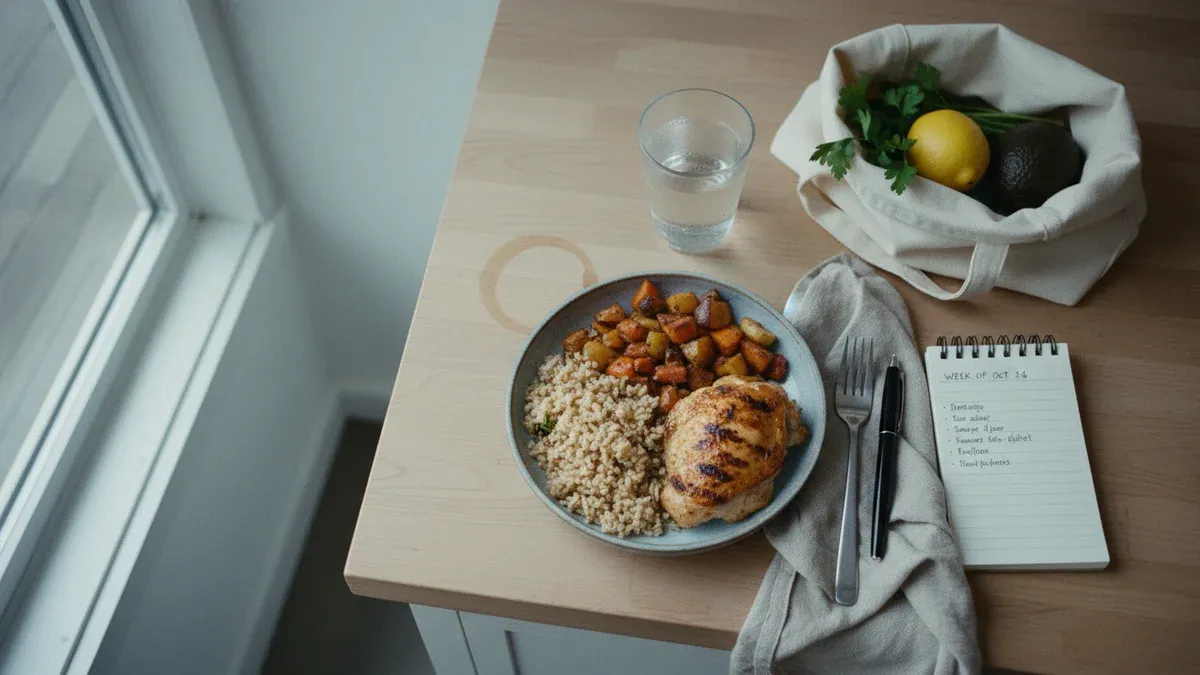
Meal planning for one person works best when you build a flexible 3-4 meal rotation, shop for specific recipes in small quantities, and strategically use your freezer to store single portions of batch-cooked meals. The biggest challenge isn’t cooking — it’s buying the right amounts so nothing goes to waste. A solo meal planner can eat well for $50-$75 per week while wasting almost nothing.
Cooking for one gets a bad reputation. People assume it’s lonely, expensive per serving, or not “worth the effort.” In reality, solo meal planning gives you total control over what you eat, when you eat, and how much you spend — with zero compromise.
Key Takeaways
- Solo grocery shoppers waste more food per capita than families because packaging is designed for 4+ servings — meal planning fixes this
- Plan 3-4 dinners per week (not 7) and build in leftover nights to maximize every ingredient
- The freezer is your best friend: batch cook on weekends and freeze single portions for instant weeknight meals
- Shop from bulk bins, buy frozen produce, and split fresh ingredients across multiple recipes to eliminate waste
- A realistic weekly grocery budget for one person is $50-$75 with meal planning, versus $100-$150 without
In This Article
- Why Is Meal Planning Harder When You’re Cooking for One?
- How Much Should One Person Spend on Groceries Per Week?
- The Single-Serving Meal Planning Framework
- Smart Grocery Shopping Tips for Solo Cooks
- Best Recipes That Scale Down Well
- How to Use Leftovers Strategically
- Sample 7-Day Meal Plan for One
- FAQ: Meal Planning for One Person
- Solo Meals Worth Savoring
Why Is Meal Planning Harder When You’re Cooking for One?
Cooking for one presents unique challenges that families don’t face:
Packaging Works Against You
Most grocery items are packaged for families of 3-4. A bunch of cilantro, a bag of spinach, a package of chicken breasts — all sized for multiple people. Without a plan, half of what you buy spoils before you use it.
The USDA reports that single-person households waste more food per capita than any other household size. It’s not carelessness — it’s a packaging problem that meal planning solves.
Recipes Assume Multiple Servings
Most recipes serve 4-6. Halving recipes works for some dishes, but it’s awkward with others (how do you use half an egg?). And dividing ingredient quantities leads to odd measurements that are hard to shop for.
The Motivation Gap
After a long day, cooking “just for yourself” can feel like too much effort. Without a plan, the default becomes takeout, cereal for dinner, or skipping meals entirely — all of which cost more and feel worse long-term.
The Variety Trap
You want variety, but buying ingredients for seven completely different meals means seven sets of perishable items, most of which won’t get fully used. The result: a fridge full of half-used ingredients and nothing that makes a complete meal.
How Much Should One Person Spend on Groceries Per Week?
Here’s what realistic grocery spending looks like for one person:
| Budget Level | Weekly Spend | Monthly Spend | What It Looks Like |
|---|---|---|---|
| Tight budget | $40-$55 | $160-$220 | Rice, beans, eggs, seasonal produce, store brands |
| Moderate budget | $55-$75 | $220-$300 | Varied proteins, fresh produce, some convenience items |
| Comfortable budget | $75-$100 | $300-$400 | Quality proteins, organic options, specialty ingredients |
Without meal planning, most single people spend $100-$150 weekly because of food waste, impulse buys, and frequent takeout. That’s $5,200-$7,800 annually — much of it wasted.
With meal planning, a moderate budget of $55-$75 weekly ($2,860-$3,900 annually) provides nutritious, varied meals with minimal waste. That’s a potential savings of $2,000-$4,000 per year.
For more strategies on cutting grocery costs, see our guide on how to cut your grocery bill with meal planning.
The Single-Serving Meal Planning Framework
Here’s a 5-step system designed specifically for solo cooking:
Step 1: Plan 3-4 Dinners, Not 7
This is the most important mindset shift. You don’t need a unique dinner every night. Plan 3-4 meals that yield 2 servings each. That gives you 6-8 servings for 7 nights, with built-in flexibility for leftovers, social plans, or nights when you just want toast.
Why it works: Fewer unique meals means fewer unique ingredients, which means less waste and simpler shopping.
Step 2: Overlap Ingredients Across Meals
Choose recipes that share perishable ingredients:
- Week using bell peppers: Stuffed peppers Monday, fajitas Wednesday, pepper and egg scramble for a quick dinner Friday
- Week using fresh herbs: Herb-crusted chicken Tuesday, tabbouleh Thursday
- Week using spinach: Spinach and mushroom pasta Monday, spinach smoothie breakfast Tuesday-Wednesday, spinach and feta frittata Thursday
When every perishable ingredient appears in at least two meals, nothing goes to waste.
Step 3: Assign a Batch Cook Day
Pick one day (Sunday works for most people) to cook one large-batch recipe. Portion into single servings and freeze what you won’t eat within 3 days.
Good batch cook candidates for one:
- Soups and stews (freeze in single-serving containers)
- Grain bowls with roasted vegetables (refrigerate grains, freeze proteins)
- Pasta sauces (freeze in ice cube trays or small containers)
- Chili or curry (freezes and reheats perfectly)
One batch cook session creates 4-6 future meals that you can pull from the freezer on busy nights.
Step 4: Keep a Running “Pantry Meal” List
Maintain a list of 5-6 meals you can make entirely from pantry and freezer staples — no fresh shopping required. These are your safety net for weeks when life gets chaotic:
- Pasta with jarred sauce and canned vegetables
- Rice and beans with frozen vegetables
- Fried rice with frozen peas, eggs, and soy sauce
- Quesadillas with canned beans and frozen peppers
- Omelette with whatever cheese and vegetables are on hand
Step 5: Shop with a Specific List (No Browsing)
Create your shopping list directly from your meal plan. Include exact quantities. Get in, get what you need, get out.
For a complete beginner’s framework, see our beginner’s guide to meal planning.
Smart Grocery Shopping Tips for Solo Cooks
Buy from Bulk Bins
Bulk bins let you buy exactly the amount you need — 1 cup of rice instead of a 5-pound bag, a handful of nuts instead of a full container. This is the single best grocery hack for solo shoppers.
Best bulk bin purchases for one:
- Grains (rice, quinoa, oats)
- Dried beans and lentils
- Nuts and seeds
- Spices (buy small amounts instead of full jars)
- Pasta
Choose Frozen Over Fresh (Sometimes)
Frozen produce is picked and frozen at peak ripeness, so it’s nutritionally equivalent to fresh — and it won’t spoil. Keep these frozen staples on hand:
- Frozen spinach, broccoli, and stir-fry vegetable mixes
- Frozen berries for smoothies and oatmeal
- Frozen shrimp (defrosts in minutes, cooks in 5)
- Frozen edamame (protein-rich side dish or snack)
Buy Proteins in Bulk, Freeze Individually
When chicken, salmon, or ground meat is on sale, buy the large package and immediately portion it into single servings using freezer bags. Label with contents and date. You’ll pay bulk prices but use single-serving amounts.
Use the Salad Bar Strategically
Need 1 cup of diced onion, a handful of cherry tomatoes, and some shredded carrots? The salad bar lets you buy pre-cut produce in exactly the quantity you need. The per-pound price is higher, but you waste nothing — making it cheaper overall for a single person.
Shop Small, Shop Often (If It Works for You)
The “shop once weekly” rule works for families, but solo cooks sometimes do better with two smaller trips — one main trip on the weekend and a quick produce run mid-week. This keeps fresh items at peak quality without overbuying.
For more on keeping a well-stocked kitchen, see our pantry staples checklist.
Best Recipes That Scale Down Well
Not all recipes work for one person. Here are categories that do:
Perfect for One
- Sheet pan dinners: One protein + vegetables on a single sheet pan. No scaling needed.
- Stir-fries: Use one chicken breast or a handful of shrimp, whatever vegetables you have, and a simple sauce.
- Grain bowls: Cook a base grain, add protein and toppings. Infinitely customizable.
- Frittatas and omelettes: 2-3 eggs plus whatever needs using from the fridge.
- Single-serve pasta: 2 oz dried pasta, a splash of sauce, and one protein.
Good for Batch Cooking (Freeze Extras)
- Soups and stews: Make a full pot, eat one serving, freeze the rest in individual portions.
- Curries: Scale beautifully and actually taste better reheated.
- Chili: Freezes perfectly, reheats in minutes.
- Meatballs or meatloaf: Form individual portions, freeze uncooked on a sheet pan, then bag them.
- Pasta sauce: A big batch of marinara or bolognese lasts months frozen.
Avoid When Cooking for One
- Recipes requiring an entire roast or whole chicken (unless you plan 3-4 meals around it)
- Dishes that don’t reheat well (crispy items, delicate fish preparations)
- Recipes with highly perishable garnishes you won’t use again
How to Use Leftovers Strategically
The key to leftovers for one: plan them as their own meal, not as an afterthought.
The “Cook Once, Eat Twice” Method
Plan your week so that dinner leftovers become tomorrow’s lunch:
| Dinner | Next-Day Lunch |
|---|---|
| Grilled chicken + roasted vegetables | Chicken grain bowl with leftover veggies |
| Pasta bolognese | Bolognese-stuffed pepper or as a wrap filling |
| Stir-fry with rice | Fried rice using leftover rice and protein |
| Roasted salmon + salad | Salmon salad sandwich or salmon rice bowl |
| Turkey meatballs + pasta | Meatball sub or meatball soup |
This system means you cook once and eat twice — halving your cooking time for the week.
The Remix Principle
When you’re tired of the same flavors, change the format:
- Same ingredients, different cuisine: Monday’s grilled chicken becomes Wednesday’s chicken tacos with salsa and lime
- Same base, different temperature: Hot pasta tonight becomes cold pasta salad tomorrow
- Same protein, different vehicle: Steak dinner becomes steak sandwich for lunch
For more ideas on keeping meals interesting, check out our guide on meal prep without getting bored.
Sample 7-Day Meal Plan for One
Here’s a realistic week that uses overlapping ingredients, batch cooking, and strategic leftovers:
Shared ingredients this week: chicken thighs (2), bell peppers (2), spinach (1 bag), garlic, onion, rice, eggs, canned beans
| Day | Breakfast | Dinner | Notes |
|---|---|---|---|
| Sunday | Yogurt + granola | Batch cook: chicken thighs + roasted peppers + rice | Portion into 3 containers |
| Monday | Spinach smoothie | Chicken rice bowl with roasted peppers | From Sunday’s batch |
| Tuesday | Toast + eggs | Spinach and bean soup (from pantry + fresh spinach) | Make 3 servings, freeze 1 |
| Wednesday | Overnight oats | Chicken fried rice with leftover rice + peppers | Uses Sunday’s batch |
| Thursday | Spinach smoothie | Bean quesadilla + side salad | Uses remaining beans and spinach |
| Friday | Toast + eggs | Leftovers or pantry meal | Use whatever remains |
| Saturday | Brunch out or eggs | Flexible: social dinner, takeout, or freezer meal | No planning pressure |
Estimated grocery cost: $45-$55 Fresh items purchased: chicken thighs, bell peppers, spinach, yogurt, eggs, one onion From pantry/freezer: rice, canned beans, garlic, oats, granola, bread, tortillas, oil, spices
This plan generates zero food waste because every fresh ingredient is used across multiple meals.
FAQ: Meal Planning for One Person
Is it cheaper to meal plan for one person?
Yes. Meal planning for one typically reduces grocery spending by 30-50%. Without a plan, single-person households spend $100-$150 weekly on groceries plus takeout, with significant food waste. With a plan, you can eat well for $50-$75 weekly by buying only what you need, using ingredients across multiple meals, and batch cooking to prevent waste.
How do I stop wasting food when cooking for one?
Three strategies work best: overlap ingredients across meals so every perishable item gets used at least twice, batch cook and freeze single portions for future meals, and buy from bulk bins or frozen sections to get exactly the quantities you need. Planning 3-4 meals instead of 7 also reduces the variety of perishable ingredients you need to buy.
What are the easiest meals to cook for one person?
Sheet pan dinners (one protein + vegetables, 25 minutes), stir-fries (10 minutes with pre-cut ingredients), grain bowls (assemble from prepped components), egg-based meals (frittatas, omelettes, scrambles), and single-serve pasta dishes. These all scale naturally to one serving without awkward ingredient adjustments.
How many meals should I plan per week if I live alone?
Plan 3-4 unique dinners that each yield 2 servings. This gives you 6-8 dinner servings for 7 nights, with built-in flexibility for leftovers, social plans, or nights when you prefer something simple. Planning all 7 dinners leads to overbuying and waste — the exact problem you’re trying to avoid.
Can I meal prep for one person on a budget?
Absolutely. Focus on affordable proteins (eggs, canned beans, chicken thighs), buy grains and legumes from bulk bins, use frozen vegetables instead of fresh when possible, and batch cook one large recipe per week to freeze in single portions. A well-planned week of solo meals costs $40-$55 on a tight budget without sacrificing nutrition or variety.
Solo Meals Worth Savoring
Cooking for one isn’t about settling — it’s about freedom. You eat exactly what you want, when you want, without negotiating with anyone else’s preferences. Meal planning just makes that freedom practical by eliminating the waste, the decision fatigue, and the guilt of another expensive takeout order.
Start small: plan three dinners for next week, make a list, and shop once. Notice how much less you spend, how much less you throw away, and how much better it feels to open the fridge and know exactly what you’re making.
Tavola helps busy parents spend less time planning and more time around the table — because every family recipe tells a story worth preserving.