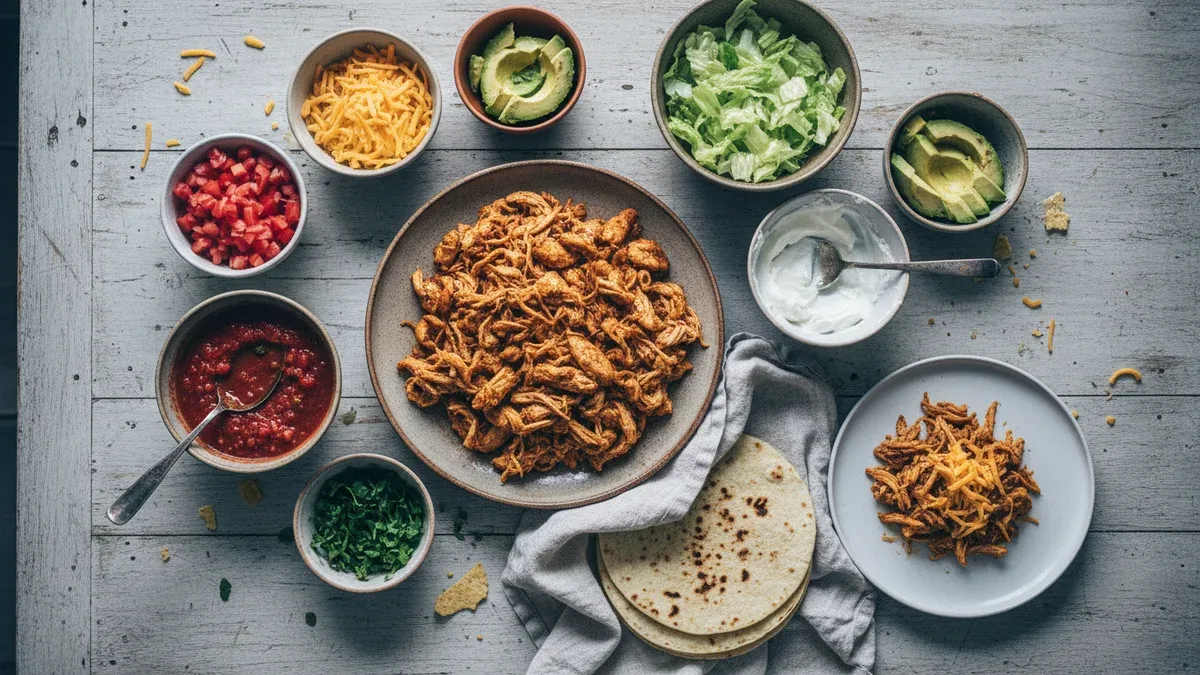
You don’t need to cook separate meals for picky eaters. The most effective strategy is building “choose your own adventure” meals — one base dish with customizable toppings, sauces, and sides that let everyone at the table eat what they’re comfortable with. This approach cuts your cooking time in half, reduces mealtime battles, and naturally exposes picky eaters to new foods without pressure.
Key Takeaways
- The “one meal, many ways” strategy (tacos, bowls, pasta bars) lets picky and adventurous eaters eat together without separate cooking
- Most picky eating in children is developmentally normal and peaks between ages 2-6 — pressure and force backfire
- Plan 3-4 customizable dinners per week, keeping at least one “safe food” on every plate
- Build a rotation of 10-12 family-approved meals and introduce new foods as optional sides, not main dishes
- Involve picky eaters in meal planning and prep — kids who help choose and prepare food are more likely to try it
In This Article
- Why Picky Eating Happens (And Why It’s Normal)
- The “One Meal, Many Ways” Strategy
- How to Build a Picky-Eater-Friendly Meal Plan
- 10 Family Dinners That Work for Picky and Adventurous Eaters
- What About Lunches and Snacks?
- How to Gradually Expand What Picky Eaters Will Try
- FAQ: Meal Planning for Picky Eaters
- One Table, One Meal
Why Picky Eating Happens (And Why It’s Normal)
Before diving into meal planning strategies, it helps to understand why picky eating happens. It’s rarely about your cooking.
It’s developmental. Children between ages 2 and 6 go through a phase called food neophobia — a natural fear of new foods. Evolutionary biologists believe it developed as a survival mechanism to prevent young children from eating potentially dangerous plants and berries. It’s hardwired, not a reflection of your parenting.
Sensory sensitivity is real. Some kids (and adults) experience textures, smells, or flavors more intensely. Slimy foods, mixed textures, or strong-smelling vegetables can genuinely feel overwhelming. This isn’t being dramatic — their experience is different from yours.
Pressure makes it worse. Research consistently shows that forcing, bribing, or punishing kids around food increases pickiness and creates negative associations with mealtimes. The “you can’t leave the table until you finish your broccoli” approach backfires long-term.
The good news: most children naturally outgrow picky eating when given consistent, low-pressure exposure to a variety of foods. Your job isn’t to fix it overnight. It’s to keep mealtimes positive and keep offering variety.
The “One Meal, Many Ways” Strategy
This is the core framework that eliminates the need for separate meals. Instead of cooking entirely different dishes for different family members, you cook one base meal and let everyone customize it.
How It Works
- Choose a base: protein + starch (chicken + rice, ground beef + tortillas, pasta + sauce)
- Prepare toppings and sides separately: Put components in individual bowls on the table
- Let everyone build their own plate: The adventurous eater loads up on toppings; the picky eater sticks to plain rice and chicken
Why This Works
- No separate cooking — you made one meal
- No mealtime battles — everyone has choices
- Natural exposure — picky eaters see new foods on the table without pressure to eat them
- Shared family meal — everyone sits together eating variations of the same dinner
The key shift: you’re responsible for what’s offered, they’re responsible for what they eat from what’s offered.
How to Build a Picky-Eater-Friendly Meal Plan
Step 1: Identify Your Family’s “Safe Foods”
Every picky eater has a short list of foods they’ll reliably eat. Write them down:
- Proteins: Chicken nuggets? Plain grilled chicken? Hot dogs? Cheese?
- Starches: Plain pasta? Rice? Bread? Tortillas?
- Fruits/vegetables: Apples? Carrots? Corn? Bananas?
- Sauces: Ketchup? Ranch? Butter?
These become your building blocks. Every dinner should include at least one safe food so your picky eater always has something to eat.
Step 2: Build Meals Around Customizable Bases
Plan 3-4 dinners per week using the “one meal, many ways” approach:
| Base Meal | Picky Eater Version | Adventurous Version |
|---|---|---|
| Taco night | Plain tortilla + cheese + rice | Loaded tacos with salsa, cilantro, lime |
| Pasta bar | Butter noodles | Pasta with roasted vegetables and pesto |
| Rice bowls | Plain rice + chicken + soy sauce | Teriyaki bowl with edamame, cucumber, sriracha |
| Pizza night | Cheese pizza | Pizza with peppers, mushrooms, olives |
Step 3: Keep a “Yes” List Rotation
Create a master list of 10-12 meals your family can agree on. You don’t need dozens of recipes. Rotate through this list every 2-3 weeks. Consistency is comforting for picky eaters, and repetition saves you planning time.
For help building a weekly rotation, check out our beginner’s guide to meal planning.
Step 4: Add One New Element Per Week
Don’t overhaul your meal plan. Add one unfamiliar food per week as an optional side — not as the main dish. Put it on the table alongside familiar foods. No announcement, no pressure. If they try it, great. If not, also fine.
Step 5: Plan for Reality, Not Perfection
Include backup options in your weekly plan:
- One night of breakfast for dinner (most picky eaters love scrambled eggs or pancakes)
- One “fend for yourself” night where everyone assembles something simple
- Keep frozen standby meals (chicken nuggets, mac and cheese, fish sticks) for genuinely rough days
This isn’t giving up. It’s being realistic about family life.
10 Family Dinners That Work for Picky and Adventurous Eaters
These meals naturally accommodate different preferences without extra cooking:
1. Build-Your-Own Tacos Set out tortillas, seasoned ground beef or shredded chicken, cheese, lettuce, tomatoes, salsa, sour cream, and rice. Everyone assembles their own.
2. Pasta Bar Cook one pot of pasta. Offer butter, marinara sauce, pesto, parmesan, grilled chicken, and roasted vegetables as separate toppings.
3. Homemade Pizza Night Use store-bought dough or naan bread. Set out sauce, cheese, and toppings. Each person makes their own mini pizza. Even the pickiest eater will make a cheese pizza.
4. Rice Bowl Station Cook rice, prepare a protein (grilled chicken, ground turkey, or tofu), and set out toppings: soy sauce, teriyaki, edamame, cucumber, shredded carrots, avocado, sesame seeds.
5. Baked Potato Bar Bake large potatoes. Offer butter, sour cream, cheese, broccoli, chili, bacon bits, and chives. A plain baked potato with butter is a safe food for most kids.
6. Sandwich/Wrap Night Set out bread, wraps, deli meats, cheese, lettuce, tomato, hummus, and spreads. Everyone builds their own. Pair with soup for the adults.
7. Sheet Pan Chicken with Roasted Vegetables Roast chicken pieces and assorted vegetables on a sheet pan. Picky eaters eat the plain chicken; adventurous eaters eat everything. Serve with rice or bread.
8. Quesadillas with Sides Cheese quesadillas take 5 minutes. Add chicken, beans, or vegetables for family members who want them. Serve with fruit and raw veggies on the side.
9. Breakfast for Dinner Scrambled eggs, pancakes or waffles, fruit, and toast. Almost universally loved by picky eaters. Add sausage or a veggie hash for adults.
10. Soup + Sides Night Make a simple soup (chicken noodle, tomato, or minestrone). Serve with bread, crackers, cheese, and raw vegetables. Picky eaters who won’t eat soup can fill up on bread, cheese, and fruit.
For more quick dinner ideas, see our guide to 20-minute dinners for busy weeknights.
What About Lunches and Snacks?
Lunches
Picky eaters tend to eat better when meals are predictable. For school lunches and weekday meals:
- Rotate 3-4 lunch options rather than trying something new daily
- Use bento-style containers — small portions of several foods feel less overwhelming than one big dish
- Include one “sure thing” — if they always eat crackers and cheese, make that the anchor and add other items around it
- Pack foods they can eat independently — picky eaters are more likely to eat at school if they don’t need help opening, cutting, or heating things
Snacks
Strategic snacking can fill nutritional gaps that dinner misses:
- Offer vegetables and hummus at snack time when they’re hungriest (usually after school)
- Smoothies hide a lot — spinach, fruit, yogurt, and a splash of juice blend into something most kids will drink
- Don’t let grazing replace meals — set specific snack times so they arrive at dinner actually hungry
How to Gradually Expand What Picky Eaters Will Try
Expanding a picky eater’s food repertoire is a long game. These strategies work over weeks and months, not days.
The “Food Bridge” Technique
Start with a food they already like, then slowly bridge to a similar food:
- Likes french fries → try sweet potato fries → try roasted sweet potato wedges
- Likes chicken nuggets → try breaded chicken tenders → try grilled chicken strips
- Likes plain pasta → try pasta with butter and parmesan → try pasta with light cream sauce
- Likes apples → try pears → try peaches
Involve Them in the Process
Kids who participate in meal planning and cooking are significantly more likely to try new foods:
- Let them help choose meals for the week (give 2-3 options, not unlimited freedom)
- Assign age-appropriate kitchen tasks — washing vegetables, stirring, pouring ingredients
- Take them grocery shopping and let them pick one new fruit or vegetable to try
- Grow herbs or cherry tomatoes together — food they grew themselves feels less threatening
The “Learning Plate” Approach
Place a small amount of a new food on a separate “learning plate” next to their regular plate. They can look at it, touch it, smell it, or ignore it entirely. No requirement to taste it. After 10-15 exposures like this, many children will voluntarily try the food.
Research shows it can take 15-20 neutral exposures before a child accepts a new food. Most parents give up after 3-5 attempts.
What Not to Do
- Don’t hide vegetables in other foods — it erodes trust when they find out
- Don’t use dessert as a reward for eating dinner — it teaches them that dessert is the good food and dinner is the punishment
- Don’t comment on what they eat or don’t eat — “You’re being such a good eater!” puts performance pressure on meals
- Don’t compare siblings — “Your sister eats everything!” doesn’t motivate; it shames
FAQ: Meal Planning for Picky Eaters
How many meals should I plan per week for a picky-eater household?
Plan 4-5 dinners per week. Leave 1-2 nights for leftovers or flexible meals (breakfast for dinner, sandwiches). This gives you enough structure without making meal planning feel like a second job. For a broader planning framework, see our budget meal planning guide for families.
Should I make separate meals for picky eaters?
No. Making separate meals teaches picky eaters that they’ll always get an alternative, which removes any motivation to try what the family is eating. Instead, use the “one meal, many ways” strategy: serve customizable meals where everyone can build a plate that works for them from the same base ingredients.
At what age do kids outgrow picky eating?
Most children begin expanding their food preferences between ages 6 and 10, though the timeline varies widely. Some kids remain selective eaters into their teens. Consistent, low-pressure exposure to variety is the most effective long-term strategy. If picky eating is extreme (fewer than 10 accepted foods, gagging, weight loss), consult a pediatric feeding specialist.
What if my picky eater won’t eat anything I make?
First, make sure at least one safe food is available at every meal. If they still won’t eat, stay calm — skipping one meal won’t harm a healthy child. Avoid offering a replacement meal. They’ll eat more at the next meal or snack time. If this happens consistently, review whether meals include enough familiar elements.
Can meal planning apps help with picky eaters?
Yes. Apps that let you save and organize your family’s accepted recipes make rotation planning much easier. Instead of remembering which 12 meals everyone will eat, you can tag recipes by who likes them and quickly build weekly plans around your family’s actual preferences.
One Table, One Meal
Feeding a family with picky eaters doesn’t have to mean running a short-order kitchen. The “one meal, many ways” approach keeps everyone at the same table, eating variations of the same dinner, without the stress of cooking multiple dishes.
Start this week: pick two customizable dinners from the list above (tacos and pasta bar are the easiest entry points). Put the components in separate bowls on the table. Let everyone build their own plate. You’ll spend less time cooking, less energy negotiating, and more time actually enjoying dinner together.
Tavola helps busy parents spend less time planning and more time around the table — because every family recipe tells a story worth preserving.