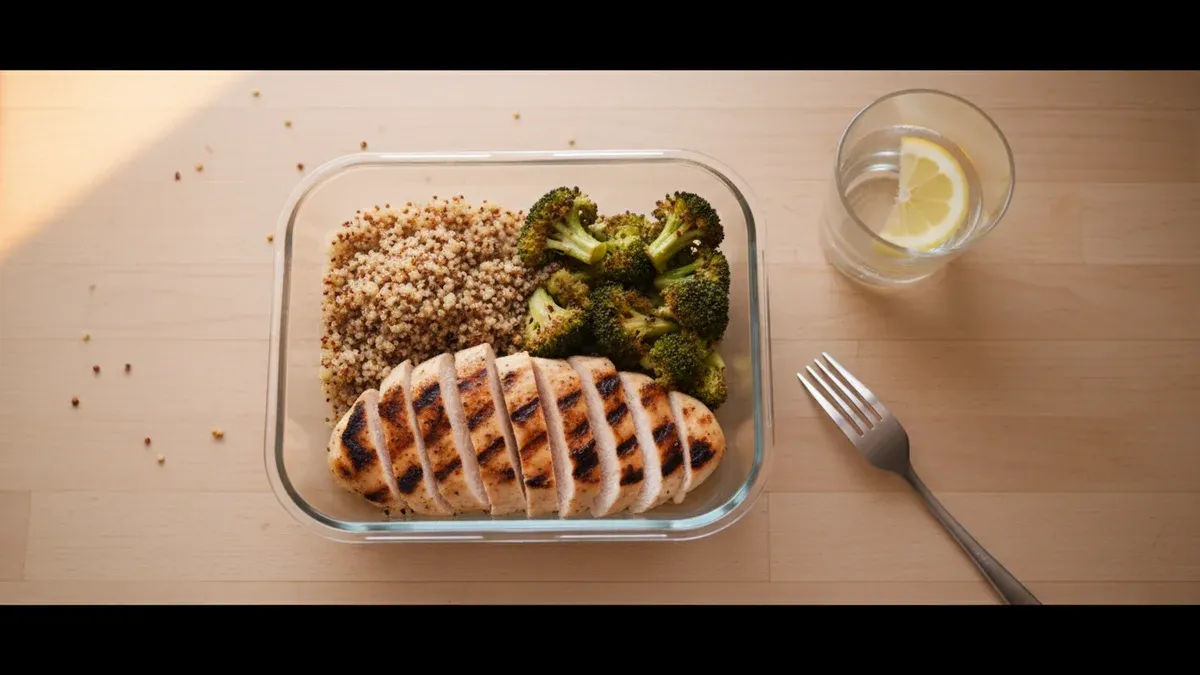
Meal planning is one of the most effective tools for weight loss — not because it forces you to eat less, but because it removes the daily decisions that lead to overeating. When you know exactly what you’re eating for dinner, you don’t end up ordering pizza at 7 PM because you’re too tired to think. Research from the International Journal of Behavioral Nutrition and Physical Activity found that people who plan meals are significantly more likely to have a healthier diet and lower rates of obesity.
The catch? Most “weight loss meal plans” you find online are miserable. They involve tiny portions, bland food, and ingredients you’d never buy twice. That’s not a plan — that’s a punishment. A sustainable weight loss meal plan should leave you feeling full, include food you actually enjoy, and fit into your real life.
Key Takeaways
- A moderate calorie deficit of 300-500 calories per day leads to sustainable weight loss of 0.5-1 lb per week without constant hunger
- Focus on volume eating: fill half your plate with vegetables and fiber-rich foods that keep you full on fewer calories
- Protein is your best friend — aim for 25-30g per meal to preserve muscle and control hunger
- Prep flexible components (proteins, grains, vegetables) rather than rigid complete meals so you don’t get bored
- Don’t eliminate entire food groups or your favorite foods — restriction leads to bingeing, not long-term results
In This Article
- Does Meal Planning Actually Help With Weight Loss?
- Why Most Diet Meal Plans Fail
- How to Build a Weight Loss Meal Plan That Works
- A Sample 7-Day Meal Plan for Weight Loss
- Smart Grocery Shopping for Weight Loss
- How to Meal Prep for Weight Loss Without Spending All Sunday in the Kitchen
- Common Mistakes That Sabotage Weight Loss Meal Plans
- FAQ: Meal Planning for Weight Loss
- Start Simple, Stay Consistent
Does Meal Planning Actually Help With Weight Loss?
Yes — and the reason is less about what you eat and more about what you avoid.
Unplanned eating is where most excess calories sneak in. The after-work snacking while you figure out dinner. The extra-large portion because you’re starving by the time you cook. The drive-through run because there’s nothing ready at home.
Meal planning addresses all three by:
- Reducing impulse eating. When your meals are decided, you don’t browse the pantry at 4 PM looking for “something.”
- Controlling portions naturally. Pre-portioned meals remove the guesswork. You eat what’s in the container.
- Cutting takeout spending. The average takeout meal contains 200-300 more calories than a home-cooked version of the same dish, largely from added oils and larger portions.
You don’t need to count every calorie or weigh every gram of chicken. Planning ahead simply creates structure that makes overeating harder and eating well easier.
Why Most Diet Meal Plans Fail
If you’ve tried a “weight loss meal plan” from a magazine or influencer and gave up within a week, you’re not alone. Most pre-made diet plans fail for predictable reasons:
They’re too restrictive. Cutting to 1,200 calories when you’re used to 2,200 is a recipe for misery. You’ll be hungry, irritable, and thinking about food constantly. A deficit that large is also counterproductive — your body ramps up hunger hormones and slows metabolism to compensate.
They ban entire food groups. No carbs. No sugar. No dairy. These rules create an all-or-nothing mindset where one “slip” feels like failure. In reality, no single food causes weight gain — overconsumption does.
They ignore real life. A meal plan that requires cooking three separate meals from scratch every day doesn’t survive a busy Tuesday. If the plan can’t handle a late meeting, a kid’s soccer practice, or a night when you just don’t feel like cooking, it’s not a real plan.
They’re boring. Plain chicken breast, steamed broccoli, and brown rice for every meal. By day three, you’re eyeing the frozen pizza like a long-lost friend.
The fix isn’t more discipline. It’s a better plan.
How to Build a Weight Loss Meal Plan That Works
Step 1: Find Your Calorie Target (Without Obsessing)
You need a moderate calorie deficit to lose weight — not a dramatic one.
Quick estimate:
- Multiply your body weight (in pounds) by 12-14 to estimate maintenance calories
- Subtract 300-500 calories for a sustainable deficit
- Example: 170 lb person × 13 = 2,210 maintenance → 1,710-1,910 daily target
This produces roughly 0.5-1 lb of weight loss per week. It’s not dramatic, but it’s sustainable — and you won’t feel like you’re starving.
Important: This is a starting point, not a rigid rule. If you’re consistently hungry, eat more. If you’re not losing after 2-3 weeks, reduce slightly. Your body will tell you if the deficit is too aggressive.
Step 2: Build Your Plate Right
Every meal should follow this general structure:
| Component | Portion | Calorie Impact | Why It Matters |
|---|---|---|---|
| Vegetables | Half the plate | Low (25-50 cal per cup) | Volume and fiber keep you full |
| Protein | Quarter of the plate | Moderate (120-200 cal per serving) | Preserves muscle, highest satiety per calorie |
| Complex carbs | Quarter of the plate | Moderate (100-200 cal per serving) | Sustained energy, prevents cravings |
| Healthy fats | Thumb-sized portion | Calorie-dense (100-130 cal per tbsp) | Flavor, satiety, nutrient absorption |
This isn’t a rigid formula — it’s a visual guide. Glance at your plate and roughly check the proportions. That’s enough.
Step 3: Prioritize Protein
Protein is the single most important nutrient for weight loss. Here’s why:
- It’s the most satiating macronutrient. Protein keeps you full longer than carbs or fat, calorie for calorie.
- It preserves muscle. During a calorie deficit, your body can lose muscle along with fat. Adequate protein (1.2-1.6 g per kg body weight) prevents this.
- It has the highest thermic effect. Your body burns 20-30% of protein calories during digestion, compared to 5-10% for carbs and 0-3% for fat.
Practical targets:
- Aim for 25-30 g protein per main meal
- Include a protein source at every eating occasion, including snacks
- Good options: chicken breast, fish, eggs, Greek yogurt, cottage cheese, tofu, lentils, beans
For more high-protein options that meal prep well, check out our high-protein meal prep recipes.
Step 4: Use Volume Eating to Stay Full
The secret to eating in a calorie deficit without constant hunger is volume. Some foods take up a lot of space in your stomach for very few calories.
High-volume, low-calorie foods:
- Leafy greens (10-15 cal per cup)
- Cucumbers, celery, bell peppers (15-30 cal per cup)
- Broccoli, cauliflower, zucchini (25-40 cal per cup)
- Berries (50-85 cal per cup)
- Watermelon (45 cal per cup)
- Broth-based soups (60-100 cal per cup)
- Popcorn, air-popped (30 cal per cup)
Build meals around these foods and add protein and carbs to them — not the other way around. Start with a big base of vegetables, then add your protein and grain. Your plate looks enormous. Your calorie count stays reasonable.
Step 5: Plan for the Moments That Derail You
Everyone has predictable weak points. Identify yours and plan around them:
The after-work snack attack: Have a planned snack ready — Greek yogurt with berries, apple with peanut butter, or vegetables with hummus. If you’re eating at 4 PM because dinner isn’t until 7, that’s not a problem to fix. It’s a meal to plan.
The weekend free-for-all: Keep your meal structure on weekends too, but allow more flexibility for social meals. One untracked restaurant dinner won’t undo a week of good eating.
The “I’m too tired to cook” night: Have 2-3 emergency meals that take under 10 minutes: eggs and toast with vegetables, a pre-made soup with bread, or a quick stir-fry with pre-cut vegetables and a rotisserie chicken.
A Sample 7-Day Meal Plan for Weight Loss
This sample plan targets roughly 1,600-1,800 calories per day. Adjust portions based on your personal calorie target.
| Day | Breakfast | Lunch | Dinner | Snack |
|---|---|---|---|---|
| Mon | Greek yogurt parfait with berries and granola | Chicken grain bowl with roasted vegetables and tahini dressing | Baked salmon with sweet potato and steamed broccoli | Apple + 1 tbsp almond butter |
| Tue | Veggie egg scramble (2 eggs + spinach, peppers, onions) with toast | Turkey and hummus wrap with mixed greens | Turkey meatballs with zucchini noodles and marinara | Cottage cheese with pineapple |
| Wed | Overnight oats with protein powder and banana | Leftover salmon over mixed greens with avocado | Chicken stir-fry with mixed vegetables and brown rice | Handful of almonds + orange |
| Thu | Greek yogurt parfait (same as Monday) | Chicken fajita bowl with black beans, peppers, salsa | Lemon herb chicken thighs with roasted cauliflower and quinoa | Vegetables + hummus |
| Fri | Veggie egg scramble with toast | Turkey and black bean burrito bowl | Shrimp and vegetable stir-fry with rice noodles | Greek yogurt with berries |
| Sat | Banana protein pancakes | Big salad with grilled chicken, avocado, and seeds | Homemade pizza on whole wheat base with lots of vegetables | Popcorn (air-popped) |
| Sun | Eggs, avocado toast, and fruit | Soup and crusty bread | Slow cooker chicken with root vegetables | Dark chocolate (2 squares) + strawberries |
Notice: There’s pizza on Saturday. There’s chocolate on Sunday. There’s bread and granola and real food throughout. This is what a sustainable weight loss plan looks like — not a list of sacrifices.
For more on building a weekly dinner rotation, see our guide to creating a weekly dinner system.
Smart Grocery Shopping for Weight Loss
Your meal plan is only as good as what’s in your fridge. Stock your kitchen to support your plan.
The Weight Loss Grocery List Framework
Proteins (buy weekly):
- Chicken breasts or thighs
- Ground turkey (93% lean)
- Salmon or white fish
- Eggs
- Greek yogurt (plain, nonfat or low-fat)
- Canned tuna or chickpeas
Vegetables (buy weekly, in season):
- Leafy greens (spinach, mixed greens)
- Broccoli, cauliflower
- Bell peppers, zucchini, onions
- Cherry tomatoes, cucumbers
- Sweet potatoes
Complex carbs (buy biweekly):
- Brown rice or quinoa
- Whole wheat bread or tortillas
- Oats
- Pasta (whole grain or legume-based)
Healthy fats (buy monthly):
- Olive oil
- Avocados (buy weekly)
- Nuts and nut butters
- Seeds (chia, flax)
Flavor boosters (stock once):
- Hot sauce, mustard, vinegar
- Lemon and lime juice
- Fresh herbs (buy weekly) and dried spice blends
- Low-sodium soy sauce
- Salsa
For a more complete shopping template, check out our grocery list template for healthy eating.
Shopping Tips for Weight Loss
- Shop the perimeter first. Produce, proteins, and dairy line the outer edges. Processed foods live in the center aisles.
- Never shop hungry. This cliché exists because it’s true. Eat before you go.
- Buy in bulk where it makes sense. Frozen vegetables, chicken breasts, and grains are cheaper in larger quantities and keep well.
- Don’t avoid frozen produce. Frozen fruits and vegetables are picked and frozen at peak ripeness. They’re nutritionally equivalent to fresh and last weeks longer.
How to Meal Prep for Weight Loss Without Spending All Sunday in the Kitchen
You don’t need elaborate meal prep to eat well for weight loss. Spend 60-90 minutes on Sunday and you’re set for the week.
The Minimal Prep Method
Batch-cook two proteins (25 min):
- Bake a sheet pan of chicken breasts
- Brown a pound of ground turkey with seasoning
Cook one grain (20 min, mostly hands-off):
- Make a large pot of brown rice or quinoa
Roast one pan of vegetables (25 min, mostly hands-off):
- Toss broccoli, sweet potatoes, and bell peppers with olive oil and seasoning
- Roast at 400°F while you handle the proteins
Prep raw vegetables (10 min):
- Wash and chop cucumbers, bell peppers, celery, and carrots for snacking
Make one sauce or dressing (5 min):
- A simple lemon-herb vinaigrette or tahini dressing elevates everything
That’s it. With these components, you can assemble different meals all week without eating the same thing twice. Monday’s chicken goes into a grain bowl. Tuesday’s chicken becomes a wrap. Wednesday’s ground turkey goes on zucchini noodles.
For more on the component prep approach, see our Meal Prep Sunday guide.
Common Mistakes That Sabotage Weight Loss Meal Plans
Cutting Calories Too Aggressively
A 1,000-calorie daily deficit sounds like it’ll get results faster. In practice, it makes you miserable, kills your energy, and triggers intense cravings that eventually lead to a binge. Slow and steady — 300-500 calorie deficit — wins every time.
Skipping Meals to “Save” Calories
Skipping breakfast to have a bigger dinner rarely works. You arrive at dinner ravenous and overeat by more than you saved. Spread your calories across 3-4 meals to maintain steady energy and controlled hunger.
Drinking Your Calories
A morning latte with whole milk and syrup can be 300+ calories. A glass of juice is 120. Two glasses of wine at dinner add 250. Liquid calories don’t register the same satiety signals as solid food. Switch to black coffee, water, or unsweetened tea — and save those calories for food that actually fills you up.
Not Adjusting Over Time
As you lose weight, your calorie needs decrease. A plan that created a deficit at 180 lbs may be maintenance at 165 lbs. Recalculate every 10-15 lbs lost, or when progress stalls for more than 2-3 weeks.
Treating Weekends as Cheat Days
Two untracked days of eating can erase five days of deficit. You don’t need to meal plan Saturday and Sunday with the same precision, but maintain awareness. A weekend brunch is fine — a weekend-long free-for-all isn’t.
FAQ: Meal Planning for Weight Loss
How many calories should I eat to lose weight?
A moderate deficit of 300-500 calories below your maintenance level is sustainable for most people. Estimate maintenance by multiplying your weight (in pounds) by 12-14 depending on activity level. For a 160 lb moderately active person, that’s roughly 1,580-1,740 calories per day for weight loss. Adjust based on how you feel and your results over 2-3 weeks.
Can I lose weight without counting calories?
Yes. Many people lose weight simply by following the balanced plate method (half vegetables, quarter protein, quarter carbs), eating slowly until satisfied rather than stuffed, and cutting liquid calories. Calorie counting is a tool, not a requirement. If it stresses you out, the plate method combined with consistent meal planning gets you most of the way there.
What should I eat for dinner to lose weight?
A weight loss dinner should include a lean protein (chicken, fish, tofu), plenty of vegetables (half the plate), and a moderate portion of complex carbs (sweet potato, rice, quinoa). Avoid heavy cream sauces and oversized portions. Cooking methods matter too — grilling, baking, and roasting use less oil than frying.
How do I stop cravings when trying to lose weight?
Cravings usually signal one of three things: you’re not eating enough overall, you’re cutting a food group too drastically, or you’re bored. Make sure your meals are satisfying (enough protein and healthy fats), include foods you enjoy in moderation, and stay hydrated — thirst often masquerades as hunger.
Is meal prepping necessary for weight loss?
Not strictly necessary, but it makes weight loss significantly easier. Having pre-portioned, ready-to-eat meals eliminates the daily decision-making that leads to impulse eating. Even partial prep — just cooking your proteins and chopping vegetables in advance — reduces friction enough to keep you on track.
Start Simple, Stay Consistent
You don’t need to overhaul your entire diet on Monday. Pick one meal to plan consistently — most people find dinner easiest to start with. Get comfortable with that before adding lunch, then breakfast.
The best weight loss meal plan isn’t the most restrictive one. It’s the one you’ll actually follow in three months. Start with foods you already like, build in treats so you never feel deprived, and focus on progress over perfection.
Tavola helps busy parents spend less time planning and more time around the table — because every family recipe tells a story worth preserving.