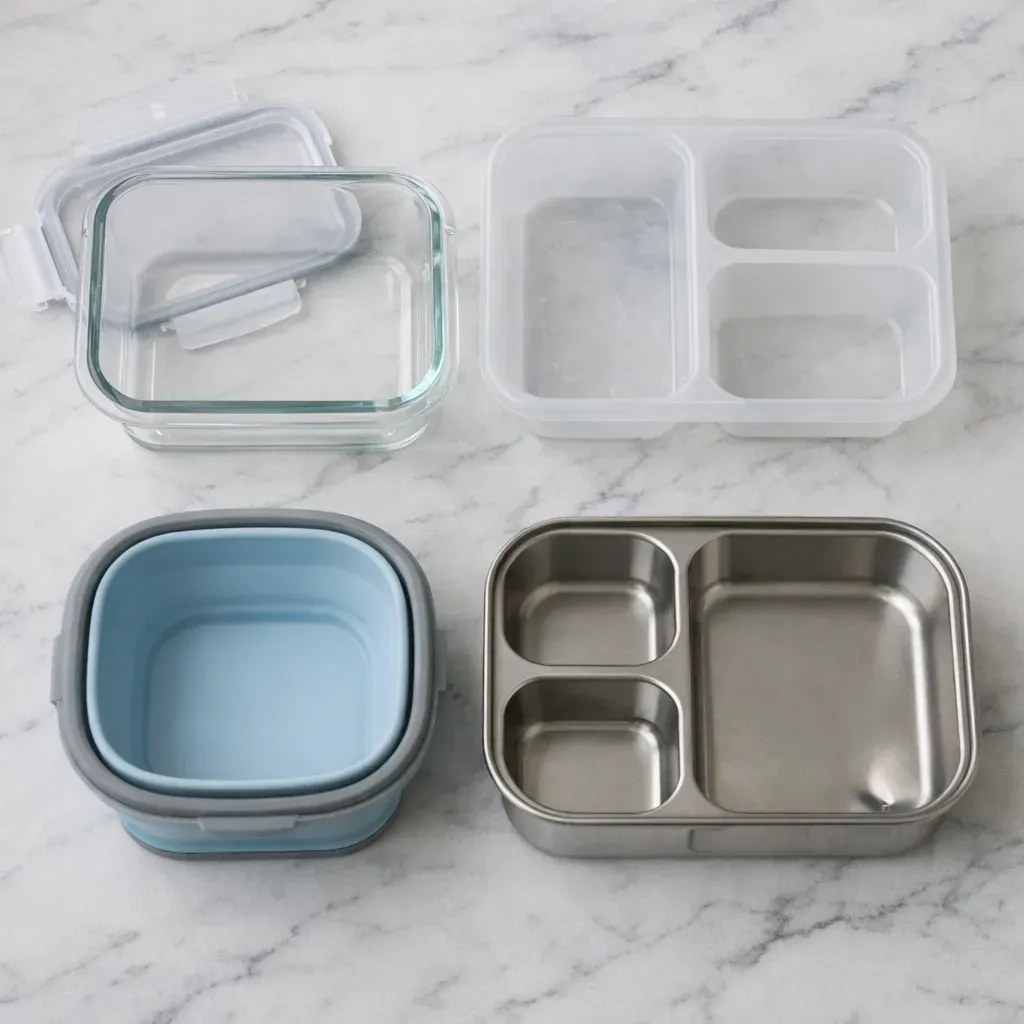
Glass containers are best for reheating and durability (last 5+ years), plastic containers are best for portability and budget ($15-25 for a full set), and silicone containers are best for space-saving storage. For most meal preppers, a combination works best: glass for home storage and reheating, plastic for lunches on the go.
The most important factors are whether containers are microwave-safe, dishwasher-safe, leak-proof, and sized appropriately for your portions.
Key Takeaways
- Glass is best for home reheating and durability (5+ years, no staining), plastic is best for portability and budget ($15-25 for a set), silicone is best for small kitchens (collapses flat)
- Most meal preppers benefit from a mix: glass for home storage and reheating, plastic for lunches on the go, small containers for sauces and snacks
- For leak-proof transport of soups or sauces, look for 4-sided locking lids or screw-top lids — simple snap-on lids will leak
- Start with 10 single-compartment containers (3-4 cup) plus 5 small ones for sides — expand only after you know your actual routine
- Extend container life by washing lids separately, letting hot food cool before sealing, and never microwaving with lids on
In This Article
- Container Material Comparison
- Glass Containers: Detailed Breakdown
- Plastic Containers: Detailed Breakdown
- Silicone Containers: Detailed Breakdown
- Stainless Steel Containers: The Alternative
- Choosing the Right Sizes
- Compartment Layouts
- Leak-Proof Considerations
- Material Recommendations by Use Case
- Maintenance and Longevity Tips
- Common Container Questions
- Start With the Basics
- Make the Right Choice for Your Needs
Container Material Comparison
Here’s a complete breakdown of the three main container materials.
| Feature | Glass | Plastic (BPA-free) | Silicone | Stainless Steel |
|---|---|---|---|---|
| Microwave safe | Yes | Usually (check label) | Yes | No |
| Dishwasher safe | Yes | Yes | Yes | Yes |
| Oven safe | Yes (without lid) | No | Yes (up to 400-450°F) | No |
| Durability | Very high (5+ years) | Moderate (2-3 years) | High (4-5 years) | Very high (10+ years) |
| Weight | Heavy | Light | Light | Moderate |
| Cost per container | $8-15 | $2-5 | $10-15 | $12-20 |
| Stain resistance | Excellent | Poor (tomato sauce stains) | Good | Excellent |
| Odor retention | None | Moderate | Minimal | None |
| Eco-friendliness | High (recyclable) | Moderate (recyclable but degraded) | High (long-lasting) | High (recyclable) |
| Breakability | Can shatter if dropped | Won’t break | Won’t break | Won’t break |
| Best for | Home storage, reheating | Portability, budget | Space-saving, versatile | Lunches without reheating |
Glass Containers: Detailed Breakdown
Glass containers are the premium option for meal prep.
Pros of Glass Containers
Safe for all heating methods. Glass works in the microwave, oven (without plastic lids), and even under the broiler. You can reheat directly in the container without concerns about chemicals leaching.
Doesn’t retain stains or odors. Tomato sauce, curry, turmeric—nothing stains glass. It washes clean every time and doesn’t absorb food smells.
Long-lasting. Quality glass containers last 5-10 years with normal use. The glass itself is nearly indestructible; the lids typically wear out first.
Eco-friendly. Glass is infinitely recyclable and doesn’t degrade over time like plastic. It’s the most sustainable long-term option.
Better food appearance. Clear glass lets you see exactly what’s inside, which helps with meal planning and reduces forgotten food waste.
No chemical concerns. Glass is completely inert—no BPA, no phthalates, no concerns about chemicals leaching into food.
Cons of Glass Containers
Heavy. A glass container with food inside weighs significantly more than plastic. If you’re carrying lunch in a bag, this adds up.
Can break if dropped. While glass is durable, it will shatter if dropped on tile or concrete. This is a concern if you have young kids helping with meal prep or if you’re clumsy.
More expensive upfront. Quality glass containers cost $8-15 each compared to $2-5 for plastic. A full meal prep set can run $60-100.
Takes up more space. Glass containers are bulkier and heavier, so they fill dishwashers and cabinets faster.
Not ideal for freezing. Glass can crack from thermal shock when going from freezer to microwave. If you freeze meals, you need to thaw them slowly.
Best Glass Container Brands
Pyrex (Classic): $$ - Industry standard, widely available, reliable quality. Square and rectangular options with snap lids.
Glasslock: $$$ - Excellent seals with four-sided locking lids. More expensive but very leak-proof.
Prep Naturals: $$ - Good value, comes in sets with multiple sizes. Popular on Amazon.
Rubbermaid Brilliance: $$ - Hybrid design with glass base and sturdy plastic lids. Good balance of durability and seal quality.
When to choose glass: You’re prepping meals primarily for home use, you reheat often, and you’re willing to invest more upfront for longevity.
Plastic Containers: Detailed Breakdown
Plastic containers are the budget-friendly, portable option.
Pros of Plastic Containers
Lightweight. Perfect for packing lunches, taking meals to work, or transporting food anywhere. Kids can carry them easily.
Inexpensive. You can buy a 10-pack for $15-25. If you lose one or it wears out, replacement is cheap.
Won’t shatter. Drop them, toss them in a bag, let kids handle them—plastic containers are virtually indestructible from impacts.
Wide variety of shapes and sizes. More options for compartments, bento-style layouts, and specialized designs.
Easier to stack. Plastic containers are lighter and often nest or stack more efficiently than glass.
Cons of Plastic Containers
Stains easily. Tomato sauce, curry, and turmeric leave permanent orange or yellow stains. After a few months, plastic containers look dingy even when clean.
Retains odors. Garlic, onions, and strong-flavored foods leave lingering smells in plastic. Even after washing, you might smell yesterday’s lunch.
Shorter lifespan. Plastic containers warp, crack, and degrade after 2-3 years of regular use. Lids wear out even faster.
Chemical concerns. Even BPA-free plastic can leach other chemicals when heated. While modern plastics are safer, there’s ongoing research about long-term effects.
Not oven-safe. You can’t put plastic in the oven, and some plastics warp even in the microwave at high heat.
Less eco-friendly. Plastic degrades with each recycling cycle and often ends up in landfills. It’s not as sustainable as glass or stainless steel.
Best Plastic Container Brands
Rubbermaid TakeAlongs: $ - Budget option, widely available, decent quality for the price.
Sistema: $$ - Better sealing lids, varied sizes, good for lunches.
Freshware: $ - Amazon’s choice for meal prep, comes in 3-compartment designs.
Prep Naturals (Plastic version): $ - Good value sets with multiple sizes.
IMPORTANT: Always look for “BPA-free” labels. Most modern meal prep containers are BPA-free, but verify before purchasing.
When to choose plastic: You need portable containers for work or school lunches, you’re on a tight budget, or you’re just starting meal prep and want to test the system before investing more.
Silicone Containers: Detailed Breakdown
Silicone is the newer, space-saving option.
Pros of Silicone Containers
Collapsible for storage. This is silicone’s biggest advantage. Containers collapse flat when empty, saving 70-80% of storage space. Perfect for small kitchens.
Microwave and oven safe. Food-grade silicone handles temperatures up to 400-450°F. You can bake and reheat in the same container.
Won’t break. Flexible and virtually indestructible. Drop it, squeeze it, crush it—silicone bounces back.
Minimal staining and odor retention. Better than plastic, though not as good as glass.
Safe material. Food-grade silicone is inert and doesn’t leach chemicals.
Lightweight. Similar to plastic in weight, easy to carry.
Cons of Silicone Containers
More expensive than plastic. Silicone containers cost $10-15 each, similar to glass but without glass’s longevity advantages.
Floppy when full. Silicone containers are flexible, which makes them harder to carry when filled with liquid or heavy food. They don’t stack as securely as rigid containers.
Lid seal issues. Because they’re flexible, silicone containers sometimes don’t seal as tightly as rigid glass or plastic. Leaks are more common.
Limited availability. Fewer brands and options compared to glass or plastic.
May retain some odors. Better than plastic, but strong spices can linger in the silicone.
Best Silicone Container Brands
Stasher Bags: $$$ - Premium reusable silicone bags, more for snacks than full meal prep, but very popular.
Souper Cubes: $$$ - Silicone freezer trays for portioning soups, stews, and sauces.
Zip Top: $$$ - Silicone containers that stand upright, better for actual meal storage.
Collapsible lunch boxes (various brands): $$ - Generic silicone collapsible containers on Amazon, good value.
When to choose silicone: You have limited storage space, you need oven-safe containers, or you travel frequently and want to collapse empty containers in your luggage.
Stainless Steel Containers: The Alternative
Stainless steel isn’t as common for meal prep but has specific advantages.
Pros of Stainless Steel
Extremely durable. Stainless steel containers last 10+ years. They don’t break, crack, or degrade.
No staining or odors. Similar to glass—completely non-reactive.
Lightweight compared to glass. Easier to carry than glass, more durable than plastic.
Eco-friendly. Fully recyclable and incredibly long-lasting.
Great for cold foods. Salads, sandwiches, and snacks work perfectly.
Cons of Stainless Steel
Not microwave-safe. This is the dealbreaker for meal prep. You can’t reheat directly in stainless steel containers.
Can’t see contents. Opaque containers mean you have to open them to see what’s inside.
More expensive. Quality stainless steel containers cost $12-20 each.
Not leak-proof for liquids. Most stainless steel containers aren’t designed for soups or liquids.
When to choose stainless steel: You don’t reheat meals (you eat cold lunches or have access to plates for reheating), you want maximum durability, or you’re packing kids’ lunches without liquids.
For a complete meal prep system including container recommendations, see our Meal Prep Sunday guide.
Choosing the Right Sizes
Container size matters as much as material.
Standard Meal Prep Sizes
1-compartment containers:
- 1-cup (8 oz): Snacks, sides, small portions
- 2-cup (16 oz): Single meal for weight loss or portion control
- 3-cup (24 oz): Standard single meal
- 4-cup (32 oz): Large meal or family-style serving
3-compartment containers:
- Total 28-36 oz: Protein in large section, two sides in smaller sections
- Common layout: 50% main compartment, 25% each for two sides
Specialized sizes:
- Soup containers: 2-4 cups with screw lids for leak-proof transport
- Snack containers: 4-8 oz for nuts, fruit, crackers
- Sauce containers: 1-2 oz for dressings and sauces
How Many Containers Do You Need?
For one person meal prepping 5 lunches:
- Minimum: 5 main containers (one per day)
- Ideal: 7-10 containers (allows rotation, some in dishwasher while using others)
For one person prepping lunches and dinners:
- Minimum: 10 containers
- Ideal: 15-20 containers
For a family of four:
- Minimum: 20 containers
- Ideal: 30-40 containers
Don’t forget:
- 5-10 small containers for sides, snacks, and ingredients
- 2-4 sauce containers for dressings
Pro tip: Start with a smaller set (10-12 containers) and expand as you learn your actual needs. Many beginners overbuy.
Compartment Layouts
Different layouts work for different meal styles.
1-Compartment Containers
Best for:
- Mixed dishes (pasta, stir-fry, casseroles)
- Soups and stews
- Grain bowls where ingredients mix
- Salads (keep dressing separate)
Advantages: Maximum flexibility, fits any food type
Disadvantages: Foods touch and mix, not ideal for keeping items separate
3-Compartment Containers
Best for:
- Balanced plate meals (protein + 2 sides)
- Portion control (visual guide for protein vs. vegetables)
- Picky eaters who don’t want food touching
- Bento-style lunches
Advantages: Natural portion guidance, keeps foods separate
Disadvantages: Less flexible, harder to fit certain foods
2-Compartment Containers
Best for:
- Main + side meal layouts
- Protein + salad combinations
- Keeping wet and dry foods separate
Advantages: Separation with more flexibility than 3-compartment
Disadvantages: Still less flexible than single compartment
Most versatile approach: Own both 1-compartment and 3-compartment containers in your preferred material. Use the right layout for each meal type.
Leak-Proof Considerations
Not all containers seal equally well.
Testing for Leak-Proof Seals
The flip test: Fill the container halfway with water, seal it, and flip it upside down over the sink. If water leaks, it’s not truly leak-proof.
The bag test: Put the sealed container in a plastic bag. If you wouldn’t trust it to ride in your bag without the secondary protection, the seal isn’t great.
Features of Leak-Proof Containers
4-sided locking lids: Containers with clips on all four sides (like Glasslock) seal better than simple snap-on lids.
Silicone gaskets: Lids with silicone seals around the edge prevent liquid escape.
Screw-top lids: Best for liquids like soups. The threaded seal is more secure than snap lids.
Avoid: Simple one-piece snap lids for liquids. They’re fine for dry foods but won’t contain soups or sauces reliably.
If you’re prepping liquids (soups, curries, stews), invest in containers specifically marketed as leak-proof with locking mechanisms or screw lids.
Material Recommendations by Use Case
Choose materials based on how you’ll use them.
Best for Home Meal Prep
Glass containers are ideal. You’re not carrying them anywhere, weight doesn’t matter, and you’re reheating regularly. The durability and lack of staining justify the higher cost.
Recommended: Pyrex or Glasslock sets in 3-4 cup sizes.
Best for Work Lunches
Plastic containers are ideal for portability. They’re lightweight, won’t break if dropped, and cheap enough to not worry about losing one at the office.
Recommended: Sistema or Freshware 3-compartment containers.
Best for Small Kitchens
Silicone collapsible containers save critical storage space. When empty, they take up minimal room in crowded cabinets.
Recommended: Collapsible silicone containers from Amazon or specialty brands like Zip Top.
Best for Freezer Meals
Glass containers work if you thaw slowly. Plastic containers are safer for freezer-to-microwave use. Silicone is also freezer-safe.
Recommended: Plastic or silicone for direct freezer-to-microwave use. Avoid thermal shock with glass.
Check our freezer-friendly meals guide for more on freezing strategies.
Best for Kids’ Lunches
Stainless steel or plastic work well. Stainless steel is indestructible and eco-friendly. BPA-free plastic is lightweight and budget-friendly when kids inevitably lose containers.
Recommended: Stainless steel bento boxes or colorful plastic containers kids can identify.
Best on a Budget
Plastic containers offer the most value. You can get a complete set for $20-30.
Recommended: Rubbermaid TakeAlongs or generic Amazon meal prep sets.
Best for Sustainability
Glass or stainless steel are most eco-friendly due to longevity and recyclability.
Recommended: Invest in glass for home use, stainless steel for portable needs.
Maintenance and Longevity Tips
Proper care extends container life significantly.
General Care Tips
Wash lids separately. Lids wear out faster than containers. Hand wash lids or place them on the top rack of the dishwasher.
Avoid abrasive scrubbers on plastic. They scratch the surface, making it harder to clean and more prone to staining.
Let hot food cool before sealing. Sealing hot food creates condensation and can warp plastic lids.
Don’t microwave with lids on. Even if the container is microwave-safe, vent the lid or remove it entirely to prevent warping and pressure buildup.
Store with lids off. This allows air circulation and prevents musty odors from developing.
Replace lids as needed. When lids crack or lose elasticity, replace them. Many brands sell replacement lids separately, which is cheaper than buying new containers.
Material-Specific Care
Glass:
- Avoid extreme temperature changes (freezer directly to oven)
- Check for chips or cracks regularly
- Replace if damaged (can shatter during use)
Plastic:
- Hand wash if possible to extend life
- Store away from heat sources (warping)
- Replace when heavily stained or odorous (usually 2-3 years)
Silicone:
- Wash thoroughly after strong-flavored foods
- Ensure completely dry before storing (traps moisture)
- Check for tears or degradation in the silicone
When to Replace Containers
Replace immediately if:
- Glass is chipped or cracked
- Plastic is cracked or deeply scratched
- Lids no longer seal properly
- Containers have permanent odor despite cleaning
- Plastic shows signs of warping
Consider replacing when:
- Plastic is heavily stained (aesthetic, not safety)
- You upgrade to better containers
- You change your meal prep system
For ongoing meal prep success without boredom, see our guide on meal prepping without getting bored.
Common Container Questions
Can I put meal prep containers in the freezer?
Most are freezer-safe, but check labels. Glass can crack from thermal shock (freezer to microwave), so thaw slowly. Plastic and silicone handle freezing better.
Are glass containers really safer than plastic?
Glass is chemically inert and doesn’t leach anything into food. Modern BPA-free plastic is considered safe, but there’s ongoing research about other plasticizers. Glass eliminates any concerns entirely.
How do I remove stains from plastic containers?
Soak in a paste of baking soda and water for 30 minutes, then scrub. For tough stains, leave in direct sunlight for a few hours (UV helps break down stains). Prevention is easier—spray with cooking spray before adding tomato-based foods.
What’s the best container for soup?
Glass or plastic with screw-top lids or 4-sided locking mechanisms. Single-snap lids leak too easily for liquids. Fill only 3/4 full to allow expansion during freezing.
Do I need to buy containers with separate compartments?
Not necessarily. If your meals are mixed (pasta, stir-fry), single-compartment containers work fine. Compartments help with portion control and keeping foods separate but aren’t required.
Start With the Basics
You don’t need to buy every container type immediately.
Beginner meal prep container starter set:
- 10 single-compartment containers (3-4 cup size)
- 5 small containers for snacks or sides (1-2 cup size)
- 2-3 small containers for sauces/dressings
Material choice for beginners: Start with plastic for budget and portability. If meal prep sticks, upgrade to glass for home use after a few months.
Where to buy:
- Amazon: Best variety and prices, read reviews
- Target/Walmart: Rubbermaid and Pyrex widely available
- Container Store: Higher-end options, good sales
- Restaurant supply stores: Bulk containers at good prices
Avoid buying too many until you know your actual meal prep rhythm. Many people start with 30 containers and realize they only use 12 regularly.
Make the Right Choice for Your Needs
The “best” meal prep container depends entirely on your situation. Glass offers durability and safety for home use. Plastic provides portability and value for lunches on the go. Silicone saves space in tiny kitchens. Stainless steel works for cold lunches and sustainability.
Most successful meal preppers own a mix: glass for meals eaten at home, plastic for portable lunches, small containers in various materials for snacks and sides.
Start with one set that fits your primary use case. As you develop your meal prep routine, you’ll naturally discover which sizes and materials work best for your actual needs—and that’s when it makes sense to invest in additional containers that perfectly match your system.
Tavola helps you plan exactly how many containers you’ll need each week based on your meal plan, preventing both over-buying and running short on prep day.