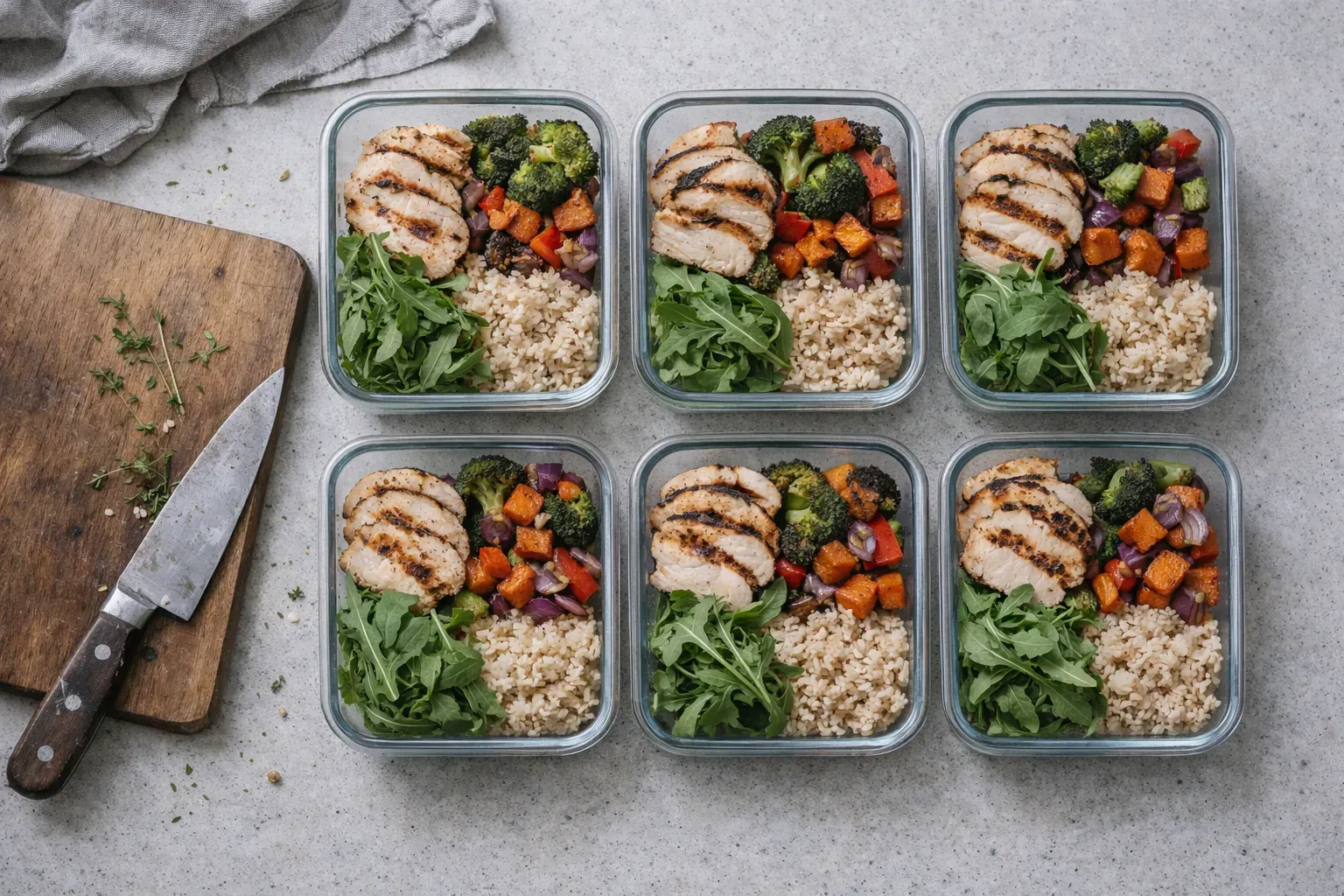
Meal Prep Sunday is a weekly routine where you dedicate 2-4 hours on Sunday (or any day off) to preparing components, full meals, or ingredients that make weeknight cooking faster and easier. Instead of starting from scratch every evening when you’re tired and hungry, you open the fridge to find chopped vegetables, marinated proteins, cooked grains, and prepped ingredients ready to assemble into quick meals.
This guide walks you through exactly what to prep, what to skip, the equipment you need, and a realistic timeline from start to finish. By the end of Sunday, you’ll have set yourself up for a week of stress-free cooking.
Key Takeaways
- Prep components (chopped vegetables, cooked grains, marinated proteins), not identical complete meals — this preserves variety and freshness
- Start long-cooking items first (slow cooker, oven roasts, grains), then chop vegetables while those run unattended
- Cook delicate items fresh (fish, crispy foods, cream-sauce pasta) but prep their marinades and sides on Sunday
- Label every container with contents and date — it prevents food safety guesswork and waste mid-week
- Start small: prep just 2 dinners your first Sunday, then expand as the habit builds
In This Article
- Why Meal Prep Sunday Works
- What to Prep vs. What to Cook Fresh
- Equipment You Need
- The Sunday Meal Prep Timeline
- Storage Tips for Maximum Freshness
- Sample Sunday Prep for a Week of Meals
- Starter Meal Prep Recipes and Ideas
- Common Meal Prep Mistakes (and Fixes)
- How Meal Prep Connects to the Weekly System
- Beyond Efficiency: The Real Gift
- Frequently Asked Questions
- Start This Sunday
Why Meal Prep Sunday Works
The concept is simple: invest a few focused hours on Sunday, reclaim hours throughout the week.
You eliminate weeknight decision fatigue. At 6pm on Tuesday, you’re not staring into the fridge wondering what’s possible. You already know — the ingredients are prepped, the plan is clear, dinner takes 15 minutes.
You save actual cooking time. Chopping vegetables for one meal takes 10 minutes. Chopping vegetables for five meals on Sunday takes 20 minutes. Roasting one batch of chicken takes the same oven time as roasting enough for three dinners. Batch work is efficient.
You reduce food waste. When you prep Sunday’s produce immediately after shopping, it gets used. When vegetables sit untouched in the crisper until Thursday, they often end up composted.
You make healthy eating the easy default. The hardest part of cooking healthy meals is the prep work — washing, peeling, chopping, measuring. When that’s already done, choosing the healthy option becomes effortless.
You preserve what matters most. Meal prep isn’t about eating identical containers of bland chicken and broccoli all week. It’s about handling the tedious parts on Sunday so weeknight dinners can focus on the meaningful parts — teaching your daughter how to make Grandma’s sauce, letting your son flip pancakes, gathering everyone around the table for a meal that actually matters.
What to Prep vs. What to Cook Fresh
This is the most important distinction for beginners. Meal prep Sunday is not about cooking seven complete meals and reheating them. It’s about strategic preparation.
Always Prep These Components
Grains and starches. Cooked rice, quinoa, pasta, and roasted potatoes reheat beautifully. Make a big batch on Sunday, portion it, and you have instant sides all week.
Chopped vegetables. Washed and chopped onions, peppers, carrots, celery, broccoli, cauliflower — these prep tasks take time on weeknights but are quick in batch. Store properly and they stay fresh for 4-5 days.
Washed greens. Wash and dry salad greens, spinach, or kale. Store with a paper towel to absorb moisture. Salads become a 2-minute task instead of 10.
Proteins for marinating. Portion and marinate chicken, beef, or tofu on Sunday. By Tuesday or Wednesday, flavors have deepened and proteins are ready to cook quickly.
Slow-cooked or roasted proteins. Whole roasted chickens, slow-cooked pulled pork, baked chicken breasts, hard-boiled eggs — proteins that take a long time but minimal attention are perfect for Sunday prep.
Sauces and dressings. Homemade vinaigrettes, marinara sauce, pesto, or salad dressings made on Sunday last all week and elevate simple meals.
Snacks and breakfast components. Overnight oats, egg muffins, cut fruit, portioned nuts, energy balls — grab-and-go options for busy mornings and after-school snacking.
Usually Cook These Fresh
Delicate fish. Fish tastes best cooked fresh. Prep marinades or seasoning blends on Sunday, but cook fish the day you eat it.
Crispy or fried foods. Reheated fried or crispy foods lose texture. If you’re making breaded chicken or crispy tofu, cook it fresh.
Tender vegetables. Asparagus, zucchini, and leafy greens get mushy when prepped too far ahead. Wash them Sunday, but cook them fresh.
Pasta dishes with cream sauce. Cream-based sauces separate when reheated. Tomato-based or oil-based sauces are better for prep.
Assembled salads. Prep all the components (greens, chopped vegetables, proteins, dressings), but don’t assemble until you’re ready to eat. Pre-assembled salads get soggy.
The balance: prep the time-consuming components, cook the finishing touches fresh. A stir-fry with Sunday-prepped chopped vegetables and marinated chicken takes 10 minutes on Tuesday because all you do is heat the pan and toss everything together.
Equipment You Need
You don’t need a professional kitchen to meal prep successfully. Here’s the practical toolkit:
Good knives and a cutting board. Meal prep involves a lot of chopping. A sharp chef’s knife and a large cutting board make the work faster and safer.
Storage containers. Glass or BPA-free plastic containers in various sizes. You’ll need containers for full meals, individual components, and sauces. Aim for 10-15 containers to start.
Sheet pans. Two or three large sheet pans let you roast multiple things simultaneously — chicken on one pan, vegetables on another.
Large pots. For cooking grains, pasta, or batch soups.
Slow cooker or Instant Pot (optional but helpful). Set up a slow cooker Sunday morning and come back to pulled pork or shredded chicken with minimal effort. An Instant Pot speeds up grains and beans.
Labels and masking tape. Label containers with contents and date. You’ll thank yourself Thursday when you can’t remember if the container holds marinara or enchilada sauce.
Paper towels or clean kitchen towels. For drying washed greens and vegetables.
That’s it. Meal prep doesn’t require specialty gadgets. Simple, sturdy equipment does the job.
For specific recommendations on which containers work best for different types of meals, see our meal prep containers guide.
The Sunday Meal Prep Timeline
Here’s a realistic 4-hour timeline from start to finish. Adjust based on your energy level — some people prefer 2 hours of lighter prep, others go all-in with a full afternoon.
9:00am - 9:15am: Set Up and Review
Start with your meal plan for the week. If you haven’t planned yet, check out the beginner’s guide to meal planning to create a simple weekly plan first.
Review each planned meal and identify what can be prepped. Make a list:
- What proteins to cook or marinate?
- What vegetables to chop?
- What grains to cook?
- What sauces to make?
Clear and clean your workspace. Gather all ingredients, containers, and equipment. Put on music or a podcast — meal prep is more enjoyable with entertainment.
9:15am - 9:45am: Start Long-Cooking Items
Begin with anything that takes a long time but doesn’t need constant attention.
Preheat the oven to 425°F if you’re roasting proteins or vegetables.
Start your slow cooker if you’re making pulled pork, shredded chicken, or a big batch of chili.
Get grains cooking. Put rice, quinoa, or farro on the stove or in a rice cooker. Large batches of grains take 30-45 minutes, so starting early means they’re done before you need the burner for other tasks.
Put a whole chicken or chicken breasts in the oven if that’s on your prep list. Roasting takes 45-60 minutes depending on size.
Set eggs to boil if you want hard-boiled eggs for snacks or salads. 12 minutes for perfect hard-boiled eggs.
While these items cook unattended, you move to hands-on tasks.
9:45am - 10:30am: Vegetable Prep
This is the most time-intensive part of meal prep, so dedicate focused time.
Wash all produce for the week. Lettuce, spinach, herbs, vegetables — rinse thoroughly and dry with towels or a salad spinner.
Chop vegetables based on your meal plan:
- Onions and garlic (store in airtight containers)
- Bell peppers (store whole or sliced)
- Carrots, celery, broccoli, cauliflower
- Any vegetables for specific recipes
Group chopping by task to work faster. Chop all onions at once, then all peppers, then all carrots. This assembly-line approach is more efficient than prepping one meal at a time.
Store properly: Hearty vegetables like peppers, onions, and carrots go in airtight containers. Delicate greens go in containers lined with paper towels to absorb moisture. Herbs can be stored with stems in water like a bouquet, covered loosely with a plastic bag.
10:30am - 11:15am: Protein Prep
By now, your first batch of proteins from the oven or slow cooker may be done. Check them and shift to new tasks.
Portion raw proteins for later in the week. If you bought a family pack of chicken thighs, separate them into meal-sized portions. Freeze what you won’t use within 3 days.
Marinate proteins for mid-week meals. Tuesday’s chicken can marinate in teriyaki sauce. Wednesday’s tofu can sit in a sesame-ginger marinade. Marinades deepen flavor over 1-2 days.
Shred or slice cooked proteins. If your roasted chicken is done, let it cool slightly, then shred or slice it. Portion for different meals — some for salads, some for tacos, some for pasta.
Make any ground meat bases. If your plan includes tacos and spaghetti, brown ground beef or turkey now. Season for tacos and store separately from the plain meat for spaghetti sauce.
11:15am - 12:00pm: Sauces, Dressings, and Assembly
With proteins and vegetables handled, move to flavor components.
Make sauces: Marinara, pesto, tahini sauce, peanut sauce — whatever your weekly meals need. Homemade sauces store in jars or containers for 5-7 days and taste significantly better than store-bought.
Mix salad dressings: A basic vinaigrette takes 3 minutes to whisk together and lasts all week. Make 2-3 different dressings for variety.
Prep breakfast components:
- Overnight oats in jars (different flavors for each day)
- Egg muffins or frittata (bake in a muffin tin, store, reheat for breakfast)
- Cut fruit for yogurt parfaits or smoothies
Prep snack portions:
- Portion nuts, trail mix, or crackers into small containers
- Cut vegetables (carrots, celery, peppers) and store with hummus containers
- Make energy balls or protein bites if that’s part of your plan
12:00pm - 12:45pm: Final Assembly and Storage
Everything is prepped. Now organize it strategically.
Assemble any full meals you’re making. If you prep complete lunches (like grain bowls or salads in jars), assemble them now. Label with the day you plan to eat them.
Portion cooked grains into containers or bags. Some people prefer one large container to scoop from all week; others like individual portions.
Organize your fridge logically. Put Monday’s dinner components front and center. Push later-week items to the back. Visibility prevents waste.
Label everything: Container contents and the date prepped. This matters more than you think when Thursday rolls around.
Clean as you go throughout the process, but do a final kitchen reset now. Wash cutting boards, wipe counters, and put away equipment. A clean kitchen after meal prep makes the rest of Sunday more enjoyable.
12:45pm - 1:00pm: Review and Relax
Take stock of what you accomplished. Open your fridge — it should be organized with a week’s worth of prepped ingredients and components ready to go.
Review your meal plan for the week. Make sure each planned dinner has its prepped components ready. Adjust if needed.
Then relax. You just invested 4 hours into a week of easier cooking. That’s a trade worth celebrating.
Storage Tips for Maximum Freshness
Proper storage is the difference between fresh ingredients all week and spoiled food by Thursday.
Airtight containers are essential. Exposure to air dries out food and speeds spoilage. Invest in good containers with tight-sealing lids.
Paper towels absorb excess moisture. Line containers of greens, herbs, or washed vegetables with paper towels. Moisture causes wilting and mold.
Glass containers are best for reheating. If you’re prepping full meals, glass containers go from fridge to microwave or oven safely.
Cool food before storing. Hot food creates condensation in containers, leading to sogginess and faster spoilage. Let roasted vegetables and cooked grains cool to room temperature first.
Store sauces separately. Don’t add dressing to salads or sauce to grain bowls until you’re ready to eat. Assembled-too-early meals get soggy.
Use freezer for later in the week. If you prepped proteins or full meals for Thursday or Friday, freeze them Sunday and move to the fridge Tuesday night to thaw. This keeps them fresher.
First in, first out. Use Sunday’s prepped vegetables before opening new produce. Work through older ingredients before fresher ones.
Sample Sunday Prep for a Week of Meals
Here’s what a realistic Sunday prep session might produce:
Proteins:
- 1 whole roasted chicken (for Monday’s dinner and Wednesday’s salad)
- 8 marinated chicken thighs (for Thursday’s dinner)
- 1 pound ground beef, cooked and seasoned for tacos (Tuesday)
- 12 hard-boiled eggs (snacks and breakfast)
Grains:
- Large batch of brown rice (for bowls and sides)
- Cooked quinoa (for salads)
Vegetables:
- Chopped onions, peppers, and garlic (for multiple meals)
- Washed and chopped romaine lettuce (for salads)
- Roasted vegetables (broccoli, carrots, sweet potatoes for sides)
- Cut raw vegetables (carrots, celery, peppers for snacking)
Sauces and Extras:
- Homemade vinaigrette
- Marinara sauce
- Pesto
Breakfast and Snacks:
- 5 jars of overnight oats (Monday-Friday breakfast)
- Cut fruit (berries, melon for yogurt)
- Portioned trail mix
This prep supports a week of varied meals without cooking complete dinners in advance. Monday’s roasted chicken with rice and vegetables takes 10 minutes to plate and reheat. Tuesday’s tacos use pre-cooked ground beef and chopped vegetables — just warm tortillas. Wednesday’s salad assembles in 5 minutes with shredded chicken, washed greens, and prepped vegetables.
Starter Meal Prep Recipes and Ideas
If you’re new to meal prep, start with these beginner-friendly approaches:
One-Pan Protein and Vegetables: Season chicken breasts, chicken thighs, or salmon. Surround with chopped vegetables (broccoli, bell peppers, zucchini). Roast at 425°F for 25-35 minutes. Portion into containers with cooked rice or quinoa. You have 4-5 complete lunches or easy dinners.
Slow Cooker Shredded Chicken: Place 3-4 pounds of chicken breasts in the slow cooker with a jar of salsa, some taco seasoning, and a bit of broth. Cook on low for 6-8 hours. Shred and use for tacos, burrito bowls, salads, quesadillas, or soup all week.
Mason Jar Salads: Layer ingredients in a jar starting with dressing on the bottom, then hearty vegetables (carrots, peppers, cucumbers), grains or beans, proteins, and greens on top. When you’re ready to eat, shake and pour into a bowl. Stays fresh for 4-5 days.
Breakfast Egg Muffins: Whisk eggs with vegetables (spinach, peppers, onions), cheese, and cooked sausage or bacon. Pour into greased muffin tins. Bake at 350°F for 20-25 minutes. Pop out, store in a container, reheat for 30 seconds each morning.
Grain Bowls with Interchangeable Components: Cook a large batch of grains (rice, quinoa, farro). Roast a variety of vegetables. Prep 2-3 proteins (chicken, tofu, hard-boiled eggs). Store separately. Each day, build a different bowl combination with different sauces or dressings.
Energy Balls: Combine oats, nut butter, honey, chocolate chips, and add-ins (chia seeds, coconut, dried fruit). Roll into balls. Store in the fridge. Grab for snacks all week.
For more recipes designed specifically for freezing and reheating, check out our guide to freezer-friendly meals.
Common Meal Prep Mistakes (and Fixes)
Mistake 1: Prepping too much too soon. You spend 6 hours making elaborate meals for every breakfast, lunch, dinner, and snack. By Wednesday you’re burned out and by Thursday the food is spoiled or you’re sick of eating the same things.
Fix: Start small. Prep 3 dinners and a few breakfasts. As the habit builds, gradually expand.
Mistake 2: Making the same meal seven times. You heard meal prep means eating chicken, rice, and broccoli from identical containers all week. By day three, you’re ordering takeout.
Fix: Prep components, not identical meals. Variety comes from mixing and matching prepped ingredients, using different sauces, and cooking some elements fresh.
Mistake 3: Not labeling containers. By Thursday, you’ve forgotten what’s in half the containers and you’re nervous about food safety.
Fix: Label everything with contents and date. Use masking tape and a marker. Takes 30 seconds and prevents waste.
Mistake 4: Improper storage. You store everything in flimsy containers that leak or don’t seal properly. Food spoils quickly.
Fix: Invest in quality airtight containers. Store delicate greens with paper towels. Keep sauces separate until eating.
Mistake 5: Prepping without a meal plan. You prep random ingredients that seem healthy but don’t add up to actual meals. Midweek, you still don’t know what’s for dinner.
Fix: Meal plan first, then prep based on that plan. Prep has purpose when it’s tied to specific meals.
Mistake 6: Trying to prep recipes you’ve never made. You’re learning both a new recipe and a new prep technique. It takes twice as long and may not turn out well.
Fix: Prep familiar recipes at first. Save experimenting for regular weeknight cooking. Once you’re comfortable with meal prep, then try new recipes in batch.
How Meal Prep Connects to the Weekly System
Meal Prep Sunday is most powerful when it’s part of an integrated system:
Meal planning comes first. You can’t prep effectively if you don’t know what you’re cooking. The beginner’s guide to meal planning shows you how to create the weekly plan that drives your prep.
Grocery shopping supplies the ingredients. After planning, you shop with a clear list of exactly what you need. Our grocery list template organizes shopping by category for efficiency.
Meal prep sets up the week. Sunday’s prep work means weeknight cooking becomes assembly rather than starting from scratch.
The complete weekly cycle ties it all together: plan Sunday morning, shop Sunday afternoon, prep Sunday evening or Monday, then cruise through the week with minimal cooking stress. The complete weekly system guide shows how all these pieces integrate.
Start with planning, add shopping, then layer in prep. Each component makes the others more effective.
Beyond Efficiency: The Real Gift
Meal Prep Sunday saves time. That’s true and valuable.
But the real gift is what you do with that reclaimed time.
When Tuesday’s dinner takes 15 minutes instead of an hour because Sunday you prepped the vegetables and marinated the chicken, you’re not just being efficient. You’re creating space.
Space to sit down with your kids while they do homework instead of frantically chopping onions. Space to actually talk with your partner during dinner instead of one person cooking while the other manages everything else. Space to teach your daughter how to set the table or your son how to toss a salad instead of shooing them out of the kitchen because you’re stressed and behind.
The two hours you spend on Sunday preparing components isn’t about optimizing productivity. It’s about protecting the moments that matter during the week.
And when those prepped ingredients go into Grandma’s soup recipe or your family’s traditional Sunday sauce, you’re not just saving time — you’re ensuring that meaningful recipes actually get made. The tedious prep work is handled, leaving room for the parts of cooking that build connection and preserve tradition.
That’s the real value of Meal Prep Sunday.
Frequently Asked Questions
How long does Sunday meal prep take?
For beginners, plan for 2-4 hours depending on how much you prep. As you get faster and establish routines, you can accomplish significant prep in 90 minutes to 2 hours. The time investment on Sunday saves 5-10 hours of cooking and decision-making during the week.
Do I have to prep on Sunday?
Not at all. “Meal Prep Sunday” is just a catchy name. Many people prep on Monday evenings, Saturday mornings, or split prep across Sunday and Wednesday. Choose whatever day works for your schedule. Consistency matters more than which specific day.
How long does prepped food stay fresh?
Most prepped vegetables last 4-5 days in airtight containers. Cooked grains and proteins last 3-4 days in the fridge. Delicate greens start wilting after 3 days. Sauces and dressings last 5-7 days. When in doubt, freeze portions for later in the week and thaw as needed.
What if my family won’t eat “meal prep” food?
Then don’t serve identical reheated meals. Prep components instead. Use Sunday-chopped vegetables in a fresh stir-fry Tuesday. Use Sunday-marinated chicken in a fresh baked dish Wednesday. The prep work is done, but the cooking feels fresh because you’re assembling and finishing the meal right before eating.
Can I meal prep if I’m cooking for one?
Absolutely. Meal prep is especially valuable for solo cooks because batch work is more efficient than cooking single portions daily. Prep 3-4 different meals on Sunday, enjoy variety throughout the week, and freeze individual portions of anything you won’t eat within 4 days.
Start This Sunday
You don’t need to execute a perfect 4-hour prep session this week. Start smaller.
This Sunday, pick two dinners from your weekly plan. Spend one hour prepping just the components for those two meals. Chop the vegetables. Marinate the protein. Cook the grain.
Then, on Tuesday or Wednesday when you make those dinners, notice how much faster and easier cooking becomes. Notice the stress you don’t feel. Notice the time you have to actually sit down and eat.
That experience will motivate you to expand the habit.
The following Sunday, add breakfast prep or a third dinner. The week after, try prepping snacks or lunches. Gradually, meal prep becomes a natural part of your routine — not a burdensome project, but a simple weekly rhythm that makes everything else easier.
Tavola helps busy parents spend less time planning and more time around the table — because the recipes you cook matter, and meal prep makes sure you have time to cook them.