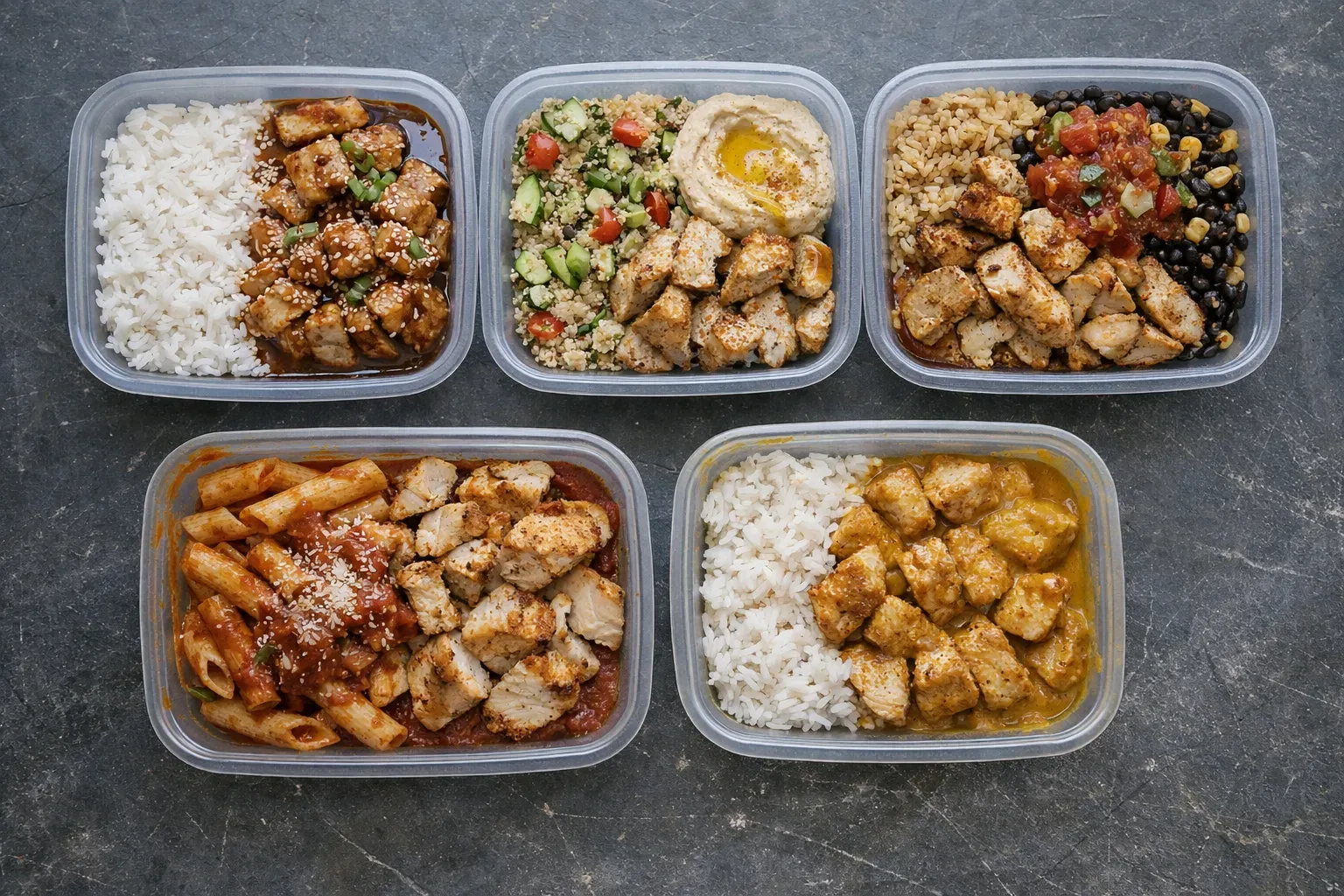
Meal prep boredom happens when you eat identical meals multiple days in a row. The solution is the base-plus-variation method: prep versatile components (proteins, grains, vegetables) once, then combine them differently with varied sauces and toppings throughout the week. This creates 5-7 distinct meals from one 2-hour prep session.
Additional strategies include rotating recipes on a 4-week cycle, using weekly themes for natural variety, and scheduling flavor profiles to prevent repetition.
Key Takeaways
- Use the base-plus-variation method: prep proteins, grains, and vegetables once, then combine them with different sauces and toppings for 5-7 distinct meals from one prep session
- Sauces are the highest-leverage change — rotating between Asian, Mexican, Mediterranean, and American sauce families makes the same chicken taste completely different each night
- Build a 4-week recipe rotation (20-28 recipes total) so no meal repeats more than once a month, while keeping shopping and prep efficient
- Add fresh elements (herbs, avocado, crunchy toppings) right before eating to counter the “reheated” quality that causes meal prep fatigue
- Prep two different proteins per week instead of one, and alternate them across meals for instant variety with minimal extra effort
In This Article
- Why Meal Prep Boredom Happens
- The Base-Plus-Variation Method
- Sauce and Seasoning Rotation
- The Weekly Theme System
- 4-Week Rotation System
- Adding Variety With Toppings and Fresh Elements
- Protein Variety Strategies
- Grain and Carb Variety
- Preventing Flavor Fatigue
- Seasonal Rotation for Long-Term Variety
- Batch Cooking Different Recipes
- Common Meal Prep Boredom Questions
- Start Small and Add Variety Gradually
Why Meal Prep Boredom Happens
The typical meal prep mistake is preparing five identical meals on Sunday and eating the exact same thing Monday through Friday.
Day 1: This chicken, rice, and broccoli tastes great. Day 3: This is getting old. Day 5: I never want to see chicken and rice again.
The problem isn’t meal prep itself—it’s the lack of variety. When you eat the same exact meal five times in a week, even your favorite dish becomes tiresome. Your brain craves variety, and monotonous food makes eating feel like a chore rather than something enjoyable.
Common boredom triggers:
- Same protein, same preparation, five days straight
- Identical sauce or seasoning across all meals
- No textural variety (everything soft, or everything crunchy)
- Visually similar meals (all brown food, no color variation)
- No fresh elements (everything prepped and reheated)
The goal is to maintain meal prep’s efficiency while building in enough variety that eating feels interesting, not repetitive.
The Base-Plus-Variation Method
This is the most effective strategy for variety without extra work.
How It Works
Instead of prepping complete identical meals, you prep base components, then combine them differently throughout the week with varied sauces, toppings, and fresh additions.
Sunday prep session (2 hours):
- Cook one versatile protein (grilled chicken)
- Cook two grains (rice and quinoa)
- Roast two types of vegetables (sweet potatoes and broccoli)
- Prep fresh vegetables (lettuce, tomatoes, avocado)
- Make or buy 3-4 different sauces
Weeknight meals (5-7 different dishes from the same components):
- Monday: Burrito bowl (rice + chicken + salsa + avocado + beans)
- Tuesday: Asian grain bowl (quinoa + chicken + teriyaki sauce + edamame)
- Wednesday: Caesar salad (lettuce + chicken + parmesan + Caesar dressing)
- Thursday: Mediterranean plate (quinoa + chicken + hummus + cucumber + feta)
- Friday: Stir-fry style (rice + chicken + soy-ginger sauce + broccoli)
Same prep work, five completely different eating experiences.
Why This Works
Different flavor profiles. Monday’s Mexican-inspired bowl tastes nothing like Wednesday’s Caesar salad, even though both use the same chicken.
Visual variety. Each meal looks different on the plate, which makes eating more appealing.
Prevents palate fatigue. Your taste buds get different experiences each night, reducing the “I’m sick of this” feeling.
Flexible for preferences. Family members can combine components differently based on what they want.
Minimal extra effort. Making or buying 3-4 sauces takes 15 extra minutes on Sunday but creates completely different meals all week.
Sauce and Seasoning Rotation
Sauces are the easiest way to transform the same base ingredients into different meals.
Essential Sauce Categories
Keep these sauce types in rotation to cover different cuisines and flavor profiles.
Asian-inspired:
- Teriyaki sauce
- Soy-ginger sauce
- Peanut sauce
- Sesame-miso dressing
- Sweet chili sauce
Mediterranean/Middle Eastern:
- Hummus
- Tahini sauce
- Tzatziki
- Lemon-herb vinaigrette
- Harissa
Mexican/Latin:
- Salsa (fresh or jarred)
- Chipotle crema
- Lime-cilantro dressing
- Mole sauce
- Pico de gallo
American/European:
- BBQ sauce
- Ranch dressing
- Buffalo sauce
- Honey mustard
- Pesto
Pro tip: Make 2-3 sauces from scratch and buy 2-3 quality jarred sauces. This balances effort with convenience.
Weekly Sauce Strategy
Rotate through different sauce families each week:
Week 1: Mexican theme (salsa, chipotle crema, lime dressing) Week 2: Asian theme (teriyaki, peanut sauce, soy-ginger) Week 3: Mediterranean theme (hummus, tzatziki, lemon vinaigrette) Week 4: American comfort (BBQ, ranch, buffalo)
This prevents you from having teriyaki chicken three weeks in a row.
For comprehensive meal prep guidance, see our Meal Prep Sunday guide.
The Weekly Theme System
Assigning themes to days creates natural variety and makes meal decisions easier.
How to Implement Weekly Themes
Choose a different cuisine or meal style for each day of the week.
Sample theme schedule:
- Monday: Mexican (tacos, burrito bowls, enchiladas)
- Tuesday: Asian (stir-fry, fried rice, noodle bowls)
- Wednesday: Mediterranean (grain bowls, falafel, Greek salads)
- Thursday: Italian (pasta, risotto, caprese)
- Friday: American comfort (burgers, BBQ, casseroles)
- Weekend: Experiment or family choice
Benefits of this system:
- No repetition within the same week
- Clear structure makes meal planning faster
- Family knows what to expect each day
- Naturally rotates through different ingredients
Flexibility: Themes guide choices but aren’t rigid rules. If you’re not feeling tacos on Monday, swap with another theme day.
Seasonal Theme Adjustments
Adapt themes to what’s in season and what sounds appealing:
Summer themes might include:
- Grilled meals Monday
- Salad bowls Tuesday
- Seafood Wednesday
- Fresh pasta Thursday
- Sandwich night Friday
Winter themes might shift to:
- Soup Monday
- Slow cooker meals Tuesday
- Roasted vegetable bowls Wednesday
- Pasta Thursday
- Comfort food Friday
This keeps meals aligned with the weather and seasonal produce.
4-Week Rotation System
Rotating recipes on a monthly cycle prevents you from eating the same meals too frequently while maintaining efficiency.
Setting Up Your Rotation
Create four weeks of distinct meal plans. Each week has 5-7 different recipes. By the time you repeat Week 1’s meals, it’s been three weeks, which feels fresh again.
Week 1 example:
- Chicken fajita bowls
- Teriyaki salmon with rice
- Turkey chili
- Greek chicken bowls
- BBQ chicken salad
Week 2 example:
- Beef stir-fry
- Mediterranean quinoa bowls
- Chicken curry
- Taco salad
- Honey mustard chicken
Week 3 example:
- Thai peanut chicken
- Pulled pork bowls
- Shrimp and grits
- Buffalo chicken wraps
- Italian pasta salad
Week 4 example:
- Korean beef bowls
- Lemon herb salmon
- Black bean burrito bowls
- Chicken Caesar wraps
- Sweet potato and black bean chili
Benefits:
- You’re cooking the same 20-28 recipes monthly, which builds efficiency and skill
- Recipes don’t repeat more than once per month
- Shopping becomes faster (you’ve bought these ingredients before)
- Less mental load (you’re not finding new recipes every week)
Implementation tip: Keep a simple spreadsheet or note with your four weekly rotations. Each Sunday, pull out the next week’s plan and shop accordingly.
Adding Variety With Toppings and Fresh Elements
Small additions make prepped meals feel fresh and different.
Crunchy Toppings
Add these right before eating to maintain texture:
- Crushed tortilla chips
- Toasted nuts (almonds, cashews, peanuts)
- Crispy chickpeas
- Croutons
- Sesame seeds
- Fried shallots
- Crispy wonton strips
Why this works: Crunch provides textural contrast to soft prepped foods and makes meals feel restaurant-quality.
Fresh Additions
Prep these Sunday but add them fresh each day:
- Fresh herbs (cilantro, basil, parsley)
- Sliced avocado
- Cherry tomatoes
- Cucumber
- Shredded lettuce
- Pickled vegetables
- Fresh lime or lemon wedges
- Microgreens
Why this works: Fresh vegetables add brightness, color, and crisp texture that counters the “reheated” quality of meal prep.
Dairy and Cheese
Add right before eating to maintain quality:
- Shredded cheese
- Crumbled feta or goat cheese
- Grated parmesan
- Dollop of Greek yogurt or sour cream
Why this works: Dairy doesn’t reheat well, so adding it fresh prevents the rubbery or separated texture that happens when cheese is reheated multiple times.
Protein Variety Strategies
Rotating proteins prevents monotony and provides different nutritional profiles.
Weekly Protein Rotation
Don’t prep the same protein every week. Rotate through different options:
Week 1: Chicken (versatile, mild, budget-friendly) Week 2: Beef or turkey (heartier, different texture) Week 3: Fish or seafood (lighter, omega-3s, faster cooking) Week 4: Plant-based (beans, tofu, tempeh)
This ensures you’re not eating chicken for five straight weeks.
Multiple Proteins in One Prep
Prep two different proteins on Sunday:
- 2 lbs grilled chicken
- 1.5 lbs ground beef
Use chicken for 3 meals, ground beef for 2 meals. Instant variety within the same week.
Example week:
- Monday: Chicken teriyaki bowl
- Tuesday: Beef taco salad
- Wednesday: Chicken Caesar wrap
- Thursday: Beef pasta
- Friday: Chicken grain bowl
Same prep effort, but you’re alternating proteins throughout the week.
Different Cooking Methods for Same Protein
If you prefer to stick with one protein type, vary the preparation:
- Grilled chicken breast
- Shredded chicken (slow cooker)
- Ground chicken (for tacos or pasta)
- Baked chicken thighs
These taste different even though they’re all chicken.
Check out our high-protein meal prep recipes for protein-focused variety.
Grain and Carb Variety
Don’t default to rice every week. Rotate through different bases.
Grain Options to Rotate
Common grains:
- White rice
- Brown rice
- Jasmine rice
- Quinoa
- Farro
- Bulgur wheat
- Couscous
Other carb bases:
- Sweet potatoes
- Regular potatoes
- Pasta
- Polenta
- Cauliflower rice (low-carb)
Prep two different bases each week for automatic variety. Use rice for some meals, quinoa for others.
Flavoring Your Grains
Plain rice gets boring. Add variety with simple additions:
- Cilantro-lime rice
- Coconut rice
- Garlic herb quinoa
- Lemon farro
- Tomato couscous
These take 2 extra minutes but completely change the dish’s flavor profile.
Preventing Flavor Fatigue
Strategic planning prevents you from accidentally creating a monotonous week.
Balance Flavor Profiles Within the Week
Don’t make all Asian-inspired meals or all spicy meals in one week. Mix it up:
- Monday: Mexican (bright, spicy, fresh)
- Tuesday: Asian (savory, umami, ginger)
- Wednesday: Mediterranean (herbaceous, tangy, olive oil)
- Thursday: American (rich, comforting, familiar)
- Friday: Your choice based on cravings
This ensures different taste experiences throughout the week.
Vary Cooking Methods
Don’t grill everything or bake everything. Mix cooking techniques:
- Grilled protein
- Slow-cooked protein
- Roasted vegetables
- Steamed vegetables
- Raw/fresh vegetables
Different cooking methods create different flavors and textures.
Temperature Variety
Not every meal needs to be hot. Mix hot and cold meals:
- Hot: Stir-fry, pasta, soup
- Cold: Salads, grain bowls, wraps
- Hybrid: Warm protein on cold salad base
This is especially valuable in summer when hot meals feel heavy.
Seasonal Rotation for Long-Term Variety
Rotate recipes seasonally to align with the weather and produce availability.
Summer Meal Prep Focus
Light, fresh, grilled:
- Grilled chicken with summer vegetables
- Shrimp and corn salad
- Caprese pasta salad
- Greek chicken bowls
- Fresh berry and quinoa bowls
Fall Meal Prep Focus
Hearty, warming, roasted:
- Butternut squash and chicken bowls
- Beef chili
- Roasted root vegetable quinoa
- Apple chicken salad
- Sweet potato and black bean bowls
Winter Meal Prep Focus
Comforting, warm, substantial:
- Chicken and wild rice soup
- Beef stew
- Lentil and sausage stew
- Baked pasta dishes
- Curry bowls
Spring Meal Prep Focus
Fresh, lighter, bright flavors:
- Lemon herb chicken with asparagus
- Spring pea and mint quinoa
- Strawberry spinach salad with chicken
- Mediterranean bowls with artichokes
- Fresh herb pasta salad
Seasonal rotation means you’re never making the same recipe more than 4 times per year, which is often enough to stay interesting.
For meal ideas that work across seasons, check out our freezer-friendly meals guide.
Batch Cooking Different Recipes
Instead of making one large batch of the same recipe, make smaller batches of different recipes.
Traditional approach:
- Make 6 servings of chicken and rice
- Eat it all week
Variety approach:
- Make 3 servings of chicken fajita bowls
- Make 3 servings of teriyaki chicken bowls
- Alternate throughout the week
Time impact: Minimal. You’re still batch cooking; you’re just dividing effort between two recipes instead of one.
Boredom impact: Massive. You’re eating two different meals instead of one meal five times.
Common Meal Prep Boredom Questions
How many different recipes should I prep each week?
Aim for 2-3 different recipes if you’re meal prepping lunch and dinner. This gives you variety without overwhelming your Sunday prep time. If you’re only prepping one meal per day, one recipe is fine as long as you rotate weekly.
Can I meal prep if I get bored easily?
Yes, but skip the traditional “same meal every day” approach. Use the base-plus-variation method or prep just 2-3 days at a time and cook fresh other nights. Hybrid meal prep (components only) works best for people who crave variety.
What if my family won’t eat the same thing multiple days in a row?
Prep components instead of complete meals. Let each family member assemble their own combinations from the prepped bases. A 10-year-old might make a burrito bowl while an adult makes a salad, using the same prepped chicken and vegetables.
How long before I get tired of my meal prep recipes?
This varies by person. Some people can eat the same 10 recipes happily; others need 20-30 in rotation. Start with a 4-week rotation (16-20 recipes) and adjust based on how you feel.
Is it worth prepping if I need this much variety?
Absolutely. Even with variety-focused strategies, you’re still saving 3-5 hours weekly compared to cooking from scratch every night. The methods above add 15-30 minutes to your Sunday prep but prevent weeknight cooking, which saves far more time overall.
Start Small and Add Variety Gradually
Don’t try to implement all these strategies at once. Start with one or two approaches and build from there.
Week 1: Try the base-plus-variation method. Prep components and combine them three different ways during the week.
Week 2: Add a sauce rotation. Make two homemade sauces and buy one jarred sauce. Notice how the same chicken tastes completely different.
Week 3: Implement weekly themes. Assign cuisine types to different days and see if it reduces decision fatigue.
Week 4: Start a recipe rotation system. Document what you prepped this month so you can rotate next month.
As these strategies become habits, meal prep stops feeling repetitive and starts feeling like a flexible, efficient system that keeps eating interesting.
Meal prep boredom isn’t inevitable—it’s a sign that your system needs more variety. With strategic planning, smart sauce rotation, and the base-plus-variation method, you can maintain all the time-saving benefits of meal prep while keeping meals interesting and enjoyable week after week.
Tavola helps you build variety into your meal prep routine by organizing recipes, tracking what you’ve made recently, and suggesting different combinations from your collection. You avoid repetition without spending hours planning, and your meal prep stays interesting without sacrificing efficiency.