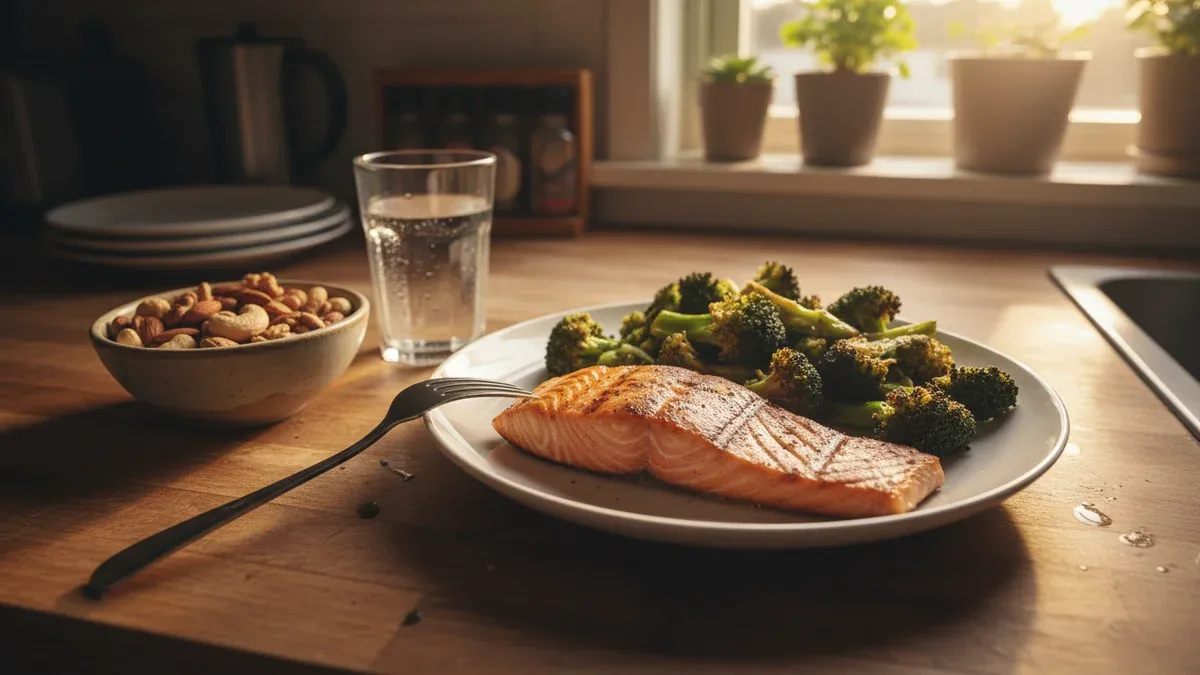
Metabolic eating is a straightforward approach to food that prioritizes protein, fiber, and whole ingredients at every meal — with the goal of keeping your blood sugar steady, your energy consistent, and your hunger naturally in check. It’s not a branded diet or a calorie-counting system. It’s a pattern: eat protein first, fill up on fiber-rich vegetables and whole grains, minimize ultra-processed foods, and let your body’s natural hunger signals do the rest.
The approach has gained traction in 2026 as more people look for sustainable eating patterns that mirror the appetite-regulating effects of GLP-1 medications — without the prescription. While metabolic eating isn’t a replacement for medical treatment, it builds on the same principles: smaller portions feel satisfying when meals are built around the right nutrients.
Key Takeaways
- Eat protein first at every meal — 25-35g per serving keeps you full longer and supports stable blood sugar
- Aim for 30+ grams of fiber daily through vegetables, legumes, whole grains, and seeds
- Minimize ultra-processed foods (packaged snacks, sugary drinks, fast food) — they bypass your body’s natural fullness signals
- Eat meals in a consistent rhythm rather than grazing all day — 3 meals and 1-2 small snacks works for most people
- This is not a restrictive diet — no food groups are eliminated, and nothing is forbidden
In This Article
What Is Metabolic Eating?
Metabolic eating is a pattern of eating designed to work with your metabolism rather than against it. Instead of restricting calories or cutting food groups, you focus on the order, composition, and quality of what you eat — so your body stays fueled, your blood sugar stays even, and you don’t end up starving by 3pm.
The core idea is simple: when you eat enough protein and fiber at each meal, your body produces more satiety hormones (GLP-1, PYY, CCK) and fewer hunger hormones (ghrelin). You feel full on less food — not because you’re forcing willpower, but because your biology is working properly.
The Three Pillars of Metabolic Eating
1. Protein first. Start every meal with a protein source. Protein has the highest thermic effect of any macronutrient — your body burns 20-30% of protein calories just digesting it, compared to 5-10% for carbs and 0-3% for fat. It also triggers the strongest satiety response.
2. Fiber at every meal. Fiber slows digestion, feeds beneficial gut bacteria, and helps regulate blood sugar after meals. Most people eat 15g of fiber daily — metabolic eating targets 30-40g by adding vegetables, legumes, and whole grains to every meal.
3. Minimize ultra-processed foods. Ultra-processed foods (chips, sugary cereals, fast food, packaged snacks) are engineered to override your fullness signals. Research from the National Institutes of Health found that people eat an average of 500 extra calories per day when eating ultra-processed foods versus whole foods — even when both options are matched for calories, fat, sugar, and fiber.
How Metabolic Eating Works
The Protein-First Rule
At every meal, eat your protein source before carbs and vegetables. This isn’t arbitrary — a 2015 study in Diabetes Care found that eating protein and vegetables before carbohydrates reduced post-meal blood sugar spikes by 29-37%. Lower blood sugar spikes mean less insulin, less energy crashing, and less rebound hunger.
Practical targets per meal:
| Meal | Protein Target | Example Sources |
|---|---|---|
| Breakfast | 25-30g | 3 eggs + Greek yogurt, or protein smoothie |
| Lunch | 30-35g | Chicken breast, salmon fillet, or lentil bowl |
| Dinner | 30-35g | Fish, lean meat, tofu, or bean-based dish |
| Snack | 10-15g | Nuts, cottage cheese, hard-boiled eggs |
For high-protein recipe ideas that store well, check our high-protein meal prep recipes.
Building Fiber Into Every Meal
The “fibermaxxing” approach doesn’t mean eating bran cereal. It means making small additions across the day:
- Add a handful of spinach or berries to breakfast
- Include beans or lentils in lunch (even 1/2 cup adds 7-8g fiber)
- Serve dinner with roasted vegetables instead of refined sides
- Snack on nuts, seeds, or vegetables with hummus
What to Limit (Not Eliminate)
Metabolic eating doesn’t ban any foods. But it’s honest about which foods work against your metabolic goals:
- Sugary drinks (soda, juice, sweetened coffee) — liquid calories bypass satiety signals entirely
- Refined carbs eaten alone (white bread, crackers, pastries without protein) — spike blood sugar without lasting energy
- Ultra-processed snacks (chips, candy bars, most packaged “health” bars) — designed to override fullness
- Alcohol in excess — disrupts sleep, increases appetite, and impairs metabolic function
The fix isn’t avoidance — it’s restructuring. Have the bread, but eat it after your protein and salad. Have the dessert, but after a fiber-and-protein-rich dinner. Order matters.
7-Day Metabolic Eating Meal Plan
This plan targets approximately 1,600-1,800 calories per day with 120-140g protein and 30-40g fiber. Adjust portion sizes to your needs.
| Day | Breakfast | Lunch | Dinner | Snack |
|---|---|---|---|---|
| Mon | 3-egg omelette with spinach, mushrooms, and feta + whole grain toast | Grilled chicken salad with chickpeas, cucumber, tomato, and olive oil dressing | Baked salmon with roasted broccoli and quinoa | Apple slices with 2 tbsp almond butter |
| Tue | Greek yogurt (plain, full-fat) with walnuts, chia seeds, and berries | Turkey and black bean lettuce wraps with avocado | Lentil and vegetable curry with brown rice | Cottage cheese with cherry tomatoes |
| Wed | Protein smoothie: protein powder, spinach, banana, flaxseed, almond milk | Tuna salad over mixed greens with white beans, olives, and lemon dressing | Chicken thighs with roasted sweet potato and green beans | Handful of almonds and an orange |
| Thu | Scrambled eggs with black beans, salsa, and a small whole wheat tortilla | Leftover lentil curry over greens | Grass-fed beef stir-fry with broccoli, peppers, and snap peas over cauliflower rice | Hard-boiled egg with everything bagel seasoning |
| Fri | Overnight oats with protein powder, chia seeds, walnuts, and berries | Salmon and avocado bowl with edamame, cucumber, and sesame dressing | One-pot chicken and white bean soup with crusty bread | Celery with peanut butter |
| Sat | Veggie frittata (eggs, zucchini, onion, bell pepper, goat cheese) | Mediterranean grain bowl: farro, grilled chicken, roasted vegetables, tahini | Shrimp with zucchini noodles, cherry tomatoes, and garlic in olive oil | Trail mix (nuts, seeds, dark chocolate chips) |
| Sun | Whole grain pancakes with Greek yogurt topping and fresh fruit | Big chopped salad with chickpeas, hard-boiled eggs, avocado, and feta | Slow-cooker pulled pork with coleslaw and roasted Brussels sprouts | Dark chocolate (2 squares) and walnuts |
What to notice:
- Every meal leads with protein. There’s no breakfast of just toast or cereal, no lunch of just salad greens.
- Fiber sneaks in everywhere. Beans in wraps, chia seeds in yogurt, vegetables in every dinner, nuts at snack time.
- Nothing is banned. There’s bread, pasta, rice, chocolate, and pancakes — just always paired with protein and fiber.
- Leftovers are built in. Tuesday’s lentil curry becomes Thursday’s lunch. Friday’s soup makes enough for freezing.
Metabolic Eating Grocery List
Proteins (Buy Weekly)
- Chicken breasts and thighs
- Wild salmon fillets (fresh or frozen)
- Lean ground turkey or grass-fed beef
- Eggs (2 dozen — you’ll use them)
- Greek yogurt (plain, full-fat)
- Cottage cheese
- Canned tuna and sardines
- Shrimp (frozen is fine)
Fiber-Rich Staples (Buy Weekly or Biweekly)
- Canned or dried black beans, chickpeas, lentils, white beans
- Broccoli, spinach, zucchini, bell peppers, Brussels sprouts
- Sweet potatoes
- Berries (fresh or frozen)
- Avocados
- Apples and oranges
Pantry (Buy Once, Use for Weeks)
- Quinoa, brown rice, farro, rolled oats
- Chia seeds, flaxseed, hemp hearts
- Almonds, walnuts, peanut butter, almond butter
- Olive oil and avocado oil
- Canned whole tomatoes and tomato paste
- Spices: cumin, paprika, garlic powder, oregano, turmeric
Smart Swaps to Stock
| Instead Of | Stock This | Why |
|---|---|---|
| White bread | Whole grain or sprouted bread | 3x more fiber per slice |
| Regular pasta | Lentil or chickpea pasta | 2x protein, 3x fiber |
| White rice | Brown rice or quinoa | More fiber, slower digestion |
| Flavored yogurt | Plain Greek yogurt + fruit | Half the sugar, double the protein |
| Granola bars | Nuts + dark chocolate | No added sugars, more satisfying |
For a complete pantry foundation, see our grocery list template for healthy eating.
Meal Prep Tips for Metabolic Eating
Metabolic eating is easier to maintain when you prep a few key components on the weekend. You don’t need to cook every meal — just prepare the building blocks.
The 60-Minute Sunday Prep
Batch-cook 2 proteins (25 min):
- Bake a sheet pan of chicken thighs with simple seasoning
- Hard-boil 8-10 eggs
- These two proteins cover breakfasts, lunches, and snacks for the week
Cook a pot of grains + a pot of legumes (mostly hands-off):
- Quinoa or brown rice — 3-4 cups cooked
- A pot of lentils or a batch of black beans
- Use as bases for bowls, salads, and side dishes
Wash and chop vegetables (15 min):
- Slice bell peppers, cucumbers, and celery for snacking
- Chop broccoli and zucchini for roasting during the week
- Wash and dry greens for salads
Make a protein-friendly dressing or sauce (5 min):
- Tahini dressing: tahini, lemon, garlic, water, salt
- Use on grain bowls, roasted vegetables, and salads all week
For a complete batch-cooking system, see our Meal Prep Sunday guide. If you find yourself getting bored with the same meals, our guide to meal prepping without getting bored has rotation strategies that keep things fresh.
Metabolic Eating vs Keto vs Mediterranean
All three approaches can support weight management, but they work differently and suit different lifestyles.
| Factor | Metabolic Eating | Keto | Mediterranean |
|---|---|---|---|
| Core focus | Protein + fiber first, minimize processed food | Very low carb, high fat | Whole foods, olive oil, fish, plants |
| Carbs | Included (whole grains, legumes, fruit) | Severely restricted (<20-50g/day) | Included (bread, pasta, grains) |
| Protein | High priority (30%+ of calories) | Moderate | Moderate |
| Restrictiveness | Low — no foods banned | High — most carbs eliminated | Low — flexible guidelines |
| Sustainability | High — easy to maintain long-term | Mixed — many find it hard to sustain | High — centuries of real-world evidence |
| Best for | Energy, appetite control, gradual weight loss | Rapid weight loss, specific medical conditions | Heart health, longevity, overall wellness |
| Hardest part | Breaking ultra-processed food habits | Giving up carbs long-term | Consistently cooking from scratch |
The honest answer: There’s significant overlap between metabolic eating and the Mediterranean diet. Both emphasize whole foods, both include all macronutrients, and both rely on fiber-rich ingredients. The main difference is that metabolic eating puts protein at the center and pays closer attention to meal composition and eating order — while the Mediterranean diet emphasizes specific ingredients (olive oil, fish, legumes) and a cultural approach to eating.
For a detailed look at the other approaches, see our keto diet meal plan and Mediterranean diet meal plan.
FAQ: Metabolic Eating Meal Plan
Is metabolic eating the same as the GLP-1 diet?
Not exactly. Some people call it the “natural GLP-1 diet” because high-protein, high-fiber meals stimulate your body’s own GLP-1 production — the same hormone that GLP-1 medications target. But metabolic eating is not a replacement for prescription medications, and it predates the GLP-1 drug trend. It’s a sensible eating pattern that happens to align with the same biological mechanisms.
How much protein do I really need per day?
For metabolic eating, aim for 1.2-1.6 grams of protein per kilogram of body weight. For a 150 lb (68 kg) person, that’s roughly 82-109 grams per day. For a 200 lb (91 kg) person, it’s 109-145 grams. Spread this across 3-4 meals rather than loading it all into dinner. Check our high-protein meal prep guide for practical recipes.
Can I do metabolic eating as a vegetarian?
Yes. Plant-based proteins that fit the metabolic eating pattern include lentils, chickpeas, black beans, tofu, tempeh, edamame, Greek yogurt, eggs, and cottage cheese. Combine legumes with whole grains (rice and beans, lentil pasta) for complete amino acid profiles. You may need to eat slightly larger portions to hit protein targets.
Will I lose weight with metabolic eating?
Most people lose weight gradually because they naturally eat less when meals are built around protein and fiber — both of which increase satiety. There’s no calorie counting involved. If weight loss is your primary goal, our meal planning for weight loss guide covers portion strategies in more detail.
How is metabolic eating different from just “eating healthy”?
Generic “eat healthy” advice is vague — eat more vegetables, drink water, avoid junk food. Metabolic eating is more specific: eat protein first at every meal, hit 30g+ fiber daily, eat in consistent rhythms, and structure meals so that carbs come after protein and fiber. The specificity makes it easier to follow because you know exactly what to do, not just what to avoid.
Start With One Meal at a Time
You don’t need to overhaul everything at once. Start with breakfast — swap the cereal or toast-only routine for eggs with vegetables, or Greek yogurt with nuts and seeds. Once that feels automatic (usually 1-2 weeks), upgrade lunch. Then dinner.
The people who stick with metabolic eating long-term are the ones who made it convenient. Prep your proteins on Sunday, keep fiber-rich snacks visible, and stop buying the ultra-processed foods that derail you — if they’re not in the house, they’re not a temptation.
This isn’t about perfection. It’s about building a pattern where most of your meals work with your metabolism instead of against it. Small, consistent changes beat dramatic overhauls every time.
Tavola helps busy parents spend less time planning and more time around the table — because every family recipe tells a story worth preserving.