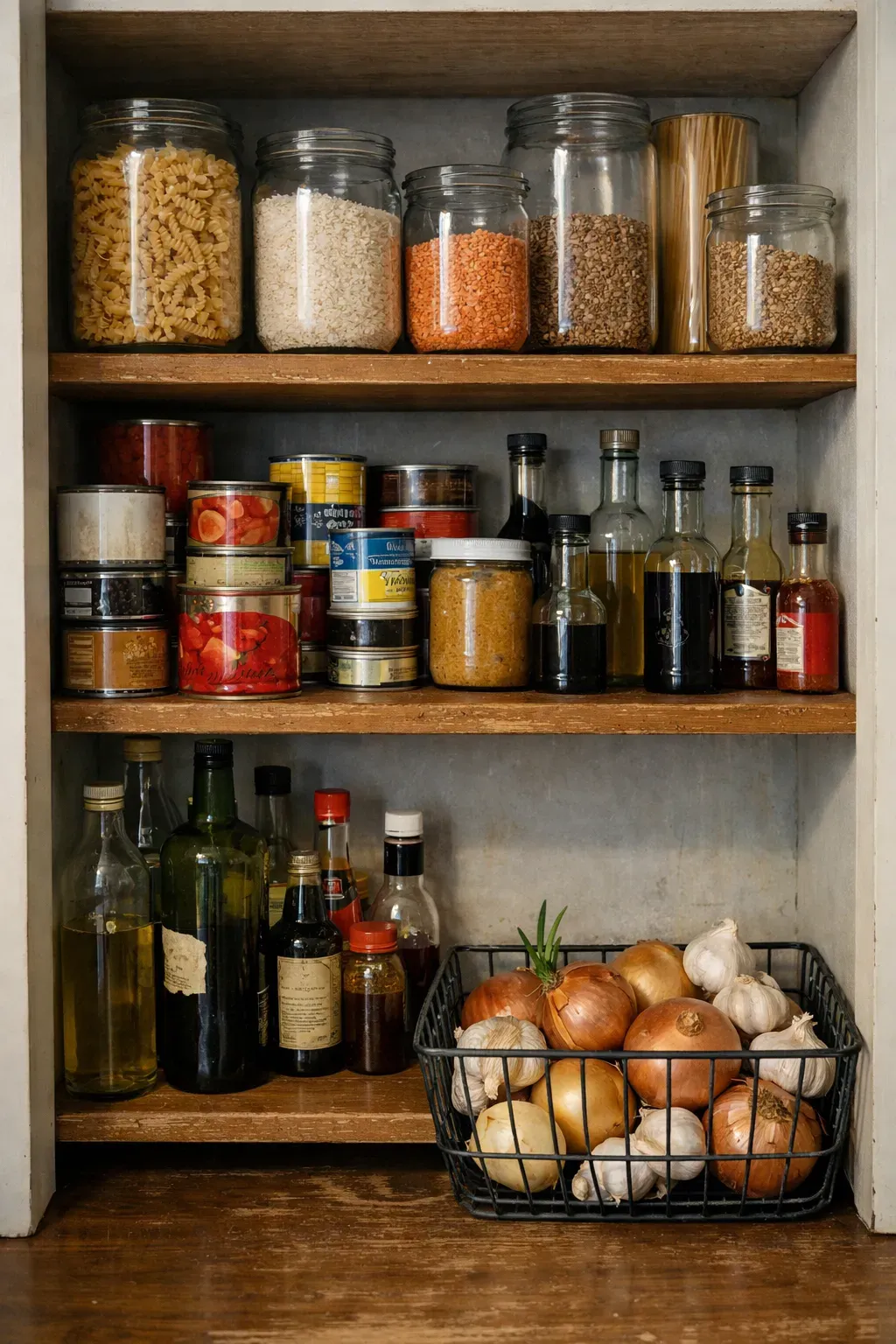
A well-stocked pantry contains 50 core staples organized into 7 categories: oils and vinegars, spices and seasonings, canned goods, grains and pasta, baking essentials, sauces and condiments, and nuts and seeds. With these items on hand, you can make a complete meal without needing a grocery run, reduce food waste, and simplify meal planning because you’re only shopping for fresh ingredients.
Key Takeaways
- Start with just 10 essentials (olive oil, salt, pepper, garlic powder, canned tomatoes, beans, pasta, rice, broth, soy sauce) to enable dozens of meals
- Build your full pantry gradually by adding 5-7 items per month based on what you actually cook
- Use the FIFO system (first in, first out) and do a 10-minute monthly pantry check to prevent waste
- Store grains, flour, and spices in airtight containers away from heat and light to maximize shelf life
- A stocked pantry lets you make emergency dinners (pasta marinara, fried rice, bean tacos) without a grocery run
In This Article
Why Keep Pantry Staples?
A stocked pantry isn’t about hoarding food. It’s about creating a foundation that makes cooking easier and more flexible.
Benefits of maintaining pantry staples:
- No emergency grocery runs. Forgot to buy something? You can often substitute with a pantry staple.
- Faster meal prep. You’re not starting from zero every time you cook.
- Less food waste. Fresh produce spoils, but pantry staples last months or years.
- Budget-friendly. Buying staples in bulk saves money long-term.
- Meal planning flexibility. You only need to shop for proteins and fresh vegetables when you have a solid base.
The key is buying items you’ll actually use, not stocking up on things that sit untouched for years.
The 50 Essential Pantry Staples
1. Oils & Vinegars
These form the base of cooking, dressings, and marinades.
| Item | Why You Need It | Shelf Life | Common Uses |
|---|---|---|---|
| Olive oil (extra virgin) | Versatile for cooking and dressings | 12-18 months | Sautéing, roasting, salad dressings |
| Neutral cooking oil (canola, vegetable, avocado) | High smoke point for frying and baking | 12-24 months | Frying, high-heat cooking, baking |
| Coconut oil | Adds flavor, good for baking and high-heat cooking | 18-24 months | Baking, stir-fries, curries |
| Balsamic vinegar | Adds depth to dressings and sauces | 3-5 years | Salad dressings, marinades, drizzling over vegetables |
| Apple cider vinegar | Adds tang, useful for marinades and pickling | 5+ years | Marinades, vinaigrettes, baking (reacts with baking soda) |
| Red wine vinegar or white wine vinegar | Standard for salad dressings | 2-3 years | Vinaigrettes, marinades, sauces |
Pro tip: Store oils in a cool, dark place. Heat and light cause them to go rancid faster.
2. Spices & Seasonings
Spices turn simple ingredients into flavorful meals.
| Item | Why You Need It | Shelf Life | Common Uses |
|---|---|---|---|
| Salt (kosher and table) | Essential for all cooking | Indefinite | Everything |
| Black pepper (whole or ground) | Universal seasoning | 2-3 years (whole), 1-2 years (ground) | Seasoning meats, vegetables, soups |
| Garlic powder | Adds garlic flavor without chopping | 2-3 years | Rubs, marinades, roasted vegetables |
| Onion powder | Quick onion flavor | 2-3 years | Soups, stews, seasoning blends |
| Paprika | Adds color and mild flavor | 2-3 years | Rubs, roasted vegetables, deviled eggs |
| Cumin | Earthy, warm flavor for Mexican and Indian dishes | 2-3 years | Tacos, chili, curries |
| Chili powder | Spicy, smoky blend | 2-3 years | Chili, tacos, roasted chickpeas |
| Oregano (dried) | Classic Italian and Mediterranean herb | 2-3 years | Pasta sauce, pizza, roasted vegetables |
| Basil (dried) | Sweet, slightly peppery herb | 2-3 years | Pasta, tomato-based dishes, salad dressings |
| Cinnamon | Sweet and warm, essential for baking | 2-3 years | Baking, oatmeal, coffee, roasted sweet potatoes |
| Red pepper flakes | Adds heat to any dish | 2-3 years | Pasta, pizza, stir-fries |
Pro tip: Buy whole spices and grind them yourself for maximum freshness and flavor. Store in airtight containers away from heat and light.
3. Canned Goods
Canned goods are the backbone of quick, budget-friendly meals.
| Item | Why You Need It | Shelf Life | Common Uses |
|---|---|---|---|
| Canned tomatoes (diced, crushed, whole) | Base for sauces, soups, stews | 18-24 months | Pasta sauce, chili, shakshuka, soups |
| Tomato paste | Concentrated tomato flavor | 18-24 months | Thickening sauces, adding depth to soups |
| Canned beans (black, kidney, chickpeas, white) | Protein-rich, quick to prepare | 2-5 years | Tacos, salads, hummus, soups, chili |
| Canned corn | Adds sweetness and texture | 2-5 years | Salads, soups, tacos, casseroles |
| Chicken broth or vegetable broth | Liquid base for soups, grains, sauces | 2-5 years | Soups, cooking rice or quinoa, deglazing pans |
| Tuna or salmon (canned) | Quick protein source | 3-5 years | Salads, sandwiches, pasta |
| Coconut milk | Creamy base for curries and soups | 2-5 years | Curries, soups, smoothies |
Pro tip: Check the “best by” date when buying canned goods and rotate your stock — use oldest first.
For more guidance on avoiding shopping mistakes, check out our guide on 10 Grocery Shopping Mistakes That Are Wasting Your Money.
4. Grains & Pasta
Grains and pasta form the base of countless meals.
| Item | Why You Need It | Shelf Life | Common Uses |
|---|---|---|---|
| White rice or brown rice | Versatile side dish and base for bowls | 6-12 months (white), 3-6 months (brown) | Rice bowls, stir-fries, side dishes |
| Quinoa | High-protein grain alternative | 2-3 years | Salads, bowls, side dishes |
| Pasta (variety: spaghetti, penne, rotini) | Quick, filling meals | 2-3 years | Pasta dishes, soups, salads |
| Oats (rolled or quick) | Breakfast staple and baking ingredient | 12-18 months | Oatmeal, overnight oats, baking |
| Couscous | Cooks in 5 minutes, versatile base | 2-3 years | Salads, side dishes, grain bowls |
| Bread crumbs (panko or regular) | For breading and topping casseroles | 6-12 months | Breading chicken, topping casseroles, meatballs |
Pro tip: Store grains in airtight containers to prevent moisture and pests. Brown rice and whole grains go rancid faster than white rice — refrigerate if keeping long-term.
5. Baking Essentials
Even if you don’t bake often, these items are useful for pancakes, breading, and quick breads.
| Item | Why You Need It | Shelf Life | Common Uses |
|---|---|---|---|
| All-purpose flour | Universal baking base | 6-12 months | Baking, breading, thickening sauces |
| White sugar | Sweetens baked goods and beverages | Indefinite | Baking, coffee, oatmeal |
| Brown sugar | Adds moisture and molasses flavor | 2 years (best quality) | Baking, marinades, glazes |
| Baking powder | Leavening agent for quick breads and pancakes | 6-12 months | Pancakes, muffins, biscuits |
| Baking soda | Leavening agent, reacts with acidic ingredients | 2 years | Baking, cleaning, deodorizing |
| Vanilla extract | Adds flavor to baked goods and desserts | 2-4 years | Baking, pancakes, oatmeal |
| Honey | Natural sweetener, never spoils | Indefinite | Baking, tea, marinades, salad dressings |
| Chocolate chips | Baking and snacking | 12-18 months | Cookies, pancakes, trail mix |
Pro tip: Store flour and sugar in airtight containers to prevent moisture and pests. Honey crystallizes over time but is still safe — just warm gently to re-liquefy.
6. Sauces & Condiments
Condiments add flavor quickly and rescue bland meals.
| Item | Why You Need It | Shelf Life | Common Uses |
|---|---|---|---|
| Soy sauce | Salty, umami-rich flavor | 2-3 years | Stir-fries, marinades, fried rice |
| Hot sauce (your favorite variety) | Adds heat and flavor | 3-5 years | Eggs, tacos, soups, marinades |
| Ketchup | Classic condiment and base for sauces | 12 months (opened) | Burgers, fries, meatloaf glaze |
| Mustard (yellow, Dijon, or whole grain) | Tangy, versatile condiment | 12 months (opened) | Sandwiches, dressings, marinades |
| Mayonnaise | Creamy base for dressings and spreads | 2-3 months (opened) | Sandwiches, salads, aioli |
| Worcestershire sauce | Adds depth to marinades and sauces | 3-5 years | Marinades, burgers, Bloody Marys |
| Salsa | Quick flavor addition | 1 month (opened) | Tacos, eggs, chips, rice bowls |
| Peanut butter or almond butter | Protein-rich spread | 6-12 months | Sandwiches, smoothies, sauces |
Pro tip: Most condiments should be refrigerated after opening. Check labels for specific storage instructions.
For a complete organized shopping list template, see our Grocery List Template for Healthy Eating.
7. Nuts & Seeds
Nuts and seeds add texture, protein, and healthy fats.
| Item | Why You Need It | Shelf Life | Common Uses |
|---|---|---|---|
| Almonds | Versatile nut for snacking and cooking | 9-12 months | Snacking, salads, granola |
| Walnuts | Rich, earthy flavor, high in omega-3s | 6-12 months | Baking, salads, oatmeal |
| Sunflower seeds or pumpkin seeds | Crunchy topping for salads and soups | 6-12 months | Salads, trail mix, granola |
Pro tip: Store nuts and seeds in the refrigerator or freezer to extend shelf life and prevent them from going rancid.
How to Stock Your Pantry on a Budget
You don’t need to buy all 50 items at once. Build your pantry gradually.
Start With the Top 10 Essentials
If you’re starting from scratch, buy these first:
- Olive oil
- Salt and black pepper
- Garlic powder
- Canned tomatoes
- Canned beans (black or chickpeas)
- Pasta
- Rice
- Chicken or vegetable broth
- All-purpose flour
- Soy sauce or hot sauce
These 10 items allow you to make pasta with marinara, fried rice, bean tacos, soups, and more.
Add 5-7 Items Per Month
Each month, add a few more staples based on what you cook most often:
- Month 2: Add baking essentials (baking powder, sugar, vanilla) if you bake
- Month 3: Add more spices (cumin, chili powder, oregano) if you cook Mexican or Italian food
- Month 4: Add nuts, seeds, and specialty items
Buy in Bulk When Possible
Items like rice, pasta, oats, and canned goods are significantly cheaper in bulk. Consider:
- Warehouse stores (Costco, Sam’s Club) for large quantities
- Bulk bins at grocery stores for spices and grains
- Online retailers (Amazon, Thrive Market) for pantry staples
Shop Sales and Stock Up
When your staples go on sale, buy extras. Canned goods, pasta, and rice don’t spoil, so stocking up during sales saves money long-term.
For more money-saving tips, check out our guide on How to Cut Your Grocery Bill in Half with Smart Meal Planning.
Organizing and Rotating Your Pantry
A stocked pantry is only useful if you can find what you need.
Organization Tips
Group by category: Keep all baking supplies together, all canned goods together, etc.
Use clear containers: Transfer grains, pasta, and baking staples into labeled clear containers so you can see when you’re running low.
Label everything: Include the name and date purchased. This helps with rotation.
Keep frequently used items at eye level: Place everyday items (olive oil, salt, pasta) where you can easily reach them.
Store backups separately: If you have multiples, keep one in use and store extras in the back or a separate area.
Rotation System: First In, First Out (FIFO)
Always use older items before newer ones:
- When you buy new canned goods, put them behind existing ones
- Check expiration dates before cooking
- Use items within their “best by” window for optimal quality
Monthly Pantry Check
Once a month, spend 10 minutes checking your pantry:
- Note what’s running low
- Check expiration dates
- Wipe down shelves
- Reorganize as needed
- Add low-stock items to your grocery list
For more organization strategies, see our guide on How to Organize Your Grocery List by Store Aisle.
Using Your Pantry for Last-Minute Meals
When you don’t have time to shop but need to make dinner, a stocked pantry saves the day.
Quick Pantry Meals
Pasta with marinara: Canned tomatoes + garlic powder + oregano + pasta = classic marinara.
Fried rice: Cooked rice + soy sauce + frozen vegetables + scrambled eggs + sesame oil.
Bean tacos: Canned black beans + taco seasoning (cumin, chili powder, garlic powder) + tortillas + salsa.
Chickpea curry: Canned chickpeas + coconut milk + curry powder + canned tomatoes. Serve over rice.
Tuna pasta salad: Canned tuna + cooked pasta + mayo + mustard + canned corn.
For more easy meal ideas, check out our guide on How to Meal Plan When You Hate Cooking.
FAQ
How often should I replace pantry staples?
Most pantry staples last 1-3 years. Check expiration dates annually and replace items that are past their prime. Spices lose potency after 2-3 years even if they haven’t “expired.”
Can I still meal plan if my pantry isn’t fully stocked?
Absolutely. Meal planning with a partial pantry just means you’ll buy more fresh ingredients each week. Focus on stocking the top 10 essentials first, then build from there.
What’s the difference between “best by” and “use by” dates?
“Best by” indicates peak quality but the food is usually safe past that date. “Use by” is more critical for perishables. For pantry staples, “best by” dates are guidelines, not strict deadlines.
Should I refrigerate anything after opening?
Yes. Condiments (mayo, ketchup, mustard), nut butters, and some oils (flaxseed, walnut) should be refrigerated after opening. Check labels for specific instructions.
How do I prevent pantry pests?
Store grains, flour, and cereals in airtight containers. Clean up spills immediately. Check bulk items for signs of pests before storing. If you see pests, discard affected items and clean thoroughly.
Start Building Your Pantry This Week
You don’t need to buy all 50 items today. Start with the top 10 essentials, then add 5-7 items per month based on what you cook most often. Within a few months, you’ll have a fully stocked pantry that makes cooking easier, faster, and more flexible.
Tavola helps busy families turn pantry staples and fresh ingredients into organized meal plans and shopping lists — because your time matters, and a well-stocked pantry is the foundation of stress-free cooking.
Your pantry isn’t just storage. It’s your secret weapon for last-minute meals, budget-friendly cooking, and simplified meal planning.