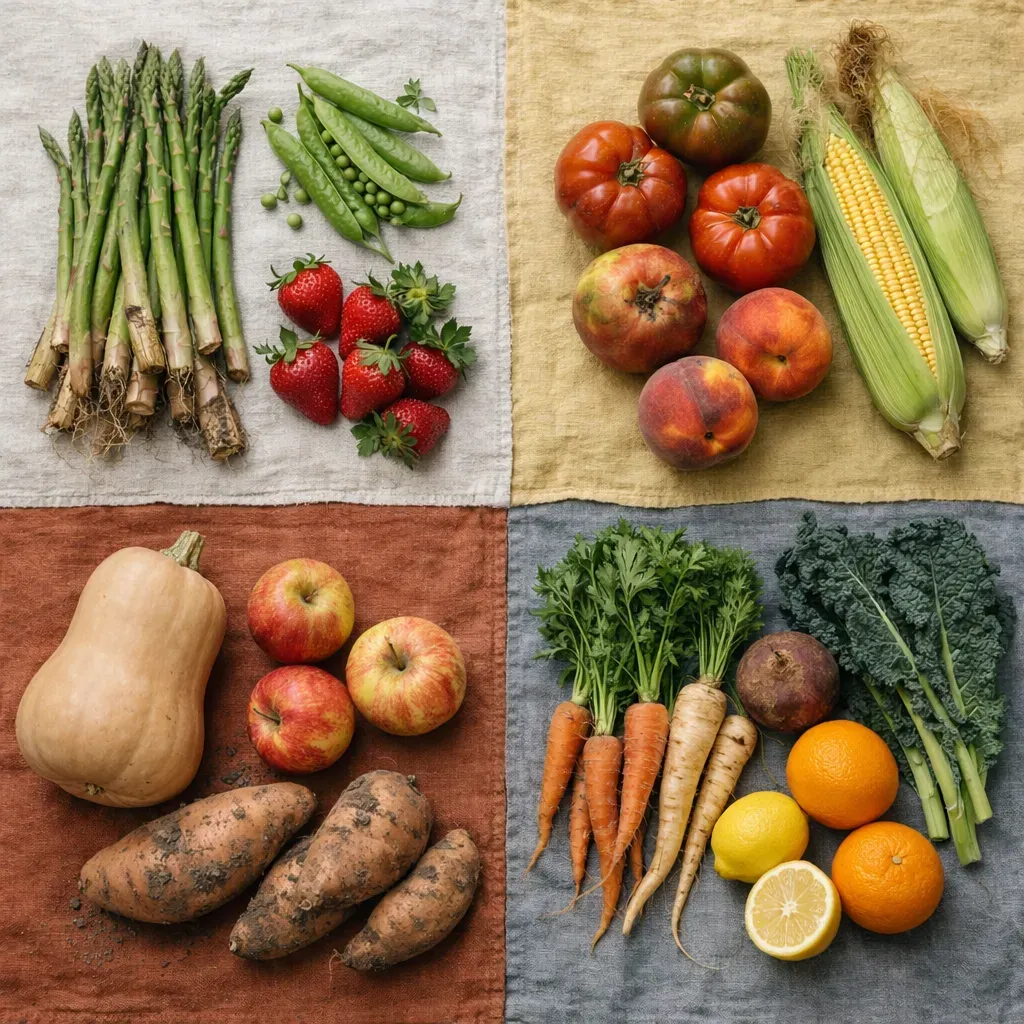
Seasonal meal planning means building your weekly menus around produce that’s naturally ripe and abundant during each time of year. You’ll save money (seasonal produce costs 30-50% less), enjoy better-tasting ingredients at peak freshness, and simplify meal planning by working with what’s naturally available.
The core principle is simple: plan meals around what’s in season, stock up when prices are lowest, and rotate your recipes as the seasons change. This approach reduces decision fatigue and keeps your meals varied throughout the year.
Key Takeaways
- Seasonal produce costs 30-50% less and tastes significantly better than out-of-season alternatives
- Use the 70/30 rule: build 70% of meals around peak seasonal produce, 30% around year-round staples
- Preserve at peak season (freeze summer berries, make and freeze tomato sauce in August) to extend savings year-round
- Check price and origin labels to identify what is truly in season: if asparagus is $1.99/lb instead of $4.99/lb, it is peak season
- Start small by making just one seasonal swap per week rather than overhauling your entire meal plan
In This Article
Why Plan Meals Around Seasons?
Seasonal eating offers concrete benefits beyond just following a trend.
Cost savings are substantial. Strawberries in December cost $6-8 per pound; in June they’re $2-3. Butternut squash in fall costs half what it does in spring. When produce is in season locally, supply is high and transportation costs are low, which means lower prices for you.
Flavor and nutrition peak when produce ripens naturally. Tomatoes picked ripe in August taste completely different from winter hothouse varieties. Seasonal produce hasn’t spent weeks in cold storage losing nutrients and flavor.
Meal planning becomes easier. Instead of staring at endless options, you focus on 10-15 items that are abundant each season. Your decision space narrows, making it faster to plan meals and create shopping lists.
Environmental impact drops. Eating seasonally typically means eating locally or regionally, which reduces the carbon footprint of long-distance shipping and energy-intensive greenhouse growing.
What’s in Season: A Complete Guide
Here’s what to look for each season, organized by quarter for easy reference.
Spring (March - May)
Spring brings tender greens and the first fresh produce after winter.
Peak produce:
- Asparagus
- Artichokes
- Peas (snap peas, sugar snap peas)
- Radishes
- Spinach
- Lettuce and salad greens
- Strawberries (late spring)
- Rhubarb
- Green onions
- New potatoes
Meal ideas for spring:
- Asparagus and lemon pasta
- Strawberry spinach salad
- Pea soup with fresh mint
- Radish and butter toast
- Artichoke and white bean dip
- Spring vegetable frittata
- Rhubarb crisp
Shopping strategy: Stock up on asparagus when prices drop mid-season. Blanch and freeze extras. Buy strawberries at peak season and freeze for smoothies and baking.
Summer (June - August)
Summer offers the most variety and abundance of any season.
Peak produce:
- Tomatoes (all varieties)
- Zucchini and summer squash
- Bell peppers
- Cucumbers
- Corn
- Green beans
- Eggplant
- Berries (blueberries, blackberries, raspberries)
- Stone fruits (peaches, plums, nectarines)
- Melons (watermelon, cantaloupe)
- Basil and fresh herbs
Meal ideas for summer:
- Caprese salad with fresh basil
- Grilled zucchini and corn
- Fresh tomato sauce for pasta
- Ratatouille
- Berry cobbler
- Cucumber and tomato gazpacho
- Peach and arugula salad
- Stuffed bell peppers
Shopping strategy: This is the time to preserve. Make tomato sauce and freeze it. Blanch and freeze green beans. Buy berries in bulk and freeze on trays before transferring to bags.
Fall (September - November)
Fall brings hearty vegetables perfect for roasting and warming meals.
Peak produce:
- Winter squash (butternut, acorn, delicata)
- Pumpkin
- Sweet potatoes
- Brussels sprouts
- Cauliflower
- Broccoli
- Apples
- Pears
- Cranberries
- Kale and hardy greens
- Beets
- Carrots
Meal ideas for fall:
- Butternut squash soup
- Roasted Brussels sprouts with maple glaze
- Apple and cheddar grilled cheese
- Sweet potato and black bean tacos
- Pumpkin chili
- Pear and arugula salad
- Roasted root vegetable medley
- Cauliflower mac and cheese
Shopping strategy: Buy winter squash in bulk—it stores for months in a cool, dry place. Stock up on apples and store in the refrigerator for up to 2 months.
Winter (December - February)
Winter relies on storage crops and cold-hardy vegetables.
Peak produce:
- Citrus fruits (oranges, grapefruit, lemons)
- Pomegranates
- Winter squash (stored from fall)
- Root vegetables (turnips, rutabaga, parsnips)
- Cabbage
- Kale and collard greens
- Leeks
- Celery root
- Fennel
Meal ideas for winter:
- Citrus and fennel salad
- Root vegetable pot roast
- Cabbage soup
- Braised kale with white beans
- Orange and pomegranate grain bowl
- Leek and potato soup
- Roasted turnips and carrots
- Grapefruit and avocado salad
Shopping strategy: Buy citrus in bulk when it’s cheapest (January-February). Store root vegetables in a cool place. Make large batches of soup and freeze for quick winter dinners.
Seasonal Produce by Month
This table shows peak seasons for common produce. Regional variations apply—adjust based on your location.
| Month | Peak Produce |
|---|---|
| January | Citrus fruits, kale, Brussels sprouts, winter squash |
| February | Citrus fruits, cabbage, turnips, rutabaga |
| March | Asparagus (late), artichokes, peas, radishes |
| April | Asparagus, strawberries, lettuce, spinach |
| May | Asparagus, strawberries, rhubarb, peas, new potatoes |
| June | Strawberries, tomatoes (early), zucchini, green beans |
| July | Tomatoes, corn, cucumbers, bell peppers, berries |
| August | Tomatoes, eggplant, melons, stone fruits, zucchini |
| September | Apples, winter squash, Brussels sprouts, cauliflower |
| October | Apples, pumpkins, sweet potatoes, kale, pears |
| November | Winter squash, Brussels sprouts, cranberries, pomegranates |
| December | Citrus fruits, kale, root vegetables, winter squash |
How to Transition Between Seasons
The shift between seasons doesn’t happen overnight. Here’s how to adapt your meal planning as produce changes.
Start with overlap periods. In late spring, you’ll find both asparagus and the first tomatoes. In early fall, summer squash and winter squash both appear. Take advantage of this variety.
Use the 70/30 rule. Build 70% of your meals around peak seasonal produce, and use 30% for items that are always available (onions, carrots, potatoes) or that you’ve preserved from previous seasons.
Preserve at peak season for use later. When tomatoes are abundant in August, make sauce for winter pasta. When berries are cheap in summer, freeze them for winter smoothies. This extends the season and saves money.
Follow sales at your grocery store. Stores heavily promote seasonal items when they’re cheapest. If you see asparagus at 50% off, that’s your signal it’s peak season—buy extra and plan 2-3 meals around it.
Adjust your recipe rotation. Keep a seasonal meal list and rotate it each year. Your August favorites (caprese salad, ratatouille) get filed away in September, while fall favorites (butternut squash soup, apple crisp) come back into rotation.
Building a Seasonal Meal Planning System
Here’s how to put this into practice week by week.
Step 1: Check what’s in season. Before you plan meals, look at the seasonal guide for the current month. Identify 5-7 vegetables or fruits at peak season.
Step 2: Plan meals around those items. If tomatoes, zucchini, and corn are at peak, plan meals featuring each: pasta with fresh tomato sauce, grilled zucchini, corn and black bean salad.
Step 3: Fill in with year-round staples. Add proteins, grains, and always-available vegetables (onions, garlic, carrots) to complete your meals.
Step 4: Create your shopping list. Group by category and focus your produce spending on seasonal items where you’ll get the most value.
Step 5: Preserve extras. If you buy more than you’ll use fresh, spend 30 minutes preserving. Blanch and freeze vegetables, make and freeze sauces, or simply wash and freeze berries.
For a complete approach to meal planning that works with seasonal eating, check out our beginner’s guide to meal planning.
Seasonal Meal Planning Tips
Start small. You don’t have to eat 100% seasonally. Begin by making one seasonal swap per week—choose butternut squash instead of zucchini in October, or asparagus instead of green beans in April.
Use frozen strategically. Frozen vegetables are picked at peak season, so frozen peas in winter are more “seasonal” than fresh peas shipped from across the world. Stock your freezer with summer berries and you’re eating seasonally in January.
Learn your region’s growing calendar. Seasons vary by location. Southern California has different peak seasons than Maine. Visit farmers markets or check local farm websites to learn your specific seasonal calendar.
Build a seasonal recipe collection. Keep a simple list of favorite recipes organized by season. When fall arrives, you’ll know exactly which recipes to pull out.
Batch cook seasonal abundance. When produce is cheap and plentiful, make large batches. Cook a big pot of tomato sauce in August, portion it, and freeze. Make apple butter in October and can it for year-round use.
Combining seasonal eating with smart grocery shopping can dramatically cut costs—learn more in our guide to cutting your grocery bill with meal planning.
Common Seasonal Planning Questions
How do I meal plan seasonally on a tight budget?
Focus on the absolute cheapest seasonal items each month. In fall, butternut squash often drops to $0.50-1.00 per pound—buy several and use them all week. In summer, buy whatever zucchini is on sale and build multiple meals around it. Use our grocery list template for healthy eating to organize your seasonal shopping efficiently.
What if my family doesn’t like seasonal vegetables?
Start with familiar preparations. If they don’t like Brussels sprouts, don’t lead with that. Try roasted butternut squash with a touch of maple syrup—it’s sweet and approachable. Introduce new seasonal items gradually alongside family favorites.
Can I still eat seasonally in winter?
Yes, but it looks different. Winter seasonal eating focuses on storage crops (squash, root vegetables, cabbage) and items that thrive in cold weather (kale, citrus). You’ll rely more on preserved items from summer and fall.
How do I know what’s truly in season vs. what’s just in stores?
Price and origin labels are your best clues. If asparagus is $1.99/lb instead of $4.99/lb, it’s in season. If the label says it’s from a nearby state, it’s likely seasonal. Greenhouse-grown or imported from far away usually means out of season.
Should I only shop at farmers markets?
Not necessarily. Farmers markets are great for finding seasonal items and supporting local farms, but grocery stores also stock seasonal produce and often have better prices on basics. Do both—hit the farmers market for special seasonal items and the grocery store for everything else.
Start Eating Seasonally This Week
Seasonal meal planning doesn’t require a complete overhaul of how you cook. Start by choosing 2-3 recipes this week that feature produce at peak season in your area. Notice the difference in flavor and price.
As you build this habit, you’ll find meal planning becomes faster—you’re working with a focused list of ingredients rather than endless options. Your food will taste better because you’re using ingredients at their peak. And your grocery bill will drop as you buy what’s abundant and cheap rather than what’s expensive and imported.
Tavola handles the logistics of meal planning while you focus on cooking with the seasons and ingredients you love. Let AI manage your weekly schedule and shopping lists, while your seasonal recipes and family favorites stay at the center of every meal.