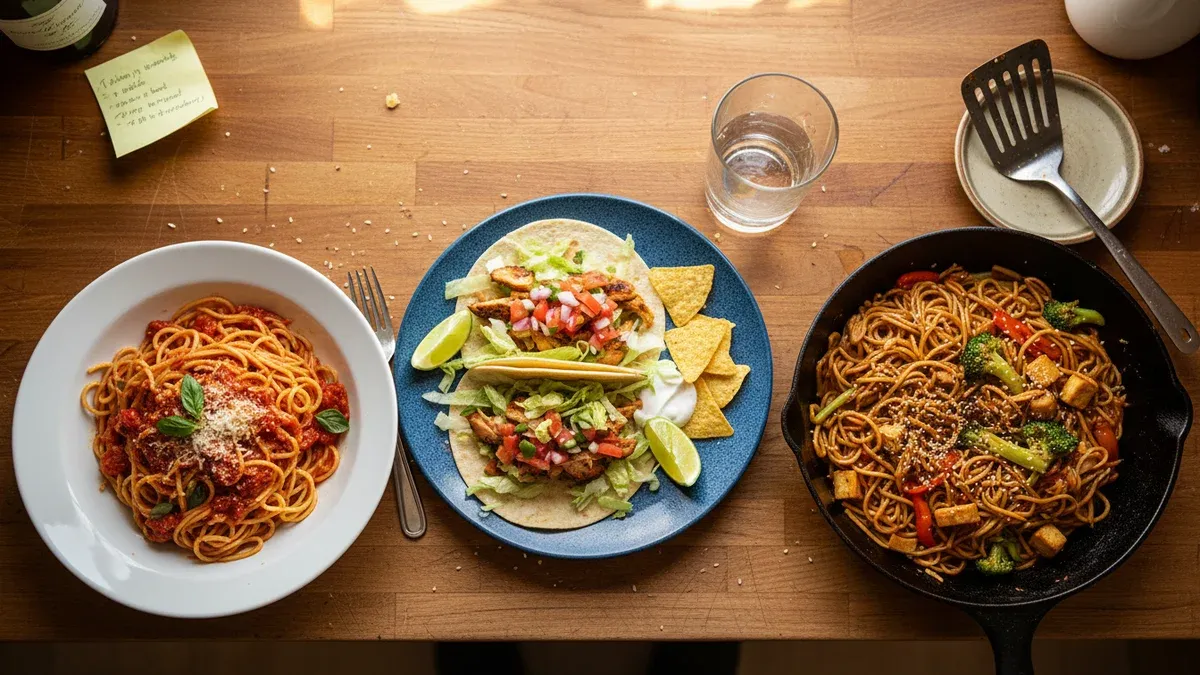
A weekly dinner rotation is a fixed schedule of themed meal slots — like Taco Tuesday, Pasta Night, or Stir-Fry Friday — that you cycle through every week, swapping in different recipes within each theme. Instead of deciding what to cook from scratch seven days a week, you decide the category once and then pick a specific recipe from a short list you already know your family likes.
This single strategy eliminates the nightly “what’s for dinner?” question, cuts your meal planning time to under ten minutes, and makes grocery shopping predictable enough that you could almost do it on autopilot.
Key Takeaways
- A dinner rotation assigns a food theme to each night of the week, then rotates specific recipes within each theme
- Most families only need 15-20 reliable recipes to run a rotation indefinitely without repeating the same meal two weeks in a row
- Themed nights simplify grocery shopping because you’re buying similar ingredient categories each week
- Build in one flexible night (leftovers, takeout, or freestyle) so the rotation never feels rigid
- Start with just 3 themed nights and expand once the habit sticks
In This Article
Why Decision Fatigue Is Ruining Your Evenings
The average family makes over 200 food-related decisions per week. What to buy, what to cook, what to defrost, what everyone will actually eat. By 5:30 PM on a Tuesday, you’ve already made hundreds of decisions at work, handled logistics for the kids, and now the fridge is staring back at you with no answers.
This isn’t a willpower problem. It’s a systems problem.
Research on decision fatigue shows that the quality of our choices deteriorates throughout the day. By evening, your brain defaults to the easiest option — which usually means expensive takeout or whatever frozen thing you can microwave fastest.
The fix isn’t trying harder. The fix is removing the decision entirely.
A dinner rotation pre-answers the question “what’s for dinner?” so that by the time you’re tired and hungry, there’s nothing to figure out. Monday is always pasta. Wednesday is always something from the slow cooker. Friday is always pizza or takeout. The decision was made once, weeks ago, and now it just runs.
If you’re already familiar with weekly meal planning basics, a dinner rotation is the next level — it turns a weekly planning session into a near-automatic system.
What Is a Dinner Rotation (and Why Does It Work)?
A dinner rotation is a repeating weekly schedule where each night has an assigned food theme. Within each theme, you keep a short list of 3-5 recipes your household enjoys. Each week, you pick one recipe per theme. That’s your meal plan — done in minutes.
Here’s why the approach works:
Themes are easier to decide than meals. Choosing between “something with chicken” and “something with beef” is harder than knowing Tuesday is Taco Night. The theme narrows your options to a manageable few.
Variety happens automatically. If you have 4 recipes under each theme and 5 themed nights, that’s 20 possible weekly combinations — over 1,000 unique weeks before you’d repeat the exact same lineup.
Grocery shopping becomes predictable. When Monday is always pasta night, you always need pasta, sauce ingredients, and a protein. Your cart looks similar week to week, which means faster shopping and less food waste.
Everyone knows what to expect. Kids especially thrive on routine. When they know Thursday is always stir-fry night, there’s less resistance and fewer complaints. They can even help choose which stir-fry recipe to make this week.
It scales with your energy. Each theme can have easy versions and ambitious versions. Exhausted? Taco Tuesday is tortillas with canned beans and shredded cheese. Feeling motivated? It’s homemade carnitas with fresh pico de gallo.
How to Build Your Rotation in 4 Steps
Step 1: Choose Your Themes
Pick 5-6 dinner themes that match how your family actually eats. Don’t aspirationally choose “Sushi Night” if nobody in the house can roll a maki.
Here are popular themes to choose from:
| Theme | What It Covers |
|---|---|
| Pasta Night | Any pasta dish — spaghetti, mac and cheese, baked ziti, pesto penne |
| Taco/Mexican Night | Tacos, burritos, quesadillas, enchiladas, burrito bowls |
| Stir-Fry/Asian Night | Stir-fries, fried rice, noodle bowls, teriyaki, curry |
| Soup & Sandwich Night | Any soup paired with bread, grilled cheese, or sandwiches |
| Sheet Pan / Roast Night | Roasted protein + vegetables on one pan |
| Slow Cooker Night | Anything that cooks itself — chili, pulled pork, stew |
| Breakfast for Dinner | Eggs, pancakes, waffles, frittata |
| Pizza Night | Homemade, store-bought, or delivery — all count |
| Grill Night | Burgers, chicken, kebabs, grilled vegetables |
| Leftover / Freestyle Night | Clear out the fridge, try something new, or order in |
Don’t fill all seven nights. Leave 1-2 nights for leftovers, takeout, or eating out. A rotation that accounts for real life lasts longer than one that demands perfection.
Step 2: Assign 3-5 Recipes Per Theme
For each theme, list recipes your family already likes and can realistically make on a weeknight. These don’t need to be fancy — reliable and doable beats impressive and exhausting.
Example: Pasta Night options
- Spaghetti with meat sauce (family recipe)
- One-pot creamy chicken pasta
- Baked ziti (great for leftovers)
- Pesto penne with cherry tomatoes
- Mac and cheese with roasted broccoli
Example: Taco Night options
- Ground beef tacos with all the fixings
- Slow cooker chicken tacos
- Black bean quesadillas
- Fish tacos with slaw
- Burrito bowls
If you can only think of 2 recipes for a theme, that’s fine. Start there and add more as you discover new favourites. For inspiration on simple recipes that fit rotation themes well, see our 5-ingredient recipes guide.
Step 3: Build Your Weekly Template
Assign themes to specific days based on your schedule.
Rules of thumb:
- Busiest nights get the easiest themes (slow cooker, breakfast for dinner, leftovers)
- Nights with more time get themes that allow for cooking (sheet pan, grill, stir-fry)
- Fridays or weekends are natural spots for pizza, takeout, or more involved cooking
- Put similar grocery categories on adjacent nights so ingredients stay fresh
Here’s an example template:
| Day | Theme | Why This Day |
|---|---|---|
| Monday | Pasta Night | Easy comfort food to start the week |
| Tuesday | Taco Night | Quick to assemble, kids love it |
| Wednesday | Slow Cooker Night | Set it in the morning, dinner’s ready at 6 |
| Thursday | Stir-Fry Night | Uses up vegetables bought earlier in the week |
| Friday | Pizza / Takeout Night | End-of-week treat, minimal effort |
| Saturday | Grill or Sheet Pan Night | More time to cook something satisfying |
| Sunday | Leftovers / Freestyle | Clear the fridge before the new week |
Step 4: Create a Swap List and Automate Shopping
Write all your rotation recipes on a single page — your “swap list.” Each week, meal planning becomes circling one recipe per theme. That’s it. Five circles, five minutes, done.
For grocery shopping, you’ll notice patterns fast. Pasta night always needs pasta, canned tomatoes, and parmesan. Taco night always needs tortillas, protein, and toppings. Build a reusable shopping list template with the common ingredients for each theme, then just add the extras for that week’s specific recipe.
If you want to take your grocery organization further, our guide on organizing your grocery list by aisle pairs perfectly with a rotation system.
Sample Dinner Rotations for Different Households
Family of 4 (Kids Under 12)
| Day | Theme | This Week’s Pick |
|---|---|---|
| Monday | Pasta Night | Mac and cheese with broccoli |
| Tuesday | Taco Night | Ground beef tacos |
| Wednesday | Slow Cooker Night | Chicken and rice soup |
| Thursday | Breakfast for Dinner | Scrambled eggs, toast, fruit |
| Friday | Pizza Night | Store-bought pizza + salad |
| Saturday | Sheet Pan Night | Roasted chicken drumsticks and potatoes |
| Sunday | Leftovers | Mix and match from the week |
Why it works: Kid-friendly themes, low-effort midweek, and a built-in leftover night to reduce waste. Only 3-4 nights require real cooking.
Working Couple (No Kids)
| Day | Theme | This Week’s Pick |
|---|---|---|
| Monday | Stir-Fry Night | Teriyaki chicken with rice |
| Tuesday | Pasta Night | Pesto shrimp pasta |
| Wednesday | Leftovers / Takeout | Eat Monday or Tuesday’s leftovers |
| Thursday | Sheet Pan Night | Salmon with roasted asparagus |
| Friday | Date Night / Eat Out | Restaurant or something special at home |
Why it works: Only 3 cooking nights per week. Smaller household means generous leftovers from each meal. Friday is flexible for social plans.
Solo Meal Planner
| Day | Theme | This Week’s Pick |
|---|---|---|
| Monday | Big Batch Night | Chili (freeze half for next week) |
| Tuesday | Leftovers | Monday’s chili |
| Wednesday | Quick Assembly | Grain bowl with rotisserie chicken |
| Thursday | Pasta Night | One-pot garlic butter pasta |
| Friday | Freestyle / Takeout | Whatever sounds good |
Why it works: Cooking only twice per week, heavy use of batch cooking and freezing. Prevents food waste — a major challenge when meal planning for one. Friday stays open for social plans or spontaneous meals.
How to Keep a Rotation Fresh Without Overthinking It
The biggest fear with a dinner rotation is boredom. Here’s how to prevent it without adding complexity.
The One New Recipe Rule
Once a month, swap one recipe in your rotation for something new. Try it on a weekend when you have more time and patience. If the family likes it, it joins the swap list. If not, no harm done.
This means your rotation slowly evolves without you ever needing to overhaul it. After a year, you’ll have tried 12 new recipes and your swap list will be stronger than when you started.
Seasonal Swaps
Rotate recipes based on what’s in season. Your stir-fry night might feature asparagus in spring and butternut squash in autumn. Your soup night shifts from light minestrone in September to hearty beef stew in January. Same themes, different ingredients. For guidance on seasonal ingredients, check out our seasonal meal planning guide.
Sauce and Seasoning Variations
The same base meal can taste completely different with a new sauce. Chicken stir-fry with teriyaki sauce one week, peanut sauce the next, and sweet chilli the week after. You’re technically making the same dish, but it doesn’t feel repetitive.
Theme Holidays
Every few months, break the rotation entirely for a week. Try a cuisine week (all Italian, all Thai), do a freezer clean-out week, or just wing it. Coming back to the rotation after a break makes it feel fresh again.
Let the Family Pick
Each week, let a different family member choose one night’s specific recipe from the theme options. Kids feel ownership over dinner, and you still stay within the rotation framework.
FAQ
How many recipes do I need to start a dinner rotation?
You need a minimum of 2 recipes per theme to avoid exact repeats every week. Ideally, aim for 3-5 per theme. With 5 themed nights and 3 recipes each, that’s only 15 recipes total — and most families already know that many meals by heart.
Won’t my family get bored eating the same themes every week?
Themes repeat, but specific meals don’t have to. If your Pasta Night list has 5 options, you won’t repeat the same pasta dish for over a month. Most families find the predictability comforting rather than boring — especially kids, who often prefer knowing what to expect.
What if something comes up and I can’t cook the planned meal?
Swap nights freely within the same week. If Wednesday’s slow cooker meal doesn’t happen, move it to Thursday and do Thursday’s easier meal on Wednesday instead. The rotation is a framework, not a contract. Having a stash of freezer-friendly meals as backup also helps.
Can I use a dinner rotation if I have dietary restrictions?
Absolutely. Themes are flexible enough to accommodate any diet. Taco Night works for vegetarian (black bean tacos), keto (lettuce wrap tacos), and gluten-free (corn tortillas) households. Just build your recipe swap list with compliant options.
How is a dinner rotation different from regular meal planning?
Regular meal planning means choosing specific meals each week from scratch. A dinner rotation pre-sets the categories so you’re only choosing within a narrow list of proven recipes. It’s meal planning with guardrails — faster to execute and easier to maintain long-term.
Start Your Rotation This Week
You don’t need to build a perfect seven-night rotation on day one. Pick three themes for Monday, Wednesday, and Friday. Assign two recipes to each. That’s your starter rotation — six recipes, three nights planned, and the rest stays flexible.
Next week, add a fourth theme. The week after, a fifth. Within a month, you’ll have a full rotation running and you’ll wonder why you ever spent mental energy on “what’s for dinner?” in the first place.
Tavola helps busy parents spend less time planning and more time around the table — because every family recipe tells a story worth preserving.