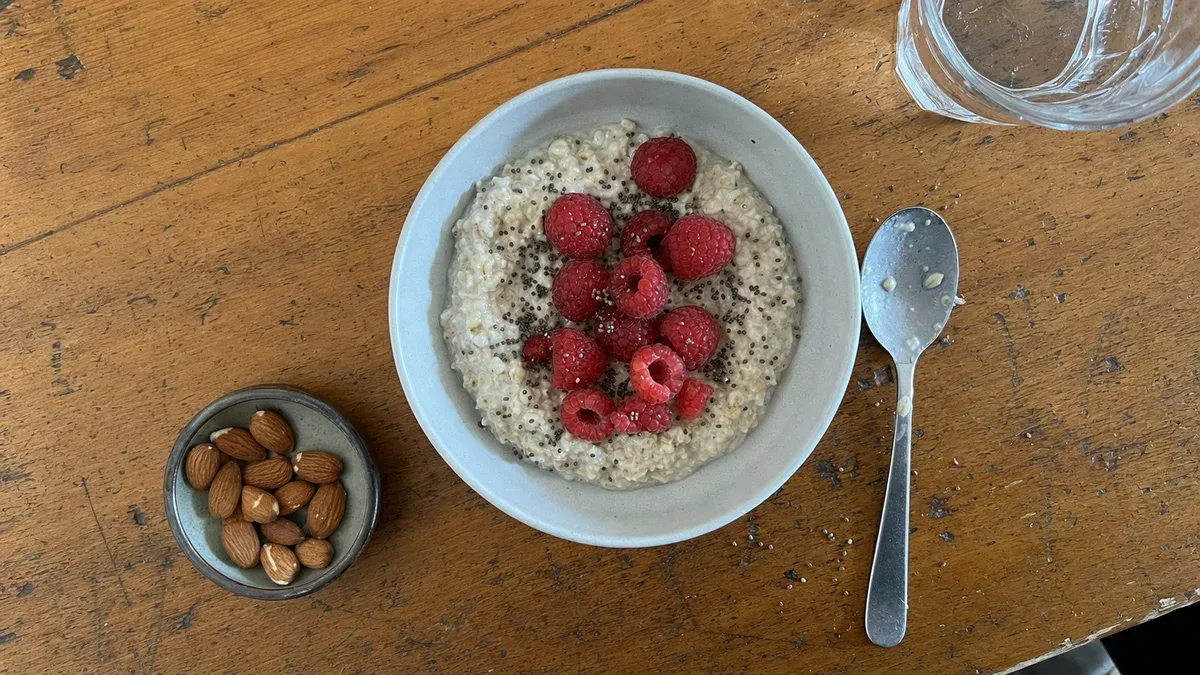
A high-fiber meal plan is simply a week of meals built around foods that deliver 25–38 grams of fiber a day — the amount most experts recommend, and roughly double what the average person actually eats. The trick isn’t eating one giant bowl of bran. It’s spreading fiber-rich foods across every meal: beans and lentils, whole grains, fruit with the skin on, vegetables, nuts, and seeds. Do that consistently and you hit your target without thinking about it.
“Fibermaxxing” — the social-media name for deliberately maxing out your daily fiber — became one of the biggest nutrition stories of 2026. But the idea behind it is old and well-evidenced: more fiber supports digestion, steadier blood sugar, lower cholesterol, and a feeling of fullness that makes everything else easier. The only catch is ramping up too fast, which is where the bloating horror stories come from. This plan builds you up gradually.
Key Takeaways
- Aim for 25 grams of fiber a day (women) or 38 grams (men) — most people get only 10–15
- Spread fiber across all meals instead of front-loading it; beans, whole grains, fruit-with-skin, and seeds do the heavy lifting
- Increase slowly over the week and drink more water — going from 12g to 35g overnight is what causes bloating and gas
- Soluble and insoluble fiber do different jobs; a good plan includes both
- A little weekend batch cooking (a pot of beans, a jar of overnight oats) makes hitting your fiber goal almost automatic
In This Article
What Is Fibermaxxing?
Fibermaxxing is the practice of intentionally maximizing your daily fiber intake by building meals around high-fiber whole foods. After years of protein dominating menus, grocery aisles, and feeds, fiber became the macronutrient of the moment in 2026 — largely because most people are so far below the recommended amount that small changes produce noticeable results.
Despite the trendy name, there’s nothing extreme about it when done right. You’re not adding fiber supplements to every glass of water. You’re choosing the bean-based soup over the creamy one, leaving the skin on your apple, swapping white rice for quinoa, and topping your yogurt with berries and chia. The “maxxing” just means being deliberate about it across the whole day.
Why Fiber Is Worth the Attention
Fiber is the part of plant foods your body can’t digest — and that’s exactly why it’s useful. It does several things at once:
- Keeps you full. Fiber adds bulk and slows digestion, so high-fiber meals keep hunger away longer on the same number of calories.
- Steadies blood sugar. Soluble fiber slows how quickly sugar enters your bloodstream, smoothing out the spikes and crashes that drive cravings.
- Supports heart health. Soluble fiber binds cholesterol in the gut and helps carry it out of the body.
- Feeds your gut. Fiber is food for the bacteria in your gut, which is increasingly linked to digestion, immunity, and even mood.
- Keeps things moving. Insoluble fiber adds bulk and supports regularity — the benefit most people notice first.
How Much Fiber Do You Actually Need?
The general guideline is 14 grams of fiber per 1,000 calories, which works out to roughly:
| Group | Recommended Daily Fiber |
|---|---|
| Women (under 50) | 25 grams |
| Men (under 50) | 38 grams |
| Women (51+) | 21 grams |
| Men (51+) | 30 grams |
Here’s the gap: surveys consistently find most adults get only 10–15 grams a day — well under half the target. That’s the real reason fibermaxxing produces results so quickly. You’re not pushing past an optimal level; you’re closing a deficit most people don’t know they have.
You don’t need to count grams forever. Use the meal plan below to learn what 30-plus grams actually looks like on a plate, and after a week or two it becomes intuitive. Building a goal like this into a repeatable weekly routine is exactly what a simple system is for — if you’re new to planning meals around a target, our beginner’s guide to weekly meal planning walks through the framework.
The Best High-Fiber Foods to Build Meals Around
There are two kinds of fiber, and a good plan includes both:
- Soluble fiber (oats, beans, apples, citrus, chia, psyllium) dissolves into a gel, slowing digestion and lowering cholesterol.
- Insoluble fiber (whole grains, vegetable skins, nuts, wheat bran) adds bulk and supports regularity.
Most whole plant foods contain a mix of both, so you don’t need to track them separately — just eat a variety. Here are the heavy hitters, with approximate fiber per serving:
| Food | Serving | Approx. Fiber |
|---|---|---|
| Split peas (cooked) | 1 cup | 16 g |
| Lentils (cooked) | 1 cup | 15 g |
| Black beans (cooked) | 1 cup | 15 g |
| Chia seeds | 2 tbsp | 10 g |
| Avocado | 1 whole | 10 g |
| Raspberries | 1 cup | 8 g |
| Whole wheat pasta (cooked) | 1 cup | 6 g |
| Pear (with skin) | 1 medium | 6 g |
| Broccoli (cooked) | 1 cup | 5 g |
| Quinoa (cooked) | 1 cup | 5 g |
| Oats (rolled, dry) | ½ cup | 4 g |
| Sweet potato (with skin) | 1 medium | 4 g |
| Apple (with skin) | 1 medium | 4.5 g |
| Almonds | 1 oz (23 nuts) | 3.5 g |
Values are approximate and vary by variety and preparation.
The pattern is clear: legumes are the single most efficient source of fiber. A cup of beans or lentils can deliver more fiber than an entire day of fiber-poor eating. If you do one thing, add a serving of beans or lentils somewhere in your day. Keep a few of these staples on hand and meals come together fast — our pantry staples checklist covers the canned beans, whole grains, and seeds worth always having stocked.
A 7-Day High-Fiber Meal Plan
This plan is designed to ramp up gradually — starting around 25 grams on Monday and building toward 38 by the weekend, so your digestion adjusts comfortably. It feeds one adult; scale portions up for a family. Fiber totals are approximate.
| Day | Breakfast | Lunch | Dinner | Snack | ~Fiber |
|---|---|---|---|---|---|
| Mon | Oatmeal with sliced apple and a sprinkle of almonds | Whole wheat wrap with hummus, spinach, and roasted vegetables | Chicken and black bean burrito bowl with brown rice | Pear | ~26 g |
| Tue | Greek yogurt with raspberries and 1 tbsp chia | Lentil and vegetable soup with whole grain bread | Whole wheat pasta with marinara and white beans, side of broccoli | Handful of almonds | ~30 g |
| Wed | Overnight oats with chia, banana, and walnuts | Quinoa salad with chickpeas, cucumber, and tomato | Baked salmon with roasted sweet potato (skin on) and Brussels sprouts | Apple with peanut butter | ~33 g |
| Thu | Whole grain toast with smashed avocado and chili flakes | Leftover lentil soup with a side of mixed greens | Black bean and veggie chili with a small whole grain roll | Orange and a few almonds | ~35 g |
| Fri | High-fiber bran cereal with milk and blueberries | Big grain bowl — farro, chickpeas, roasted veg, tahini | Stir-fry with tofu, edamame, broccoli, and brown rice | Air-popped popcorn | ~36 g |
| Sat | Veggie omelette with whole grain toast and avocado | Three-bean salad with arugula and olive oil | Whole wheat pasta primavera with lentils stirred in | Raspberries with yogurt | ~37 g |
| Sun | Chia pudding with pear and almonds | Loaded sweet potato with black beans, salsa, and avocado | Roast chicken with barley, carrots, and a green salad | Dark chocolate and walnuts | ~38 g |
A few things to notice:
- Every meal pulls weight. No single dish is carrying the day — breakfast alone often delivers 8–12 grams thanks to oats, chia, and fruit.
- Beans or lentils appear daily. They’re the backbone of the plan because nothing else is as fiber-dense per dollar or per calorie.
- Skins stay on. Apples, pears, sweet potatoes — most of the fiber lives in or just under the skin.
- Protein still shows up. Fiber and protein aren’t rivals. Pairing them keeps you full and balanced — if you want to lean into both, our high-protein meal prep recipes layer easily on top of this plan.
How Do You Increase Fiber Without the Bloat?
This is the part most fibermaxxing content skips, and it’s the most important. Fiber is great for digestion — but adding a lot of it overnight overwhelms your gut bacteria, and the result is gas, bloating, and cramping. That’s not a reason to avoid fiber; it’s a reason to ramp up slowly.
Add a few grams at a time. If you’re currently around 12 grams a day, aim for 18 this week, 24 the next, and so on. The 7-day plan above is built to climb gradually for exactly this reason — don’t feel you have to nail 38 grams on day one.
Drink more water. Fiber absorbs water to do its job. Without enough fluid, more fiber can actually make constipation worse. Increase your water intake as you increase fiber.
Spread it across the day. Three meals with 10 grams each is far gentler on your system than one 30-gram dinner. The plan above distributes fiber deliberately.
Lean on soluble fiber early. Oats, bananas, and beans tend to be gentler than a sudden pile of raw cruciferous vegetables. Cooked vegetables are also easier to tolerate than raw ones while you adjust.
Give it two weeks. Mild bloating in the first few days is normal as your gut bacteria adapt. It typically settles. If it doesn’t, ease off and ramp more slowly.
High-Fiber Meal Prep Tips
Hitting 30-plus grams a day is dramatically easier when the fiber-rich foundations are already made. A little weekend prep removes nearly all the weekday effort.
Cook a big pot of beans or lentils. This is the highest-leverage prep you can do. One pot becomes soup, burrito bowls, chili, salad toppings, and pasta add-ins all week. Dried legumes are cheapest, but canned (rinsed) work fine.
Batch a jar of overnight oats or chia pudding. Make three or four servings at once. Each delivers 8–12 grams of fiber before you’ve even had lunch, and there’s zero morning effort.
Roast a tray of vegetables. Broccoli, sweet potatoes (skin on), Brussels sprouts, and carrots all reheat well and slot into bowls, omelettes, and dinners.
Pre-portion seeds and nuts. Keep chia, almonds, and walnuts where you’ll reach for them. A tablespoon of chia on yogurt or oats is the single easiest fiber upgrade there is.
Keep fruit visible. A bowl of apples and pears on the counter does more for your fiber intake than any supplement. Skin on, grab and go.
If you want a full weekend prep routine to hang these habits on, our Meal Prep Sunday guide lays out the timing and containers.
FAQ: High-Fiber Meal Plan
How much fiber should I eat per day to lose weight?
There’s no special “weight loss” fiber number — the standard targets (25g for women, 38g for men) are exactly what helps. Fiber supports weight management mainly by keeping you full longer on fewer calories and steadying blood sugar so you crave less. Hitting your normal fiber goal consistently does more than chasing an unusually high number. For a broader approach, see our meal planning for weight loss guide.
Can I just take a fiber supplement instead?
A supplement like psyllium can help fill a gap, but it shouldn’t replace food-based fiber. Whole foods deliver fiber alongside vitamins, minerals, and the variety of fiber types your gut bacteria thrive on — things a single supplement can’t match. Use supplements as a backup, not the foundation.
Is fibermaxxing safe?
For most healthy people, yes — as long as you ramp up gradually and drink enough water. The main risks come from increasing too fast (bloating and gas) or going to extremes. If you have a digestive condition like IBS, Crohn’s, or a history of bowel obstruction, talk to your doctor first, since fiber needs are more individualized in those cases.
What’s the fastest way to add fiber to a meal I already eat?
Stir a can of rinsed beans or lentils into soups, pasta sauce, or rice; add a tablespoon of chia to yogurt or oats; leave the skin on potatoes and fruit; and swap refined grains (white bread, white rice, regular pasta) for whole-grain versions. Each swap adds 3–8 grams with almost no extra effort.
How long until I notice the benefits?
Digestive regularity often improves within a few days. Fuller, steadier energy between meals usually shows up within a week. Changes to cholesterol and other markers take longer — consistent fiber over several weeks is what moves them.
The Easiest Habit to Stick With
Fibermaxxing got popular because it works, but the real reason to care isn’t the trend — it’s that more fiber quietly makes the rest of eating easier. You’re fuller, your energy is steadier, and you’re leaning on the cheapest, most ordinary foods in the store: beans, oats, fruit, and vegetables.
Start small this week. Add beans to one dinner, put chia on your breakfast, and leave the skin on your fruit. Let the number climb on its own. The 7-day plan above is a framework, not a rulebook — the goal is a handful of fiber-rich defaults you keep reaching for long after the trend has moved on.
Tavola helps busy parents spend less time planning and more time around the table — because every family recipe tells a story worth preserving.